
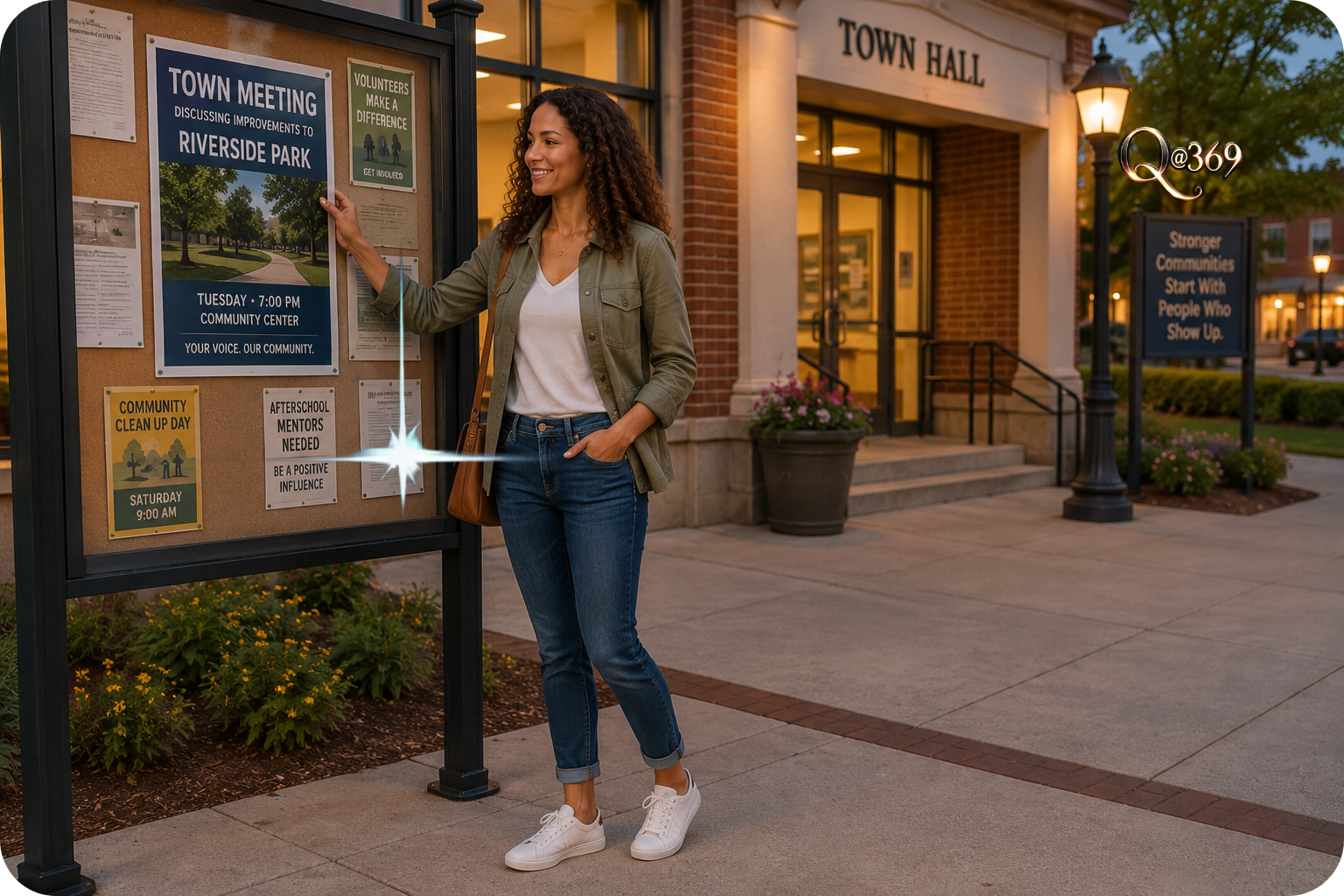
What would happen if everyone took care of their community?
Most people want safe neighborhoods, quality schools, clean parks, responsive local services, and opportunities for future generations. Yet healthy communities do not appear automatically.
They are built by people who care enough to participate.
Fortunately, civic involvement does not require holding public office or becoming a policy expert.
Often it begins with something much simpler.
- Paying attention.
- Helping others.
- Showing up when needed.
- Being informed.
Small actions performed consistently by many people create strong communities.
Citizenship Is More Than Voting
Voting remains an important responsibility in many democratic societies.
Yet civic involvement extends far beyond election day.
People participate when they volunteer, mentor young people, support community organizations, attend local meetings, assist neighbors, or contribute to projects that improve daily life.
Communities become stronger when individuals move from observation to participation.
Every person possesses knowledge, skills, experiences, and perspectives that can contribute positively.
Meaningful change often begins with ordinary people deciding to become involved.
Why Participation Benefits Everyone
Psychology research consistently shows that people who feel connected to their communities often report greater well being and life satisfaction.
Human beings naturally seek belonging, purpose, and meaningful contribution.
When people participate in community activities, they frequently develop stronger social connections and a deeper sense of purpose.
Helping others often benefits the helper as much as the recipient.
Acts of service strengthen relationships.
Relationships strengthen trust.
Trust strengthens communities.
Alma Attended Her First Town Meeting

Alma enjoyed technology and problem solving. She followed local news and cared about the community where she lived.
One evening she noticed an announcement for a town meeting discussing improvements to a nearby park.
At first she assumed other people would attend.
Someone else would share ideas.
Someone else would ask questions.
Someone else would become involved.
Then she paused.
The park mattered to local families. Children played there every day. Neighbors gathered there throughout the week.
Alma decided to attend.
She listened carefully as residents discussed concerns, opportunities, and possible solutions.
Some viewpoints differed from her own.
Others introduced considerations she had never previously considered.
When the meeting ended, Alma realized something important.
Constructive participation was not about winning arguments.
It was about listening respectfully, learning from others, and contributing thoughtfully.
Over time she attended additional meetings.
Sometimes she spoke.
Sometimes she listened.
Every time she learned something new about the people around her.
She discovered that communities become stronger when ordinary people choose to participate.
What I Have Observed
Throughout my life I have noticed that communities improve when people become involved.
Most positive changes do not begin with large organizations.
They begin with individuals.
A volunteer helping at a local event.
A neighbor assisting another neighbor.
A resident attending a meeting for the first time.
A citizen taking time to become informed.
Small contributions may seem insignificant in isolation.
Collectively, they become the foundation of healthy communities.
Kindness Is Civic Involvement Too
Many people hear the phrase civic involvement and immediately think about government.
Yet some of the most important forms of participation involve simple acts of kindness.
Helping a neighbor carry groceries.
Checking on an elderly resident.
Supporting a local food drive.
Mentoring a student.
Participating in a neighborhood cleanup.
Volunteering at a community event.
These actions strengthen the social fabric that connects people together.
Strong communities are built on relationships.
Relationships are built on trust.
Trust often begins with kindness.
Research published in Social Science & Medicine found that individuals who volunteer regularly report higher levels of life satisfaction, social connection, and overall well being than those who do not volunteer.

References
- Putnam, R. D. (2000). Bowling Alone. Simon & Schuster.
- Haidt, J. (2012). The Righteous Mind. Pantheon.
- Seligman, M. E. P. (2011). Flourish. Free Press.
- Brooks, A. C. (2007). Who Really Cares. Basic Books.
See more of QuantumAlchemist369™ selected self-empowerment knowledge selections on the Book Shelf
INKED RESONANCE
Every Mark Remembers

Science. Consciousness. Love. Loss. Quantum Mystery.
Read Book Sample Prologue Chapter Here
Read Sample Pages on Amazon
A Kind Request From the Author
Please give us your feedback.
Leave your comments below. We would love to hear your thoughts
More Communities
Benefits of Joining Our Community
By joining QuantumAlchemist369™, you will love to stay informed and connected with us and the Quantum Alchemist community. Join us and receive free daily email updates of blogs, events, and useful insights.
Leave a Comment
We would love to hear your thoughts. Please leave a comment and share how this content resonates with your own mindful journey.
Forum Discussion
Join the Quantumarian Forum Community discussion.
Sustain the Alchemy
If the insights here have sparked something within you…We invite you to Sustain the Alchemy
You Will Want to Explore
All the items, books and graphic designs, available in our QuantumAlchemist369 Shop
Featured Offering on 369 Shop

Yin Yang Metallic Symbol Tee — Blue & Gold Balance T-Shirt


Leave a Reply