
How does gratitude appears without any expectation align coherence?
Psychology shows that genuine appreciation strengthens emotional balance and resilience.
Neuroscience also reveals that gratitude practices activate brain networks linked with positive emotion and stress regulation.
I reflect on this subject because gratitude has often clarified perspective during both success and difficulty.
Continue reading to understand how gratitude without expectation strengthens awareness and emotional stability.
The Difference Between Gratitude And Transaction
Many people associate gratitude with social exchange.
Someone offers help and appreciation appears in response.
This type of gratitude often becomes transactional because appreciation depends on receiving something first.
Spiritually, gratitude without expectation shifts attention toward appreciation itself.
Practical application. Express appreciation even when no immediate benefit appears.
Neuroscience Of Gratitude
Neuroscience research shows that gratitude activates regions of the brain associated with emotional regulation and reward.
The prefrontal cortex and limbic system respond when individuals reflect on meaningful experiences.
These responses increase emotional stability and reduce stress signals.
Spiritually, gratitude centers attention on what already exists.
Practical application. Pause each day to acknowledge one moment of appreciation.
Gratitude Strengthens Emotional Resilience
Psychologists observe that gratitude improves resilience during stressful experiences.
When people reflect on positive aspects of life, emotional perspective expands.
Difficult situations become easier to navigate when appreciation remains present.
Spiritually, gratitude encourages humility and acceptance.
Practical application. During challenging moments recall previous experiences that created appreciation.
The Discipline Of Appreciation
Gratitude becomes powerful when practiced consistently.
Small daily reflections strengthen neural pathways associated with positive emotion.
Over time appreciation becomes a natural response rather than an occasional reaction.
Spiritually, disciplined gratitude aligns attention toward meaning and connection.
Practical application. Begin each morning by acknowledging one source of appreciation.
Julie Ann’s Moment

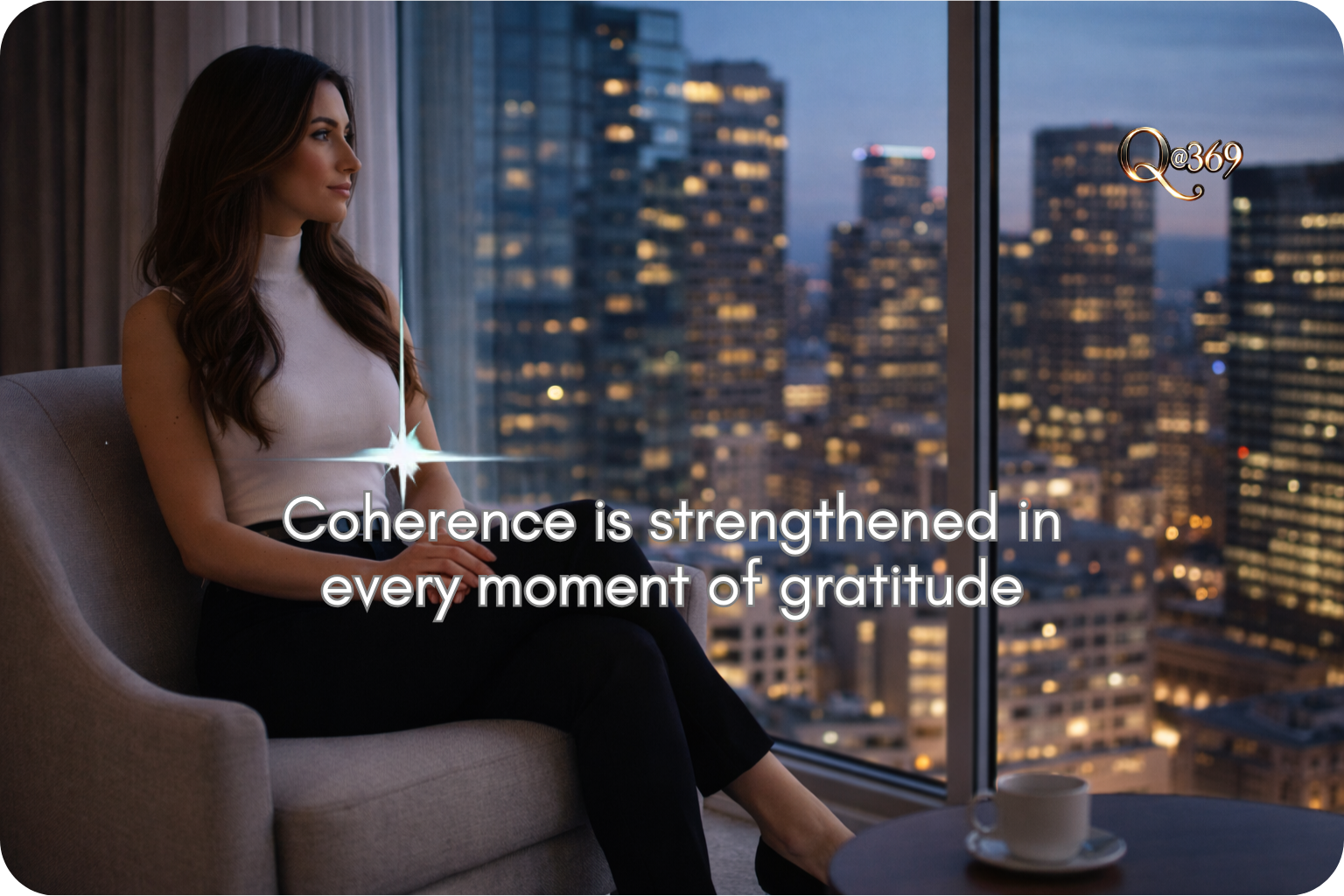
Julie Ann sat quietly near a window after finishing a long workday.
The city lights appeared slowly as evening arrived.
Rather than thinking about unfinished tasks, she reflected on the conversations and cooperation shared with colleagues earlier that day.
A quiet sense of appreciation emerged
Nothing dramatic had occurred, yet the simple awareness of shared effort created calm satisfaction.
Julie Ann recognized that gratitude did not require a special event.
It only required attention.
Practical application. Notice ordinary moments that deserve appreciation.
“Gratitude brings the mind into coherence, appreciation aligns attention with the present moment.” – Isaac Yue
Isaac Yue Insight
I have often noticed that gratitude changes perception.
When attention focuses on appreciation, the mind naturally becomes calmer and more receptive.
Scientific studies confirm that gratitude strengthens emotional regulation and improves well being.
Understanding this connection encourages people to practice appreciation intentionally.
Practical application. Reflect regularly on experiences that inspire gratitude.
Conclusion
Gratitude without expectation strengthens emotional clarity and resilience.
Neuroscience shows that appreciation activates brain systems linked with positive emotion.
Consistent gratitude practice gradually shifts perception toward stability and perspective.
What might change if appreciation became a daily habit rather than an occasional reaction?
Forward benefit. Practicing gratitude regularly strengthens emotional balance and personal awareness.
Isaac Yue Closing Reflection
I have learned that gratitude often appears in the quietest moments.
When appreciation becomes natural, the mind begins to recognize meaning in everyday experiences.
Gratitude without expectation strengthens both awareness and emotional harmony.
A study from the University of California Davis found that participants practicing gratitude journaling reported approximately twenty five percent higher levels of well being compared with control groups. University of California Davis Psychology Research
References
- Emmons Robert, Thanks How The New Science Of Gratitude Can Make You Happier, Houghton Mifflin Harcourt, 2007
- Seligman Martin, Flourish, Free Press, 2011
- Fox Glenn, The Neural Basis Of Gratitude, Frontiers in Psychology, 2015
- Davis David, Gratitude And Well Being Research Review, Journal of Positive Psychology, 2016
Quantum Pathways: A Journey to Alchemical Magic

- Explore the depths of consciousness, intention, and emotional resilience
- Learn how to applying Alchemy enriches
- Read Sample Pages on Amazon
- Follow the Link to Learn More
Please give us your feedback.
Leave your comments below. We would love to hear your thoughts
More Appreciation
Benefits of Joining Our Community
By joining QuantumAlchemist369™, you will love to stay informed and connected with us and the Quantum Alchemist community. Join us and receive free daily email updates of blogs, events, and useful insights.
Leave a Comment
We would love to hear your thoughts. Please leave a comment and share how this content resonates with your own mindful journey.
Forum Discussion
Join the Quantumarian Forum Community discussion.
Sustain the Alchemy
If the insights here have sparked something within you…We invite you to Sustain the Alchemy
You Will Want to Explore
All the items, books and graphic designs, available in our QuantumAlchemist369 Shop
Contact Us
For more information, and to contact Isaac Yue, visit our Contact Page.


Leave a Reply