
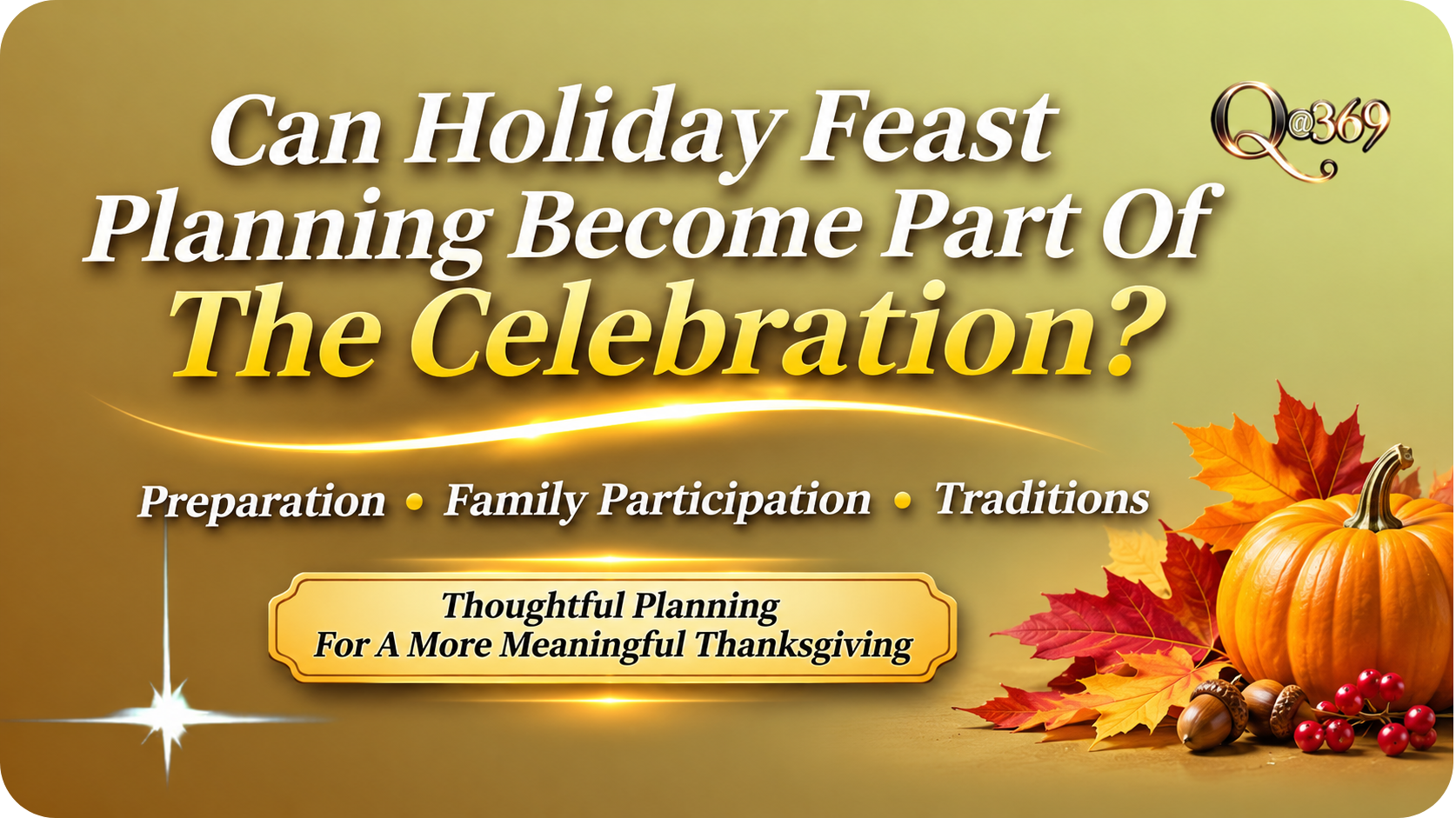
How Thoughtful Preparation, Family Participation, And Shared Traditions Make Thanksgiving More Meaningful
“The celebration does not begin when everyone sits at the table. It begins when we prepare a place for one another.” – Isaac Yue
Can Holiday Feast Planning Become Part Of The Celebration?
Can preparing a holiday feast become as meaningful as the celebration itself?
Thanksgiving preparations often involve shopping, cooking, arranging furniture, and coordinating family schedules. Yet these activities can also create opportunities for connection, shared traditions, and anticipation.
Thoughtful planning helps reduce unnecessary pressure while allowing family members to participate in creating the celebration. The experience becomes more meaningful when preparation is recognized as part of the holiday.
Five Concepts Guide Today’s Exploration:
- Thoughtful Planning: Preparing early while allowing flexibility for unexpected changes.
- Family Participation: Inviting everyone to contribute according to their abilities and interests.
- Shared Traditions: Preserving familiar customs while welcoming new ideas.
- Positive Awareness: Recognizing stress, appreciating contributions, and enjoying the process.
- Meaningful Celebration: Understanding how preparation strengthens the experience of gathering together.
✨Listen to: AUDIO PODCAST or on SPOTIFY
🙏 Join Our Community Today!
💞 Share with Friends and Colleagues
Why Does Holiday Preparation Matter?
Thanksgiving often brings families and friends together around a shared meal. The gathering may last only a few hours, but preparations frequently begin much earlier.
Menus must be considered, groceries purchased, and spaces arranged to accommodate guests. These responsibilities can become demanding when everything falls upon one person.
However, preparation can serve a purpose beyond completing necessary tasks. It creates opportunities for anticipation, cooperation, and meaningful interaction.
A family member selecting a favorite recipe may remember earlier celebrations. Another arranging the table may recall conversations shared during previous holidays.
These experiences connect the approaching gathering with memories of celebrations past. The holiday begins taking shape before the first guest arrives.
Recognizing this connection can change how we approach preparation. Instead of viewing every task as an obligation, we can identify opportunities for participation and enjoyment.
How Can Planning Reduce Holiday Stress?
A successful holiday gathering benefits from preparation that begins before the final days. Early planning allows time to consider priorities and distribute responsibilities.
Begin with the number of expected guests and the available gathering space. Consider seating, serving arrangements, and any practical needs that may influence the occasion.
Next, develop a menu that reflects family preferences and established traditions. Include familiar favorites while remaining realistic about preparation time and available resources.
A shopping list can organize ingredients, supplies, and other necessities. Separating purchases by category helps reduce forgotten items and unnecessary return trips.
Planning also creates opportunities to identify tasks that can be completed early. Some ingredients, decorations, and serving arrangements can be prepared before the busiest cooking period.
However, planning should provide guidance rather than impose rigid expectations. A forgotten ingredient or unexpected schedule change need not diminish the celebration.
The purpose is to support the gathering, not create an additional standard of perfection. A thoughtful plan leaves room for adjustments and enjoyment.
Can Family Participation Strengthen The Celebration?
Holiday preparations become more meaningful when participation extends beyond the primary host. Family members can contribute through activities suited to their interests and abilities.
Some may enjoy cooking traditional dishes or preparing desserts. Others may prefer arranging furniture, decorating the table, or helping organize supplies.
Children can participate through age appropriate activities under suitable supervision. Setting napkins, creating place cards, or helping with simple preparations gives them a meaningful role.
Older family members may contribute recipes, memories, or advice about established traditions. Their participation can preserve connections between generations.
Sharing responsibilities also creates opportunities for conversation. Preparing a familiar recipe together may encourage stories that would otherwise remain untold.
Importantly, participation should remain an invitation rather than another obligation. Family members have different schedules, abilities, and levels of comfort with particular tasks.
The goal is not to distribute work equally in every circumstance. It is to create an environment where contributions are welcomed and appreciated.
Why Do Holiday Traditions Carry Meaning?
Holiday traditions often become meaningful through repetition and shared experience. Familiar foods, table arrangements, and family customs connect present celebrations with earlier memories.
A favorite recipe may remind someone of a parent or grandparent. A familiar table decoration may recall celebrations from childhood.
These associations help explain why seemingly ordinary objects can carry personal significance. Their value comes from the experiences and relationships connected with them.
Traditions also provide continuity as families change. New members join celebrations, children grow older, and gathering arrangements evolve.
Preserving a tradition does not require repeating every detail without change. Families can retain meaningful customs while creating new experiences together.
A new recipe or seating arrangement may eventually become part of the family’s holiday history. Meaning develops through participation, memory, and shared appreciation.
What Does Science Tell Us About Shared Activities?
Psychological research provides useful perspectives on the relationship between shared activities and social connection. Researchers have examined how cooperation, gratitude, and repeated family practices influence relationships.
Shared activities create opportunities for communication and mutual support. Their benefits depend on the quality of the interactions rather than participation alone.
Research on family rituals also identifies connections with family organization, continuity, and relationship experiences. These findings do not mean every tradition produces the same benefit for every family.
Gratitude offers another relevant perspective. Recognizing someone’s contribution can communicate appreciation and strengthen interpersonal relationships.
However, holiday preparation can also create tension when expectations become unrealistic. Excessive responsibilities, financial pressure, or unequal workloads may reduce enjoyment.
The practical lesson is to balance organization with consideration for others. Planning becomes more valuable when it supports cooperation rather than increasing pressure.
Isaac Yue Reflection: Our Thanksgiving Begins A Week Early
For me, Thanksgiving preparations begin approximately one week before the holiday. The planning itself becomes part of the anticipation of gathering family together.
I begin by considering our expected family guests and how everyone will fit comfortably. Arranging the table and moving furniture become important parts of preparing our home.
Menu planning follows, along with developing shopping lists and identifying the ingredients we need. Each activity helps turn the approaching holiday into something increasingly tangible.
The week can become busy as different preparations compete for attention. However, I find the activity enjoyable because it serves a meaningful purpose.
We are preparing more than a meal. We are creating an opportunity for family members to gather and share the beginning of the holiday season.
I appreciate how familiar preparations become connected with memories of earlier celebrations. The arrangement of the table, the selected dishes, and the expected guests all contribute to that anticipation.
There is satisfaction in organizing the practical details. Yet the greater enjoyment comes from knowing why those details matter.
I also recognize the importance of remaining flexible. Plans may require adjustments, and not every arrangement needs to be perfect.
Positive awareness helps me appreciate the preparation rather than focusing entirely on completing the next task. It reminds me that the holiday experience has already begun.
For me, Thanksgiving is not limited to the time spent around the dinner table. The preceding week becomes part of the celebration through planning, anticipation, and the pleasure of bringing family together.
Can Awareness Make Preparation More Enjoyable?
Holiday preparation involves many activities competing for limited time and attention. Awareness helps us recognize which responsibilities deserve priority and which expectations can be adjusted.
Consider a menu that includes several complicated dishes. Preparing everything may create unnecessary pressure when simpler alternatives would provide an equally enjoyable gathering.
A thoughtful decision might involve reducing the number of dishes or inviting contributions from guests. Such adjustments can protect time for meaningful interaction.
Awareness also involves recognizing the needs of others. Someone may enjoy cooking but find decorating stressful, while another person may prefer organizing the gathering space.
Inviting participation according to personal interests can improve cooperation. It also demonstrates respect for individual preferences and abilities.
Another important consideration is the atmosphere surrounding preparations. Conversations, shared memories, and occasional laughter can make ordinary tasks more enjoyable.
The goal is not to remain cheerful during every moment. It is to recognize when adjustments can improve the experience for everyone involved.
Quantum Alchemy: Gratitude, Connection, And Shared Meaning
Quantum Alchemy explores relationships among science, philosophy, spirituality, and personal experience. Holiday preparation provides an everyday opportunity to consider how these perspectives contribute to meaningful living.
Psychology examines the roles of relationships, gratitude, and shared activities in human experience. Research can help us understand how appreciation and cooperation influence social connections.
Philosophy invites us to consider what makes a celebration meaningful. Is its value determined by the finished meal, or by the relationships and experiences surrounding it?
Spiritual reflection may encourage gratitude for the people who share our lives. It can also invite awareness of the ordinary moments that contribute to a meaningful gathering.
These perspectives do not require quantum physics to explain family relationships. The connections are philosophical and personal rather than claims about quantum mechanisms.
A holiday gathering becomes meaningful through human participation and interpretation. The preparation can carry value because people bring attention, effort, and care to the occasion.
Recognizing that meaning allows us to appreciate more than the completed celebration. We can also value the experiences that helped bring everyone together.
Reader Engagement: The Holiday Preparation Partnership
Thanksgiving preparations provide an opportunity to turn practical responsibilities into shared family experiences. This activity invites participation without creating unnecessary expectations.
Begin by identifying one part of the holiday gathering that could benefit from collaboration. Choose something manageable and meaningful to those involved.
First: Choose Together
Invite family members to discuss the menu, favorite traditions, or gathering arrangements. Consider which activities matter most to the people participating.
A favorite family recipe may provide a natural starting point. Alternatively, the group may prefer planning decorations or preparing the dining area.
Second: Share Responsibilities
Identify tasks that family members would enjoy contributing to the celebration. Consider individual abilities, interests, and available time.
One person may prepare a favorite dish while another organizes seating. Children may enjoy making place cards or helping with simple decorations.
Third: Create A Shared Moment
Choose one preparation that allows family members to spend time together. Preparing a traditional recipe or arranging the table can encourage conversation.
The activity does not need to be elaborate. Its value comes from participation and the experience shared.
Fourth: Practice Awareness
Notice when preparations become stressful or expectations become unrealistic. Consider whether a task can be simplified, postponed, or shared.
Remember that a successful gathering does not require perfection. Comfort, participation, and meaningful relationships deserve attention.
Fifth: Celebrate Contributions
During the gathering, recognize the efforts that helped make the occasion possible. A simple expression of appreciation can acknowledge someone’s contribution.
Consider how the shared preparations influenced the celebration. You may discover that some of the most memorable moments occurred before the meal.
Your Reflection
Which part of your holiday preparation could become a shared family experience?
Consider inviting someone to participate in a meaningful task. The preparation itself may become a tradition worth continuing.
Closing Reflection: The Celebration Begins Before The Feast
Thanksgiving is often remembered through the meal, conversations, and time spent together. However, the experiences leading toward the gathering can also carry lasting meaning.
Planning creates anticipation, while shared responsibilities encourage participation. Familiar traditions connect present celebrations with memories and relationships developed over time.
Thoughtful preparation can reduce unnecessary stress without eliminating every unexpected challenge. Flexibility allows us to focus on what matters when circumstances change.
For me, the week before Thanksgiving is already part of the holiday. Arranging furniture, planning the menu, and preparing shopping lists contribute to the pleasure of bringing family together.
The most meaningful outcome is not a perfectly arranged table. It is the opportunity to share time with people who matter to us.
As Thanksgiving approaches, consider which preparations could become opportunities for connection. Invite participation, appreciate contributions, and allow room for unexpected moments.
A holiday feast may last only a few hours. The memories created while preparing it can remain meaningful long afterward.
Discussion Question
Which Thanksgiving preparation or family tradition brings you the greatest enjoyment before the holiday gathering begins?
Share your experience in the Quantumarian Community. Your ideas may help another family discover a more enjoyable way to prepare.
Find Your Quantum

References
- Fiese, B. H., et al. (2002). A Review Of 50 Years Of Research On Naturally Occurring Family Routines And Rituals. Examines how family routines and rituals relate to organization, continuity, and family relationships. https://doi.org/10.1037/0893-3200.16.4.381
- Algoe, S. B. (2012). Find, Remind, And Bind: The Functions Of Gratitude In Everyday Relationships. Explores how gratitude can help maintain and strengthen interpersonal relationships. https://doi.org/10.1111/j.1751-9004.2012.00439.x
- Wood, A. M., Froh, J. J., And Geraghty, A. W. A. (2010). Gratitude And Well Being: A Review And Theoretical Integration. Reviews psychological research connecting gratitude with well being and social relationships. https://doi.org/10.1016/j.cpr.2010.03.005
See more of QuantumAlchemist369™ selected self-empowerment knowledge selections on the Book Shelf

Pioneers of Quantum Physics

Interactive Live Meetups
Thursday 7PM EDT Live Q&A with Isaac Yue
Join the Live Meetup Community discussion.
QA369 Forum – Empower Your Life
Join the Conversation? Start sharing your insights today! On our Quantumarian Forum Page


Leave a Reply