
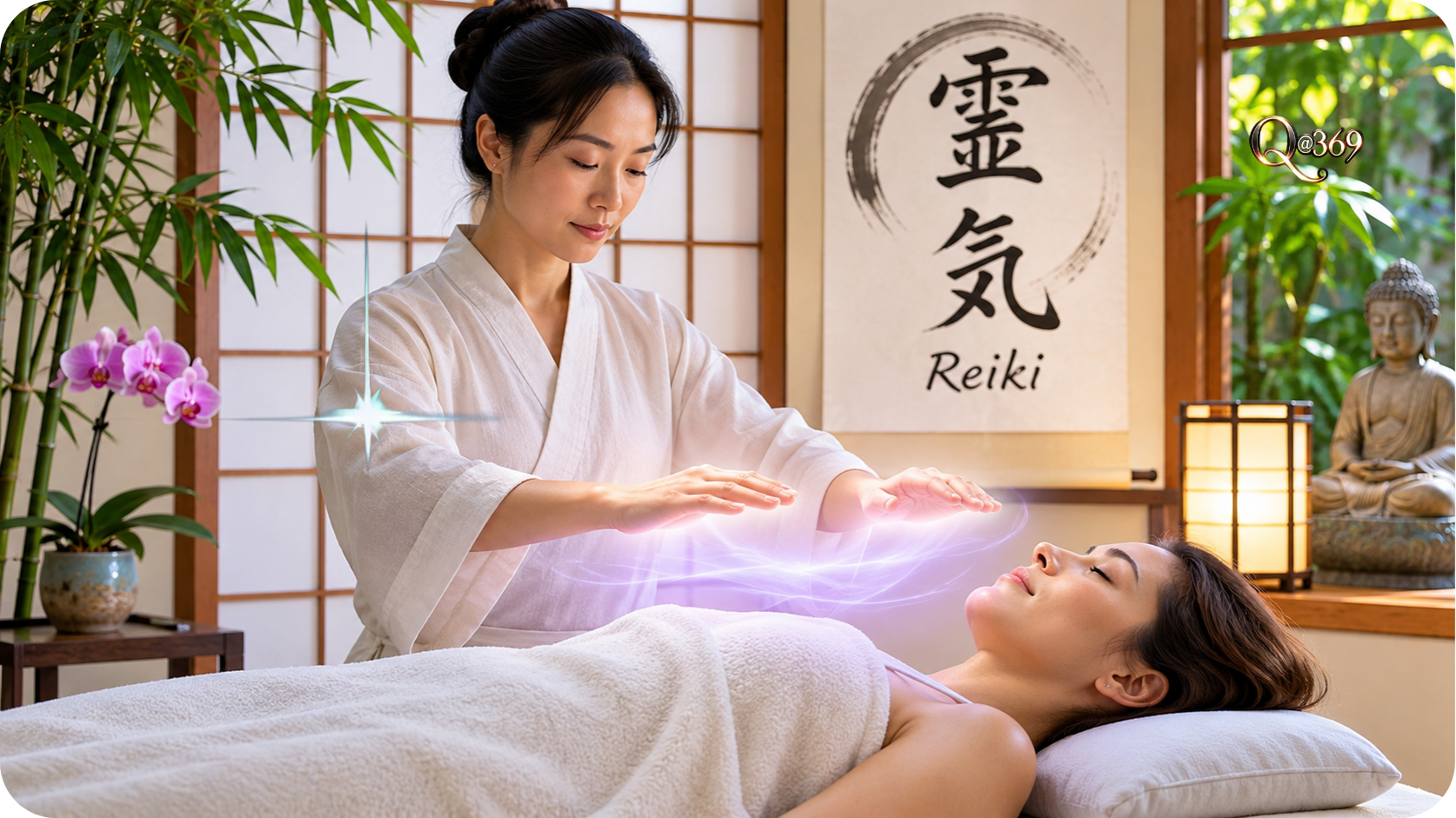
Exploring Reiki’s Origins, Energy Healing Traditions, Relaxation, And The Science Behind Its Claims
Can a Japanese healing tradition help us understand the relationship between relaxation, personal awareness, and well being?
Reiki is a Japanese practice involving gentle hand placements, focused attention, and a traditional belief in universal life energy. Understanding its history and scientific evidence helps us approach the practice with curiosity while recognizing what remains unproven.
This Thursday morning, we explore five important aspects of Reiki.
- Japanese Origins: Understanding Mikao Usui and the development of modern Reiki.
- Traditional Energy Concepts: Exploring what practitioners mean by universal life energy.
- Practical Experience: Learning what typically happens during a Reiki session.
- Scientific Evidence: Examining research on relaxation, anxiety, and proposed healing effects.
- Personal Awareness: Considering how Reiki relates to mindfulness, reflection, and complementary wellness practices.
The practical value begins with informed curiosity. We can appreciate a cultural tradition while evaluating its health claims through reliable scientific evidence.
✨Listen to: AUDIO PODCAST or on SPOTIFY
🙏 Join Our Community Today!
💞 Share with Friends and Colleagues
What Does Reiki Mean?
Reiki is commonly written in Japanese as 霊気. The term combines rei, associated with spiritual or mysterious qualities, and ki, referring to vital energy or life force.
English explanations often translate Reiki as universal life energy. However, this interpretation reflects the spiritual understanding associated with the practice rather than a scientifically established physical energy.
Reiki practitioners generally believe that this energy can support balance and natural healing processes. Sessions commonly involve placing hands lightly on or just above another person’s body.
The practice does not ordinarily require physical manipulation, massage, or specialized equipment. Its central elements involve gentle hand positions, a calm environment, and focused attention.
For someone unfamiliar with Reiki, the experience may resemble a quiet period of guided relaxation. However, practitioners interpret its purpose through a traditional framework involving spiritual energy.
Understanding this difference helps us appreciate the practice without confusing traditional beliefs with established scientific explanations.
How Did Reiki Begin In Japan?
Modern Reiki is most closely associated with Mikao Usui, who developed his system in Japan during the early twentieth century. Usui’s approach combined spiritual development, meditation, personal discipline, and hands on healing practices.
Traditional accounts connect Usui’s spiritual experiences with Mount Kurama near Kyoto. These narratives remain important within Reiki traditions, although their historical details are not all independently documented.
Usui established a system of teaching and practice that influenced later generations. His approach emphasized personal development alongside methods intended to support healing.
Chujiro Hayashi subsequently helped develop and teach Reiki practices. Hawayo Takata played an important role in introducing Reiki to Hawaii and expanding its recognition in the United States.
Over time, Reiki spread internationally and developed several teaching traditions. Contemporary practices may differ in their hand positions, training methods, spiritual interpretations, and use of symbols.
Reiki also belongs within a broader history of Japanese spiritual and healing traditions. Its development should not be interpreted as the beginning of every Japanese practice involving vital energy.
What Is The Traditional Concept Of Life Energy?
The Japanese concept of ki appears in several cultural and philosophical traditions. It is related historically to the Chinese concept of qi, often discussed in connection with traditional medicine and practices such as Qigong.
These traditions describe vital energy as an important aspect of life and balance. Reiki practitioners commonly interpret their work as supporting the movement or availability of this energy.
However, the energy described in Reiki has not been established as a measurable physical phenomenon. Scientific instruments have not demonstrated a unique healing energy transferred from practitioner to recipient.
This does not prevent people from reporting meaningful personal experiences during sessions. Feelings of warmth, relaxation, calmness, or emotional comfort may occur without confirming the proposed energy mechanism.
Human experience involves complex interactions among attention, expectations, environment, and physiological responses. Understanding these influences helps us examine Reiki experiences without dismissing the people who report them.
The traditional concept of ki therefore belongs to Reiki’s cultural and spiritual framework. Its existence as a distinct healing energy remains scientifically unverified.
What Happens During A Reiki Session?
A typical Reiki session takes place in a quiet environment. The recipient usually remains fully clothed while sitting comfortably or lying on a treatment table.
The practitioner may place their hands gently on selected areas or hold them slightly above the body. Sessions vary in length, although many last approximately thirty to sixty minutes.
Some recipients describe warmth, tingling, calmness, or deep relaxation. Others report little noticeable sensation during the experience.
These responses can differ according to individual expectations, comfort, surroundings, and personal circumstances. No particular sensation establishes that a healing energy has been transferred.
Reiki is generally considered a complementary wellness practice rather than a substitute for medical care. Anyone receiving treatment for a health condition should continue appropriate professional care.
Participants should also feel comfortable discussing boundaries before a session. Gentle touch should occur only with informed consent, and hands above the body provide an alternative.
What Does Scientific Research Tell Us?
Scientific researchers have examined Reiki in relation to pain, anxiety, stress, and general well being. Some individual studies report improvements in certain outcomes, although the overall evidence remains limited.
The National Center for Complementary and Integrative Health, part of the National Institutes of Health, states that Reiki has not been clearly demonstrated effective for health related purposes. Many studies involve small samples or methodological limitations.
One important challenge involves separating the effects of Reiki from those of relaxation, attention, expectations, and the treatment environment. These factors can influence how participants experience stress and discomfort.
Controlled studies attempt to evaluate whether Reiki produces benefits beyond these influences. However, research findings have not established a reliable healing effect attributable to a unique energy transfer.
Relaxation itself can influence physiological processes. Quiet surroundings, comfortable positioning, and reduced stimulation may contribute to feelings of calmness.
These experiences can be meaningful without confirming Reiki’s traditional explanation. Scientific evaluation requires evidence that can be tested and reproduced under appropriate conditions.
Can Reiki Help People Relax?
Many Reiki recipients describe sessions as calming experiences. The quiet setting and opportunity to rest may provide relief from everyday demands.
Relaxation can involve changes in breathing, muscle tension, and perceived stress. These responses are recognized aspects of human physiology and do not require an unidentified energy source.
However, personal reports of relaxation do not establish that Reiki treats a particular medical condition. Feeling better after a session and demonstrating a specific therapeutic effect are different questions.
Researchers must consider whether improvements exceed those associated with rest, supportive attention, or other comparison conditions. This is especially important when evaluating subjective outcomes such as discomfort and anxiety.
Someone may choose Reiki as a personal relaxation activity while recognizing these scientific limitations. The decision should remain informed, voluntary, and compatible with appropriate medical care.
Why Do People Find Reiki Meaningful?
People approach Reiki for different reasons. Some are interested in Japanese traditions, while others seek quiet reflection or a structured opportunity to relax.
The practice may also provide a sense of personal attention. During a session, participants can temporarily step away from daily responsibilities and focus on their immediate experience.
For some individuals, Reiki carries spiritual significance. They may interpret sensations or emotional responses through beliefs involving energy, balance, and personal healing.
Others may appreciate the calming environment without accepting the traditional energy explanation. These different interpretations demonstrate how personal meaning and scientific evidence address separate questions.
A meaningful experience does not automatically establish a proposed physical mechanism. However, scientific uncertainty about that mechanism does not invalidate someone’s description of feeling relaxed or comforted.
Respectful curiosity allows us to recognize both considerations.
Isaac Yue Reflection: Curiosity Without Abandoning Evidence
My interest in Reiki comes from a broader curiosity about how people understand awareness, energy, and personal well being. Japanese traditions offer interesting perspectives on the relationships between body, mind, and everyday experience.
Through my interest in Qigong and personal reflection, I appreciate practices that encourage calmness and deliberate attention. However, I also recognize the importance of examining scientific explanations carefully.
Reiki raises an interesting question about how we interpret personal experiences. Someone may feel deeply relaxed during a session and attribute that experience to universal life energy.
The relaxation may be genuine, although the proposed explanation remains unverified. Recognizing this allows us to respect the person’s experience without presenting an unsupported mechanism as scientific fact.
I find value in approaching unfamiliar traditions with curiosity rather than immediate acceptance or rejection. Understanding their history and cultural meaning can broaden our perspective.
At the same time, curiosity should not replace critical thinking. Reliable evidence remains essential when evaluating claims about physical health and medical treatment. For me, Reiki provides an opportunity to explore how tradition, personal experience, and scientific investigation can contribute different perspectives. Each deserves consideration within its appropriate context.
Quantum Alchemy: Energy, Awareness, And Scientific Integrity
Quantum Alchemy explores connections among science, philosophy, spirituality, and personal awareness. Reiki offers an opportunity to examine how these perspectives approach the concept of energy.
In physics, energy is a measurable quantity associated with the capacity of physical systems to produce change. Its behavior is described through mathematical relationships and established physical laws.
Reiki’s universal life energy is a traditional spiritual concept. It has not been demonstrated to represent a measurable energy field recognized by modern physics.
Quantum mechanics does not establish that human intention transfers healing energy through Reiki. Using quantum terminology to explain an unverified mechanism does not provide scientific validation.
However, psychology and neuroscience can investigate relaxation, attention, expectations, and subjective experience. These fields offer established methods for examining some effects associated with calming activities.
Philosophy encourages us to consider how people interpret experiences and assign meaning. Spiritual reflection may provide personal significance without requiring every belief to become a scientific claim.
These approaches can coexist when their boundaries remain clear. Scientific explanations require evidence, while personal and spiritual interpretations may address questions of meaning and experience.
A Thursday Morning Practice: Five Minutes Of Calm Awareness
You do not need to practice Reiki to explore the benefits of quiet attention. A simple relaxation exercise can provide an opportunity to observe your physical and emotional experience.
Find a comfortable place where you can sit without interruption. Allow yourself five minutes to focus on breathing, physical sensations, and gentle awareness.
Minute 1: Become Comfortable
Sit with your feet supported and your shoulders relaxed. Notice how your body feels without attempting to change every sensation.
Minute 2: Observe Your Breathing
Pay attention to your natural breathing rhythm. Allow each breath to occur comfortably without forcing a particular pattern.
Minute 3: Notice Physical Sensations
Observe sensations in your hands, shoulders, and face. Recognize areas of tension without demanding immediate relaxation.
Minute 4: Practice Gentle Attention
When your thoughts wander, acknowledge them and return your attention to breathing. Avoid judging yourself for becoming distracted.
Minute 5: Reflect On The Experience
Consider whether the exercise influenced your sense of calm or awareness. Recognize that individual experiences vary and that no particular result is required.
This practice involves ordinary attention and relaxation rather than a claimed transfer of healing energy. It provides an opportunity to examine your experience without assuming a supernatural mechanism.
Closing Reflection: Respecting Tradition While Seeking Understanding
Reiki offers an interesting example of how cultural traditions, personal experiences, and scientific questions can intersect. Its history reflects Japanese spiritual practices that later gained international recognition.
Practitioners may interpret Reiki through beliefs involving universal life energy. However, scientific research has not established that such energy exists or that Reiki reliably treats medical conditions.
Some participants report relaxation or emotional comfort during sessions. These experiences can be acknowledged while continuing to evaluate the explanations offered for them.
“Curiosity opens our minds to experience. Evidence helps us understand what experience can truly establish.” — Isaac Yue
This Thursday, consider a wellness practice or cultural tradition that interests you. Explore its history, examine the available evidence, and reflect on what you find meaningful.
Join the Quantumarian Community and share your perspective. Thoughtful conversations can help us explore unfamiliar ideas while maintaining respect and scientific integrity.
Can a wellness practice offer personal meaning even when its traditional explanation remains scientifically unverified?
Understanding begins with curiosity and develops through careful observation. We can appreciate cultural traditions while remaining committed to reliable knowledge.
Find Your Quantum

References
- National Center for Complementary and Integrative Health. Reiki. Explains Reiki, its proposed energy mechanism, scientific evidence, and limitations as a health intervention. https://www.nccih.nih.gov/health/reiki
- International Center for Reiki Training. The History of Reiki. Presents the traditional history of Mikao Usui and the development of modern Reiki. This is a practitioner source rather than independent historical research. https://www.reiki.org/faqs/history-reiki
- National Center for Complementary and Integrative Health. Relaxation Techniques: What You Need To Know. Reviews relaxation practices, their potential effects, and scientific considerations. https://www.nccih.nih.gov/health/relaxation-techniques-what-you-need-to-know
See more of QuantumAlchemist369™ selected self-empowerment knowledge selections on the Book Shelf

Pioneers of Quantum Physics

Interactive Live Meetups
Thursday 7PM EDT Live Q&A with Isaac Yue
Join the Live Meetup Community discussion.
QA369 Forum – Empower Your Life
Join the Conversation? Start sharing your insights today! On our Quantumarian Forum Page


Leave a Reply