
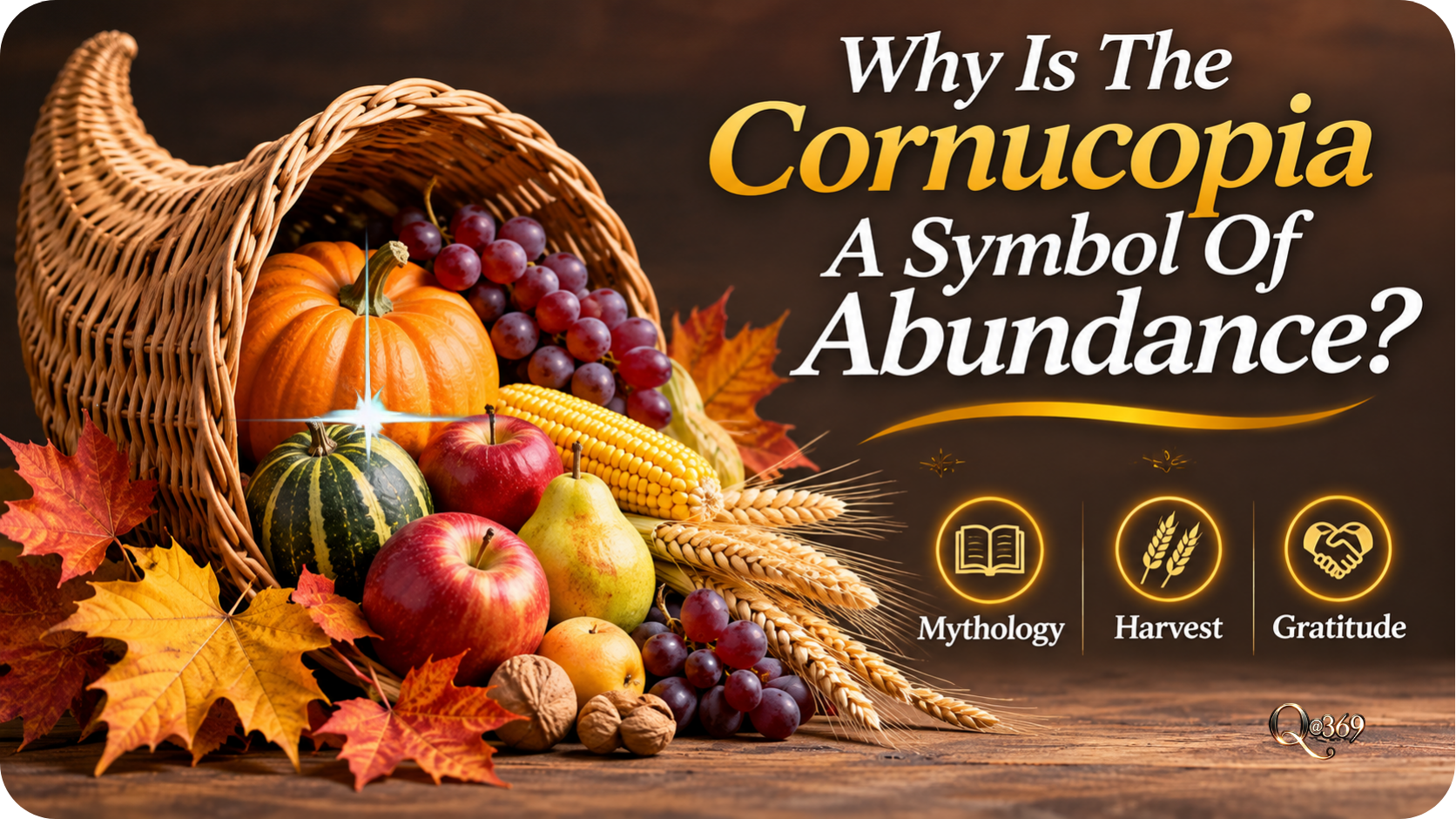
From Ancient Mythology To Thanksgiving, Discover How The Horn Of Plenty Celebrates Gratitude, Harvests, And Sharing.
“Abundance is not measured by how much we possess, but by how much we appreciate. Gratitude helps us recognize what is enough, while generosity allows us to share that abundance with others.” — Isaac Yue
Why do we associate a curved horn overflowing with fruits, vegetables, and grains with abundance and Thanksgiving?
The cornucopia, traditionally known as the horn of plenty, has represented prosperity and nourishment for thousands of years. Its story begins in classical mythology and continues through harvest celebrations and modern Thanksgiving traditions.
This familiar symbol invites us to consider five meaningful connections.
- Ancient Origins: How Greek and Roman mythology established the horn of plenty.
- Harvest Traditions: Why agricultural abundance became associated with seasonal celebrations.
- Thanksgiving: How the cornucopia became a familiar symbol of autumn gratitude.
- Sharing: Why abundance becomes more meaningful when it benefits others.
- Personal Reflection: How appreciating what we have can influence our sense of fulfillment.
The cornucopia offers more than a decorative centerpiece. It reminds us to recognize life’s provisions, appreciate those who contribute, and share what we can.
✨Listen to: AUDIO PODCAST or on SPOTIFY
🙏 Join Our Community Today!
💞 Share with Friends and Colleagues
What Is A Cornucopia?
Imagine a large, curved horn resting on a table. Apples, grapes, pumpkins, nuts, and golden wheat spill from its opening.
This familiar arrangement is called a cornucopia.
The name comes from the Latin words cornu, meaning horn, and copia, meaning abundance or plenty. Together, they describe the horn of plenty.
In ancient artwork, the cornucopia often appeared filled with fruits, flowers, and agricultural products. These objects represented nourishment, fertility, prosperity, and the generosity of nature.
The horn itself was not originally a Thanksgiving decoration. Its symbolic history reaches much further into the ancient Mediterranean world.
Ancient Greek Mythology: The Horn Of Plenty
One traditional explanation begins with the Greek god Zeus and the goat Amalthea.
According to one version of the myth, Amalthea nourished the infant Zeus while he was hidden from his father, Cronus. A horn associated with Amalthea later became a source of extraordinary abundance.
Different ancient accounts describe the horn’s origins in different ways.
Another tradition involves Heracles, known as Hercules in Roman mythology, and the river god Achelous. During their struggle, Achelous assumed the form of a bull and lost one of his horns.
In some versions, the horn became associated with overflowing nourishment and prosperity.
These stories were not scientific explanations of agricultural abundance. They were mythological narratives expressing humanity’s dependence on nourishment and nature’s productive powers.
The image of a horn providing endless food captured an enduring human aspiration. People wanted security, fertile land, and sufficient resources to sustain their families and communities.
The Cornucopia In Ancient Rome
The Romans adopted the cornucopia as a recognizable symbol of prosperity.
It appeared in sculpture, mosaics, coins, and representations of divine or symbolic figures. The horn frequently accompanied figures associated with fertility, fortune, and agricultural abundance.
Fortuna, the Roman goddess of fortune, was sometimes depicted holding a cornucopia. Abundantia, the personification of abundance, also appeared with this familiar symbol.
Its meaning extended beyond individual wealth.
A prosperous society depended on productive agriculture, reliable food supplies, and successful trade. The cornucopia represented the hope that these essential resources would remain available.
For people living close to the uncertainties of agriculture, a successful harvest was especially meaningful.
Why Harvest Celebrations Became Important
For much of human history, agricultural success determined whether communities could endure the coming seasons.
Farmers depended on rainfall, soil conditions, seasonal temperatures, and considerable physical labor. A poor harvest could threaten food supplies and economic security.
A successful harvest therefore offered practical reasons for celebration.
Communities gathered to recognize their work, express gratitude, and share food. These celebrations also reinforced social connections and responsibilities.
Different cultures developed their own harvest customs, ceremonies, and symbols.
The cornucopia became one recognizable image of this broader human experience. Its overflowing contents represented the satisfaction of having enough to sustain life.
However, abundance was never guaranteed.
That uncertainty made gratitude and careful preparation especially important.
How The Cornucopia Became Associated With Thanksgiving
Today, the cornucopia frequently appears in American Thanksgiving decorations.
Its contents often include pumpkins, squash, apples, grapes, corn, nuts, and autumn leaves. These familiar objects connect the symbol with the agricultural harvest.
However, the cornucopia did not originate with the early American Thanksgiving celebrations.
It entered American seasonal imagery through a much older European artistic tradition. Over time, its association with harvest abundance made it a natural addition to Thanksgiving decorations.
Thanksgiving itself developed through several historical traditions and changing national observances.
Modern celebrations often emphasize gratitude, family gatherings, shared meals, and reflection. The cornucopia provides a visual expression of these themes.
Its presence reminds us that the food on our tables has a history extending beyond the meal itself.
Every harvest represents natural processes, human labor, transportation, preparation, and cooperation.
Does Abundance Always Mean Having More?
The cornucopia is traditionally overflowing with food. Its appearance can create the impression that abundance means possessing more than we need.
However, abundance can also describe a sense of sufficiency.
Consider a family gathering around a Thanksgiving table. The most meaningful moments may involve conversation, laughter, familiar traditions, and shared memories.
The meal provides nourishment, although the gathering offers something less easily measured.
A person can possess many material resources while feeling disconnected from others. Someone with fewer possessions may experience considerable fulfillment through relationships, purpose, and gratitude.
This does not mean material needs are unimportant.
Reliable food, shelter, and personal security remain essential foundations of well being. Yet once basic needs are addressed, abundance can take forms beyond material accumulation.
Perhaps the horn of plenty can remind us to appreciate both what sustains us and what enriches our experiences.
Gratitude And The Psychology Of Appreciation
Gratitude involves recognizing and appreciating benefits we receive or experience.
Psychologists Robert Emmons and Michael McCullough studied the effects of regularly reflecting on things for which people feel grateful. Their research found benefits in several measures of subjective well being under the conditions studied.
Gratitude does not eliminate hardship or guarantee happiness.
However, intentionally recognizing positive experiences may help redirect attention toward valued relationships, opportunities, and everyday provisions.
Consider preparing a Thanksgiving meal.
Instead of focusing entirely on the work remaining, we might recognize the people contributing to the gathering. Someone prepares vegetables, another arranges the table, and someone else welcomes arriving guests.
These ordinary actions demonstrate cooperation and care.
The cornucopia becomes especially meaningful when we recognize the many contributions represented by its contents.
Isaac Yue Reflection: Preparing For Thanksgiving
As November arrives, I begin thinking about Thanksgiving and the opportunity to gather with family and friends.
I enjoy the familiar preparations that accompany the holiday. Planning the meal, arranging the table, and anticipating conversations create their own sense of celebration.
Z and I bring different ideas and preferences to these preparations. Those differences often make the experience more interesting and memorable.
I have come to appreciate that abundance is not measured only by the amount of food available.
It also appears in the willingness to contribute, the pleasure of welcoming others, and the memories created together.
Sometimes the most meaningful moments occur before the meal begins.
A conversation in the kitchen, a shared laugh, or someone offering to help can become a lasting memory. These small experiences remind me that gratitude often begins with paying attention.
The cornucopia captures something important about this season.
Its overflowing contents represent nourishment, although the people gathered around the table give the celebration its deeper personal meaning.
For me, Thanksgiving is an opportunity to appreciate what we have while remembering those who may need encouragement or assistance.
Abundance becomes especially meaningful when it creates opportunities to share.
Quantum Alchemy: Recognizing The Abundance Around Us
Quantum Alchemy encourages us to examine how awareness and experience influence our understanding of everyday life.
The cornucopia offers a useful symbol for this reflection.
From a scientific perspective, agricultural abundance depends on physical processes. Sunlight, water, nutrients, biological growth, and human effort contribute to the food we harvest.
These processes operate through natural laws rather than supernatural intervention.
From a philosophical perspective, abundance raises questions about sufficiency, fairness, responsibility, and the distribution of resources.
Spiritual reflection may explore gratitude, generosity, and our relationships with the natural world.
Each perspective contributes something different to our understanding.
Together, they invite us to recognize that nourishment depends on many interconnected processes and contributions.
We can appreciate the physical processes that sustain life while reflecting on the human values guiding how resources are shared.
The practical lesson is straightforward.
Recognizing abundance becomes more meaningful when appreciation leads to thoughtful action.
A Saturday Practice: Create Your Own Horn Of Plenty
You do not need a traditional woven horn to explore the meaning of the cornucopia.
A simple bowl, basket, or centerpiece can become a personal expression of gratitude.
Step 1: Choose Five Symbols Of Abundance
Select five objects representing something you appreciate.
An apple might represent nourishment. A family photograph could represent relationships, while a book might symbolize learning.
Step 2: Recognize The Contributions Behind Each Object
Consider the people, experiences, and natural processes associated with your selections.
A piece of fruit represents more than food. It also reflects sunlight, soil, water, agricultural work, and transportation.
Step 3: Identify One Opportunity To Share
Think about something you can offer another person.
Perhaps you can contribute food, volunteer your time, express appreciation, or invite someone into a meaningful conversation.
Step 4: Make Gratitude Part Of Thanksgiving Preparations
Place your arrangement somewhere visible as the holiday approaches.
Use it as a reminder to appreciate what you have and recognize the people contributing to your life.
The arrangement does not need to be elaborate.
Its meaning comes from the attention and intention behind it.
Closing Reflection: The Meaning Of Plenty
The cornucopia began as a symbol of nourishment and prosperity in ancient mythology. Across centuries, it became associated with agricultural harvests, abundance, and seasonal celebrations.
Today, its familiar appearance reminds us of Thanksgiving and the importance of gratitude.
However, the horn of plenty offers a message extending beyond an overflowing basket of food.
Abundance includes the resources that sustain us, the relationships that enrich us, and the opportunities we have to contribute.
Perhaps the greatest value of abundance comes from recognizing what is sufficient and sharing what we can.
As Thanksgiving approaches, take a moment to consider your own horn of plenty.
What would you place inside it? Which people, experiences, and opportunities deserve your appreciation?
Choose one way to express that gratitude through action.
Join the Quantumarian Community and share your perspective.
What represents abundance in your life, beyond material possessions?
Keep learning, remain curious, and appreciate the gifts of everyday life.
Find Your Quantum

References
- Encyclopaedia Britannica. Cornucopia. Provides historical background on the horn of plenty, its mythological origins, and its association with abundance. https://www.britannica.com/topic/cornucopia
- Encyclopaedia Britannica. Thanksgiving Day. Explores the history of Thanksgiving, its development in North America, and its association with harvest celebrations. https://www.britannica.com/topic/Thanksgiving-Day
- Emmons, R. A., & McCullough, M. E. (2003). Counting Blessings Versus Burdens: An Experimental Investigation of Gratitude and Subjective Well Being in Daily Life. Psychological Science, 14(5), 377–389. Examines how intentional gratitude practices can influence aspects of psychological well being. https://doi.org/10.1111/1467-9280.01411
See more of QuantumAlchemist369™ selected self-empowerment knowledge selections on the Book Shelf

Pioneers of Quantum Physics

Interactive Live Meetups
Thursday 7PM EDT Live Q&A with Isaac Yue
Join the Live Meetup Community discussion.
QA369 Forum – Empower Your Life
Join the Conversation? Start sharing your insights today! On our Quantumarian Forum Page


Leave a Reply