
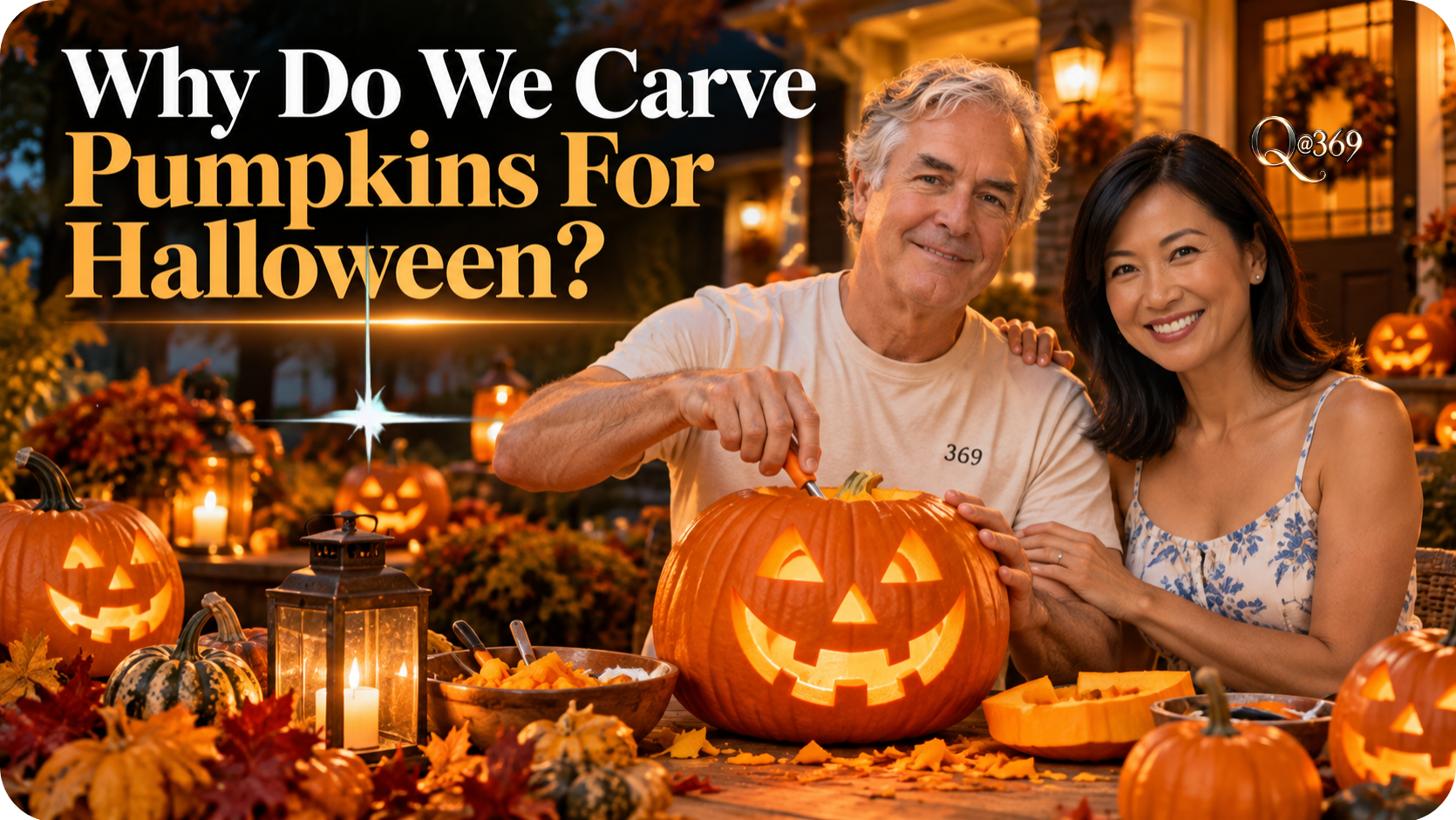
From Irish Folklore To Family Traditions, Discover How A Glowing Pumpkin Became A Halloween Symbol

Why do we carve faces into pumpkins, place lights inside them, and display them outside our homes every Halloween?
The pumpkins custom developed through Irish folklore, seasonal celebrations, and cultural changes brought by immigration. Over time, an object associated with frightening spirits became a familiar symbol of creativity, celebration, and family togetherness.
Today, pumpkin carving offers more than seasonal decoration. It provides an opportunity to explore cultural history, practice creativity, and build shared memories.
- Halloween lantern carving has historical connections to Irish traditions involving turnips and other root vegetables.
- The name jack-o’-lantern is associated with the Irish folktale of Stingy Jack.
- Irish immigrants helped popularize the tradition in America, where pumpkins became the preferred material.
- Pumpkin carving can encourage creativity, planning, cooperation, and shared family experiences.
- The meaning of a tradition can change as different generations reinterpret it.
✨Listen to: AUDIO PODCAST or on SPOTIFY
🙏 Join Our Community Today!
💞 Share with Friends and Colleagues
The Familiar Face Of Halloween
Walk through an American neighborhood in late October, and you may encounter glowing pumpkins on front porches. Some display frightening expressions, while others feature cheerful faces or elaborate artistic designs.
Children often enjoy choosing the pumpkin, deciding on a design, and watching the finished creation illuminate the evening. Adults may appreciate the opportunity to share an activity that connects generations.
Yet this familiar Halloween decoration has a history that reaches far beyond modern American neighborhoods. Its origins involve folklore, changing seasons, and traditions carried across the Atlantic Ocean.
The most surprising detail may be that the original Halloween lanterns were not made from pumpkins. They were often carved from turnips.
Before Pumpkins, There Were Turnips

In Ireland, people traditionally carved faces into turnips and other root vegetables. Some placed candles inside these hollowed vegetables to create lanterns.
These practices were associated with Halloween customs and beliefs about supernatural visitors. Frightening faces were sometimes intended to discourage unwanted spirits from approaching homes.
The tradition developed within a broader cultural history connected to Samhain. This seasonal observance marked the end of the harvest period and the approach of winter.
Folklore associated this time with encounters between the living and supernatural beings. Such beliefs help explain why frightening faces and protective lanterns became part of the celebration.
Historical evidence documents carved turnip lanterns, although the precise beginnings of every associated custom remain uncertain. Traditions often develop gradually through generations of storytelling and local practices.
Who Was Stingy Jack?
One of the best-known explanations for the jack-o’-lantern comes from an Irish folktale. Its central character is commonly called Stingy Jack.
According to the story, Jack repeatedly tricked the Devil and eventually found himself unwelcome in both Heaven and Hell. He was condemned to wander through darkness with only a burning ember to guide him.
Jack placed the ember inside a hollowed turnip to create a lantern. The story became associated with mysterious wandering lights and the name jack-o’-lantern.
Different versions of the folktale have circulated over time. The story is cultural folklore rather than a documented historical event.
Its importance comes from how people used storytelling to explain mysterious experiences and seasonal customs. Such stories also helped communities pass traditions between generations.
How Pumpkins Became The Halloween Favorite
When Irish immigrants settled in America, they encountered a familiar seasonal crop with useful characteristics. Pumpkins were widely available and generally easier to hollow out than hard turnips.
Their larger size provided more space for candles and carved designs. Their orange color also made them visually distinctive autumn decorations.
During the nineteenth century, pumpkin lanterns became increasingly associated with American Halloween celebrations. The older European tradition adapted to a different agricultural environment.
This change illustrates how cultural practices evolve when people move to new places. The underlying custom survived, while the materials and appearance changed.
Today, pumpkins have become one of Halloween’s most recognizable symbols. Their connection to the holiday reflects both European folklore and American cultural adaptation.
Why Do We Enjoy Creating Frightening Faces?
Halloween provides an unusual opportunity to explore frightening imagery within a familiar celebration. A carved pumpkin may look threatening, although everyone understands that it is a decorated vegetable.
Psychologists study how people respond to experiences involving uncertainty, surprise, and perceived danger. In controlled circumstances, frightening entertainment can produce excitement without exposing participants to the danger being portrayed.
A glowing jack-o’-lantern can contribute to this playful atmosphere. Its exaggerated expression becomes part of a shared seasonal experience.
However, not everyone enjoys frightening decorations. Some people prefer friendly faces, humorous expressions, or artistic patterns.
The flexibility of pumpkin carving allows individuals to choose an experience that suits their preferences. The activity can become playful, imaginative, or quietly creative.
The Creativity Hidden Inside Pumpkin Carving
Carving a pumpkin involves several ordinary skills working together. Participants must select a design, consider the pumpkin’s shape, and decide how to create the desired appearance.
The activity encourages visual planning and practical problem solving. Children can contribute ideas, draw patterns, and participate in age appropriate tasks.
A simple design may involve only a few shapes. More complicated patterns require greater attention to spacing, proportion, and the strength of the remaining pumpkin walls.
The finished pumpkin provides a visible result of the creative process. Small imperfections can become part of its individual character.
There is also an interesting connection between creativity and personal expression. Two people can begin with similar pumpkins and produce completely different results.
The material remains familiar, while imagination changes its appearance. This is a practical example of how creativity can transform an ordinary object into something personally meaningful.
Why Family Traditions Become Memorable
Many families repeat certain activities at approximately the same time each year. Pumpkin carving, decorating, cooking, and seasonal gatherings can become familiar parts of the family calendar.
Repeated experiences provide opportunities for shared attention and conversation. They also create recognizable cues that may help people remember earlier celebrations.
A familiar scent, photograph, or seasonal decoration can bring previous experiences into awareness. Memory involves associations among sensory information, emotions, and personal events.
Years later, someone may remember the laughter surrounding a crooked pumpkin face. Another person may remember the excitement of seeing a completed lantern glowing outside.
The importance of the memory does not necessarily depend on the artistic quality of the pumpkin. It may depend more on the people who participated and the experiences they shared.
This helps explain why a simple seasonal activity can become meaningful across generations. The tradition provides a familiar setting for creating new experiences together.
Isaac Yue Reflection: The Value Of Creating Together
I enjoy traditions that give people an opportunity to spend time together without complicated expectations. Pumpkin carving is an interesting example because the activity can be as simple or creative as participants choose.
I can imagine a family gathered around a table, discussing different designs and laughing over unexpected results. One person wants a frightening face, while another prefers a cheerful expression.
What interests me most is the shared experience rather than the finished decoration. Conversations, cooperation, and small moments of humor can become the most memorable parts of the activity.
I also appreciate how traditions change as families grow. Children develop their own ideas, adults discover new interests, and familiar activities take on different meanings.
For me, Quantum Alchemy includes recognizing the value of these ordinary human experiences. Creativity, attention, and connection can make a familiar seasonal custom more meaningful.
A carved pumpkin eventually begins to decay, and the decoration disappears. The memories created during the activity may remain long afterward.
Three Practical Ways To Make Pumpkin Carving More Meaningful
1. Explore The History Together
Before carving, share the story of how turnips became associated with Halloween lanterns. Explain how the tradition changed when pumpkins became popular in America.
Ask participants what they find most interesting about the history. This creates an opportunity to connect cultural learning with a familiar activity.
2. Encourage Everyone To Contribute
Invite each participant to propose a design or contribute an idea. Younger children can draw faces, choose patterns, or help arrange decorations.
Adults should handle sharp carving tools and supervise the activity carefully. Battery powered lights provide a safer alternative to open flames.
The goal is not to produce a perfect pumpkin. It is to create something together while respecting everyone’s abilities and interests.
3. Preserve The Experience
Take a photograph of the finished pumpkins and the people who created them. Consider recording the date and one memorable moment from the activity.
These simple records may become meaningful in future years. They can help preserve the stories surrounding the celebration rather than only the decorations.
A Tradition That Changed Its Meaning
Pumpkin carving began with customs very different from the cheerful family activities many people enjoy today. Its history includes Irish folklore, frightening lanterns, immigration, and adaptation to American life.
The tradition has changed considerably, yet its cultural importance has endured. What once reflected beliefs about supernatural visitors can now represent creativity, celebration, and family connection.
Understanding its history adds another dimension to a familiar Halloween decoration. It also demonstrates how traditions develop new meanings as societies and generations change.
Perhaps the most valuable part of pumpkin carving is not the face illuminated on the porch. It is the time people spend creating something together.
Reflection Question
Which Halloween tradition do you remember most clearly from childhood, and what made it meaningful? Was it the activity itself, or the people who shared the experience?
Today’s Practical Action
Choose one familiar seasonal tradition and learn something about its history. Consider how its meaning has changed across generations.
If you plan to carve a pumpkin this Halloween, invite someone to participate in the creative process. Focus on the shared experience rather than producing a perfect decoration.
“Traditions preserve the past, while the people sharing them create new memories.”
Find Your Quantum

References
- Library of Congress. The Origins Of Halloween Traditions. Covers Irish turnip carving, Stingy Jack folklore, and the development of Halloween customs.
- National Museum of Ireland. Ghost Turnip. Documents an authentic Irish lantern tradition and a surviving museum example.
- Smithsonian Gardens. Ghosts Of Pumpkins Past. Explains the American adoption of pumpkins for jack-o’-lanterns.
See more of QuantumAlchemist369™ selected self-empowerment knowledge selections on the Book Shelf


Interactive Live Meetups
Thursday 7PM EDT Live Q&A with Isaac Yue
Join the Live Meetup Community discussion.
QA369 Forum – Empower Your Life
Join the Conversation? Start sharing your insights today! On our Quantumarian Forum Page


Leave a Reply