
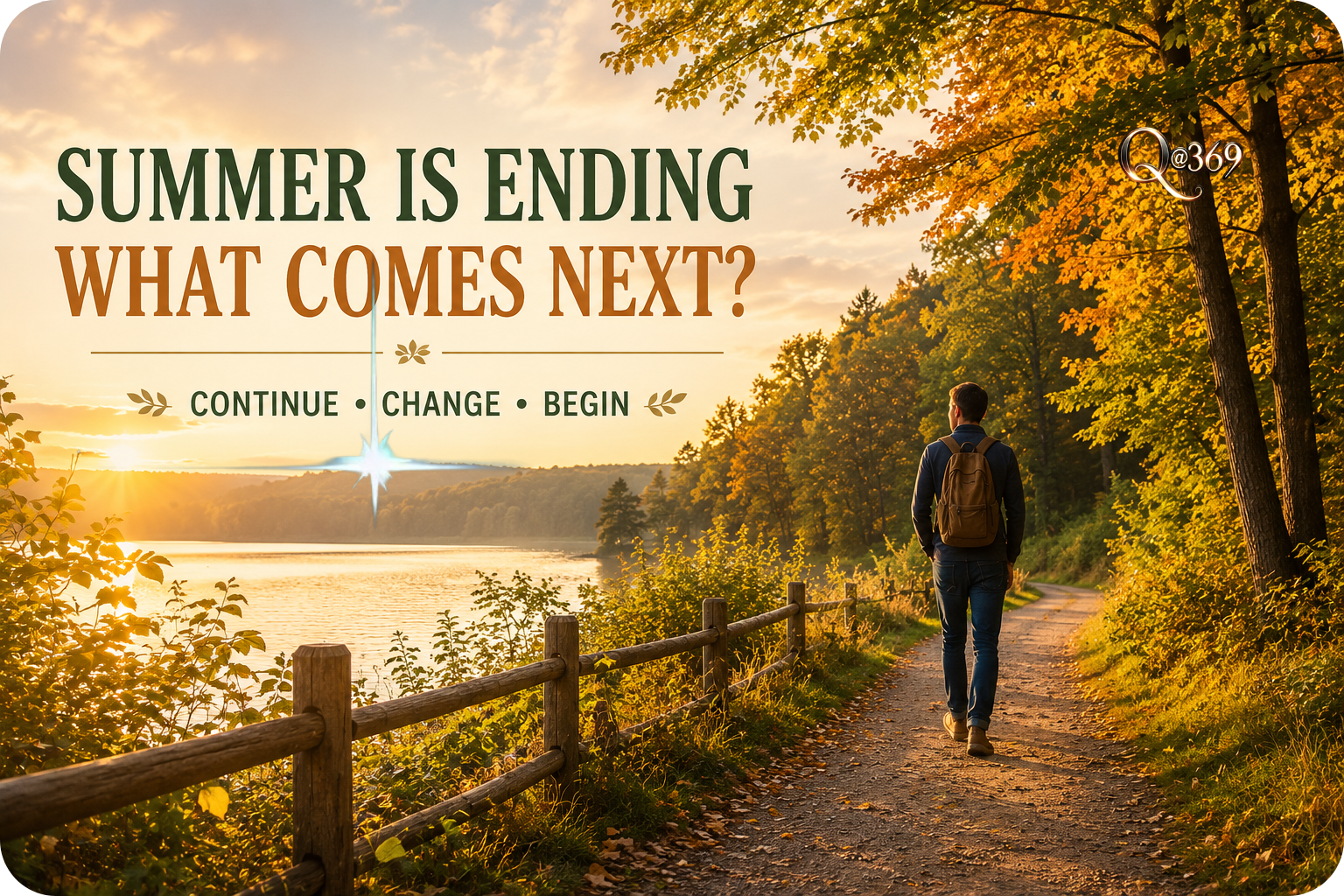
Turning A Seasonal Transition Into A Personal Reset

What if the end of summer could become more than a change on the calendar?
Seasonal transitions provide natural opportunities to notice what has been working, reconsider what has not, and intentionally prepare for summer is ending and what comes next.
In this article, you will explore:
- Why seasonal change can become a useful moment for reflection.
- How nature demonstrates transition without requiring sudden transformation.
- Why a personal reset does not require starting over.
- What summer experiences may be worth continuing.
- What routines or priorities may benefit from change.
- How choosing one new beginning can create direction for autumn.
The practical goal is simple: choose what you want to continue, what you want to change, and what you want to begin.
✨ AUDIO: Listen to “What if the end of summer could become more than a change on the calendar?” by Isaac Yue
🎯 Also Available on SPOTIFY
🙏 Join Our Enlightened Community Today!
💞 Share with Friends and Colleagues
Summer Rarely Ends All At Once
September arrives, yet summer does not immediately disappear.
Warm afternoons remain. Trees are still green in many places. Gardens continue producing. People squeeze another weekend from the beach, lake, backyard, or neighborhood park.
Nature rarely follows the sharp boundaries printed on our calendars.
One season gradually gives way to another.
That gradual transition gives us something useful: time to notice change while it is happening.
We Live Through More Transitions Than We Notice
Our lives contain transitions everywhere.
Morning becomes afternoon. Workdays become weekends. Children begin another school year. Projects move from planning toward completion.
Many transitions happen while we remain focused on whatever comes next.
Seasonal change can interrupt that pattern. Cooler mornings, shorter daylight, changing routines, and shifting landscapes remind us that time has moved forward.
The reminder does not need to create sadness.
It can create awareness.
Summer Carries Its Own Rhythm
Summer often encourages activity.
Travel, vacations, family gatherings, outdoor meals, gardening, sports, festivals, and longer evenings can change the rhythm of ordinary life.
Even people who continue working throughout summer may experience subtle differences. Traffic changes, daylight lasts longer, coworkers take vacations, and weekend possibilities expand.
Then September arrives.
Schedules begin tightening again.
A Transition Is Not An Ending
The phrase “summer is ending” can sound final.
Nature presents a different picture. Seasonal change is less about stopping and more about transitioning.
Plants redirect resources. Animals respond to changing daylight and food availability. Landscapes gradually shift according to temperature, rainfall, and latitude.
What appears to us as an ending is also preparation.
That perspective can become useful in our own lives.
You Do Not Need A Complete Reinvention
Personal resets are sometimes presented dramatically.
Start a new diet. Transform your morning routine. Reorganize the house. Begin exercising every day. Learn something new. Become a completely different person by Monday.
That approach can turn reflection into another demanding project.
A seasonal reset can be much smaller.
You are not starting your life again.
You are adjusting its direction.
Begin With What Worked
Reflection often starts with problems.
What went wrong? What did I fail to accomplish? What should I have done differently?
There is another useful place to begin.
What worked well enough that you want to keep it?
Perhaps summer encouraged you to walk after dinner. Maybe you spent more time outdoors, called family more often, read for pleasure, cooked differently, or protected weekends more carefully.
A seasonal transition does not require leaving those things behind.
Continue What Adds Value
Some summer habits deserve to survive summer.
Longer daylight may disappear, yet the evening walk can remain. Vacation may end, yet the habit of exploring unfamiliar places can continue closer to home.
Outdoor meals may become less practical in some climates. The family conversation around the table can remain.
Look beneath the seasonal activity.
Ask what made it valuable.
That is often the part worth carrying forward.
Then Ask What Needs To Change
Not everything from summer needs to continue.
Perhaps routines became inconsistent. Spending increased. Sleep schedules drifted. Exercise disappeared during travel.
None of these observations requires self criticism.
They are information.
A useful seasonal reset examines current conditions without turning every imperfection into a personal failure.
Ask what one adjustment would make autumn work better.
Nature Changes Through Conditions
Seasonal change offers an important reminder.
Nature responds to conditions.
Daylight changes. Temperatures shift. Rainfall patterns change. Plants and animals respond according to their biology and environment.
Human routines also exist within conditions.
A schedule that worked during summer may become impractical when school, work, daylight, or family obligations change.
Adapting the routine is not failure.
It is adjustment.
Preparation Can Reduce Friction
Transitions become easier when we prepare for them.
A few practical changes can make a noticeable difference. Clothing changes location. Outdoor equipment gets stored. Calendars become more structured.
Meals may change too.
Even small environmental preparations can reduce repeated decisions later.
The objective is not perfect organization. It is making the next season easier to enter.
Autumn Can Change How We Use Daylight
For much of the Northern Hemisphere, daylight continues decreasing as autumn approaches.
That change can influence when people exercise, socialize, commute, garden, or spend time outdoors.
A summer evening activity may need to move earlier. A morning routine may need additional light or preparation.
Recognizing environmental change allows routines to change intentionally.
Otherwise, useful habits can quietly disappear when their original conditions disappear.
Your Personal Season May Be Different
Calendar seasons do not affect everyone equally.
Someone living in Florida experiences September differently from someone living in Minnesota. People in the Southern Hemisphere are moving toward spring rather than autumn.
Life circumstances create personal seasons too.
A new job, retirement, school year, relationship, move, family responsibility, or creative project can create a transition independent of weather.
The deeper principle remains useful.
Notice what is changing, then respond intentionally.
Continue, Change, Begin
A simple three part framework can turn seasonal reflection into practical action.
CONTINUE
What is already working?
Choose something that deserves to remain part of your life.
CHANGE
What routine, expectation, or habit no longer fits current conditions?
Choose one reasonable adjustment.
BEGIN
What would you enjoy introducing during the coming season?
Choose something small enough to actually begin.
These three decisions create direction without requiring complete reinvention.
Do Not Turn The Reset Into Another Burden
There is an interesting risk in personal improvement.
We can create so many goals that improving life makes life more difficult.
Ten new habits rarely create a gentle reset.
They create another responsibility list.
Choose fewer things.
Give them room to become part of ordinary life.
Let The Environment Help
Behavior becomes easier when the environment supports it.
If you want to continue walking, place comfortable shoes where you will see them. If you want to read more, leave a book somewhere convenient.
If you want quieter evenings, decide where the phone will stay during dinner.
Preparation turns intention into something visible.
Small environmental changes can reduce the effort required to remember what you intended to do.
Isaac Yue Reflection

Living in Florida changes the way I experience the end of summer.
September does not suddenly bring cold mornings and brilliantly colored forests. The afternoon can still feel very much like summer, and outdoor life continues throughout much of the year.
I still notice transitions.
The angle of sunlight changes. Daylight gradually shortens. Familiar routines begin shifting as families return to school schedules and summer travel slows.
My own life has contained larger seasonal changes too. Moving from years of sustained aerospace engineering work toward more time for writing, QuantumAlchemist369, cooking, and other interests changed the rhythm of my days.
I did not need to abandon everything that came before.
Some experiences deserved to continue. Some routines needed to change. Other possibilities finally had room to begin.
That is what I appreciate about seasonal transitions.
They remind me that moving forward does not always require starting over.
Sometimes we simply decide what travels with us into the next season.
Take A Short Seasonal Walk
Find ten or fifteen minutes this weekend and go outside.
Walk through your neighborhood, a park, garden, beach, trail, or another familiar place.
Do not make the walk another productivity exercise.
Simply notice what is changing.
Look at the light, plants, temperature, sky, animals, and activity around you.
Then notice what is changing in your own life.
Ask Three Questions
When you return, write down three short answers.
What do I want to continue?
Choose something from summer that improved your days.
What do I want to change?
Choose one routine or expectation that no longer serves you well.
What do I want to begin?
Choose one realistic possibility for the coming season.
Three answers are enough.
Give The New Season Some Space
Not every transition needs an immediate answer.
Some possibilities become clearer after routines settle and conditions change.
Allow yourself to observe.
You can adjust again later.
A personal reset is not a contract with your future self. It is a thoughtful decision about the direction you want to move next.
Conclusion
Summer ending does not require a dramatic farewell.
It can simply become a useful marker.
Look back long enough to notice what gave the season value. Look at your present routines closely enough to recognize what needs adjustment.
Then look forward with curiosity.
Continue what works. Change what no longer fits. Begin something worth exploring.
The next season does not require a new version of you.
It only asks what you want to carry forward.
Reflection Question
What from this summer deserves to travel with you into the next season?
Practical Action
Take a short seasonal walk this weekend.
When you return, write three decisions:
CONTINUE: One thing worth keeping.
CHANGE: One thing worth adjusting.
BEGIN: One thing worth starting.
Keep the list somewhere visible during the first few weeks of the new season.

References
- Wood, Tam & Witt, 2005, Changing Circumstances, Disrupting Habits Research found that changes in familiar circumstances can disrupt established habits. This supports using transitions as opportunities to reconsider routines and make more intentional choices. (PubMed) PubMed: Changing Circumstances, Disrupting Habits
- Stawarz et al., 2020, Contextual Cues And New Routines Researchers found that environmental cues can help people remember and establish new routine behaviors. Visible, convenient cues can reduce effort when introducing a new habit. (PubMed) PubMed: Contextual Cues And Routine Behavior
- Shuda, Bougoulias & Kass, 2020, Nature Exposure And Stress This systematic review examined 12 studies of nature exposure and stress. Most included studies measuring perceived or physiological stress reported lower stress associated with greater nature exposure. (PubMed) PubMed: Nature Exposure And Stress Review
See more of QuantumAlchemist369™ selected self-empowerment knowledge selections on the Book Shelf
Interactive Live Meetups
Thursday 7PM EDT Live Q&A with Isaac Yue
Join the Live Meetup Community discussion.
2026 Community Feedback Now Open
You are invited to help build QuantumAlchemist369. Take a few minutes to complete the Quantumarian Community Review 2026.
“Quantum Alchemy: The Convergence of Science, Spirit, and Enlightenment”
Second Edition – Refined & Expanded


Leave a Reply