
What effects ripple through a community by a simple act of environmental stewardship?
Most people encounter litter during an ordinary day. Some assume it is someone else’s responsibility, while others quietly bend down, pick it up, and continue walking without expecting recognition. That small decision may seem insignificant, yet it reveals something important about personal character, environmental stewardship, and civic responsibility.
Today we will explore how simple acts of environmental stewardship strengthen neighborhoods, inspire others, and create healthier communities. Through the story of Aylin, we will discover why caring for shared spaces begins with one thoughtful choice.
In This Article
- Why stewardship begins with personal responsibility
- The science behind prosocial behavior
- How small actions influence entire communities
- Aylin Picked Up One Bottle
- Practical ways to become a better community steward
Every Community Reflects Its Citizens
Every community reflects the daily choices of the people who live there. Beautiful parks, clean sidewalks, colorful gardens, and welcoming public spaces rarely happen by accident. They are usually the result of thousands of ordinary people making thoughtful decisions that gradually shape the places where everyone lives.
Some contributions are large enough to receive public recognition, such as organizing a neighborhood cleanup or planting trees throughout a local park. Most, however, are much quieter. Holding a door, returning a shopping cart, helping a neighbor, or picking up a discarded bottle rarely makes the news, yet these simple actions become the foundation of a healthy community.
Communities are not built only through major projects. They are built through consistent habits repeated by ordinary people who choose to care.
Stewardship Is More Than Ownership
Many people naturally feel responsible for what belongs to them. They maintain their homes, mow their lawns, clean their vehicles, and care for their personal property because ownership creates a sense of obligation.
Stewardship expands that responsibility beyond personal possessions. Instead of asking, “Who owns this?” stewardship asks, “How can I leave this place better than I found it?” That subtle shift changes the way we view sidewalks, parks, beaches, trails, and every shared space within our community.
When individuals care for places that everyone enjoys, everyone benefits. A cleaner environment encourages outdoor activity, strengthens neighborhood pride, and reminds us that public spaces are an extension of the community itself.
What Science Says About Small Acts
Behavioral scientists have long studied how people influence one another through observation. Research shows that individuals are more likely to repeat positive behaviors after watching someone else perform them. This process, often called social modeling, helps explain how acts of kindness and responsibility quietly spread throughout a community.
Environmental psychology has reached similar conclusions. Clean, well maintained public spaces encourage greater respect for the environment, while neglected spaces often invite additional neglect. People naturally respond to the conditions they see around them, making every positive action part of a larger pattern that influences others.
One thoughtful decision may appear small in the moment. Its greatest impact often comes from the example it quietly provides.
Aylin Picked Up One Bottle

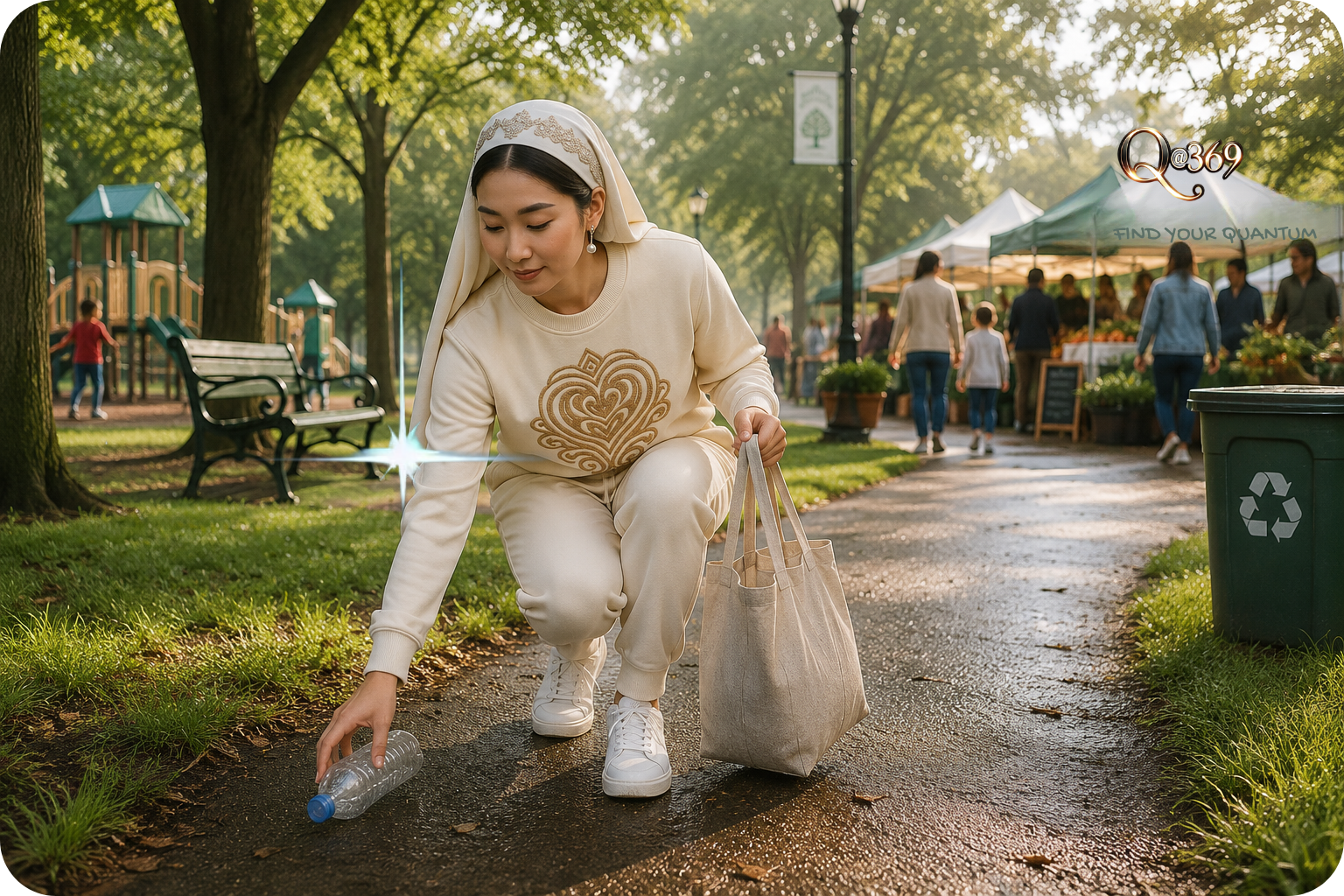
Early one Saturday morning, Aylin walked through her neighborhood park on her way to the local farmers market. The air felt fresh after a gentle overnight rain, birds moved between the trees, and children laughed from a nearby playground. It was one of those peaceful mornings that reminded her why she enjoyed living in her community.
As she followed the walking path, she noticed an empty plastic bottle resting beside a park bench. Several people walked past it without stopping. Some glanced toward it before continuing on, while others never seemed to notice it at all.
Without hesitation, Aylin quietly picked up the bottle and carried it a few steps to a nearby recycling container. She did not look around to see whether anyone had noticed. To her, it was simply the right thing to do.
A few minutes later, a young boy walking with his father spotted another piece of litter lying near the path. After watching what Aylin had done, he picked it up himself and placed it into the same recycling bin.
His father smiled warmly.
“I saw what that lady did,” the boy said. “I thought I should help too.”
Aylin never heard those words. She never realized that her simple decision had inspired another person.
Sometimes the greatest influence we have comes through actions we never witness.
The Ripple Effect Begins With One Decision
It is easy to underestimate the influence of a single thoughtful action. Picking up one discarded bottle may seem too small to matter, especially when there are countless others that remain. Yet communities rarely improve because of one dramatic event. They improve because ordinary people repeatedly choose to do small things that benefit everyone.
Imagine walking through a neighborhood park on a sunny afternoon. One person stops to remove a piece of litter. Another notices and decides to pick up a candy wrapper a few steps later. A volunteer group organizes a cleanup the following weekend, and before long families begin spending more time enjoying a cleaner, more welcoming park. One bottle did not transform the community by itself. It simply became the first ripple that encouraged others to care.
Scientists studying social behavior often describe this as a ripple effect. Positive actions can spread through observation, gradually becoming accepted community norms that encourage more people to participate. Small decisions, repeated consistently, often produce results far greater than anyone expected.
Caring For Nature Benefits Everyone
Environmental stewardship is about much more than appearance. Every discarded bottle, plastic bag, or food wrapper has the potential to travel through storm drains into streams, rivers, lakes, and eventually the oceans. Along the way, wildlife may mistake litter for food, while broken glass and sharp metal can create unnecessary hazards for both animals and people.
Many common materials remain in the environment for years before breaking down naturally. Plastic bottles, in particular, can persist for centuries as they slowly fragment into smaller pieces known as microplastics. Removing even one item before it reaches a waterway helps reduce pollution while protecting habitats that countless living creatures depend upon.
The effort requires only a few moments. The environmental benefit may continue long after we have forgotten performing the act itself.
Responsibility Is Contagious
Human beings naturally learn by watching one another. Children observe their parents. Neighbors notice how others maintain their homes. Coworkers pay attention to the habits and attitudes of those around them. Much of what we consider normal behavior develops through simple observation rather than formal instruction.
Researchers have found that visible acts of civic responsibility encourage others to behave in similar ways. When people regularly see neighbors planting flowers, returning shopping carts, volunteering, or picking up litter, those behaviors gradually become part of the community’s culture. Positive actions become expected because they are seen often enough to feel normal.
This process rarely happens overnight. Strong communities are built through thousands of small examples that quietly reinforce shared values over time.
Quantum Alchemy And Everyday Stewardship
Quantum Alchemy encourages us to focus on the choices that are within our control rather than becoming discouraged by problems that seem too large to solve. We may never eliminate every piece of litter, restore every damaged ecosystem, or resolve every environmental challenge facing society. We can, however, improve the small part of the world directly in front of us today.
That perspective transforms frustration into purposeful action. Instead of asking whether one person can solve the entire problem, we ask whether one thoughtful decision can make today slightly better than yesterday. The answer is almost always yes.
Meaningful transformation rarely begins with grand gestures. It begins with ordinary people consistently choosing to care.
Communities Reflect Daily Habits
People often describe a town as clean, welcoming, friendly, or neglected. Those impressions are seldom created by government alone. They emerge from the collective habits of thousands of residents whose daily decisions shape the environment everyone shares.
Every flower planted, every sidewalk cleaned, every neighbor greeted, and every bottle recycled contributes another small piece to the character of a community. Over time, these ordinary acts become the culture that visitors notice and future generations inherit.
Communities do not become better because a few people care occasionally. They become better because many people care consistently.
Reflection Question
The next time you notice a piece of litter, what will you do?
Will you assume someone else will take care of it?
Or will you spend a few seconds making your community a little better than you found it?
Small moments often reveal our greatest values because they occur when nobody expects anything from us.
Five Minute Quantumarian Challenge
Choose one small act of stewardship today.
Pick up a piece of litter during your walk.
Recycle something that would normally be thrown away.
Plant a flower or water a tree.
Thank a community volunteer.
Help a neighbor with a simple task.
When you finish, take a moment to notice how that small action changed your perspective. You may discover that improving your community also improves your own sense of purpose.
Science Fact
Environmental psychologists have found that clean, well maintained public spaces encourage greater respect, cooperation, and civic responsibility. Researchers also observe that people are more likely to repeat positive behaviors after seeing others perform them, demonstrating how simple acts of stewardship can spread naturally throughout a community.
Final Takeaway
Communities are rarely transformed by one extraordinary event.
They are shaped by ordinary people making thoughtful decisions every single day. Each act of kindness, responsibility, and environmental care becomes part of a culture that others experience and often choose to continue.
Quantum Alchemy reminds us that meaningful transformation begins with awareness followed by action. We cannot solve every challenge facing our neighborhoods, cities, or planet, but we can improve the small part of the world directly in front of us.
The next time you see a discarded bottle, remember that the decision is about much more than litter.
It is an opportunity to demonstrate the kind of community you hope future generations will inherit.
One thoughtful action may last only a few seconds.
Its influence may continue for years.
Scientific Insight
Environmental stewardship is supported by decades of research in environmental psychology, behavioral science, and sociology. Studies have shown that people are strongly influenced by the condition of their surroundings and by the behavior they observe in others. Clean public spaces encourage respect, cooperation, and civic responsibility, while neglected environments often contribute to additional littering and vandalism.
Researchers describe this phenomenon through concepts such as social modeling and descriptive norms. When individuals observe neighbors picking up litter, volunteering, or maintaining shared spaces, they become more likely to adopt similar behaviors themselves. In this way, one visible act of stewardship can influence many others without direct instruction.
Environmental protection also benefits ecosystems in measurable ways. Removing plastic bottles and other litter before they enter waterways helps reduce pollution, protects wildlife, and limits the formation of microplastics that can remain in the environment for many decades. Although one person cannot solve every environmental problem, consistent individual actions collectively produce significant long term benefits.

References
- Cialdini, R. B., Reno, R. R., & Kallgren, C. A. A Focus Theory Of Normative Conduct.
- Bandura, A. Social Learning Theory.
- Keep America Beautiful. National Litter Study.
- United States Environmental Protection Agency. Reducing Plastic Waste.
- National Park Service. Leave No Trace Principles.
See more of QuantumAlchemist369™ selected self-empowerment knowledge selections on the Book Shelf
The Quantumarian Way

- Clear path to understanding coherence
- Align your daily harmonious life.
- Available in Print, Kindle and Audio
- Read Sample Pages on Amazon
- Learn More
A Kind Request From the Author
Please give us your feedback.
Leave your comments below. We would love to hear your thoughts
More Stewardship
Benefits of Joining Our Community
By joining QuantumAlchemist369™, you will love to stay informed and connected with us and the Quantum Alchemist community. Join us and receive free daily email updates of blogs, events, and useful insights.
Leave a Comment
We would love to hear your thoughts. Please leave a comment and share how this content resonates with your own mindful journey.
Forum Discussion
Join the Quantumarian Forum Community discussion.
Sustain the Alchemy
If the insights here have sparked something within you…We invite you to Sustain the Alchemy
You Will Want to Explore
All the items, books and graphic designs, available in our QuantumAlchemist369 Shop
2026 Community Feedback Now Open
You are invited to help build QuantumAlchemist369. Take a few minutes to complete the Quantumarian Community Review 2026.


Leave a Reply