
Does Your Mind See Problems Before Opportunities?
Have you ever noticed that one criticism can outweigh ten compliments? Or that a small inconvenience can overshadow an otherwise wonderful day? The human brain evolved to notice potential dangers before opportunities, yet awareness gives us the ability to consciously redirect our attention. By understanding negativity bias, we can cultivate gratitude, optimism, and a healthier perspective on everyday life.
The Brain Is Wired For Survival
For thousands of years our ancestors survived because they quickly recognized danger. A hidden predator, a poisonous plant, or an approaching storm required immediate attention. Missing a threat could be fatal, while overlooking an opportunity was usually less costly.
Modern neuroscience calls this negativity bias, the tendency for negative experiences to command more attention than positive ones. Although this instinct once improved survival, it can now cause us to focus excessively on faults, criticism, and worry.
Fortunately, awareness allows us to consciously retrain our attention.
Neurobiology Of Gratitude
Brain imaging studies show that gratitude activates regions associated with positive emotion, empathy, and long term well being. Repeated gratitude practices strengthen neural pathways that make positive observations more accessible over time.
The brain changes according to where attention repeatedly rests.
Finding possibilities becomes easier through practice.
Alma Saw The Missing Piece

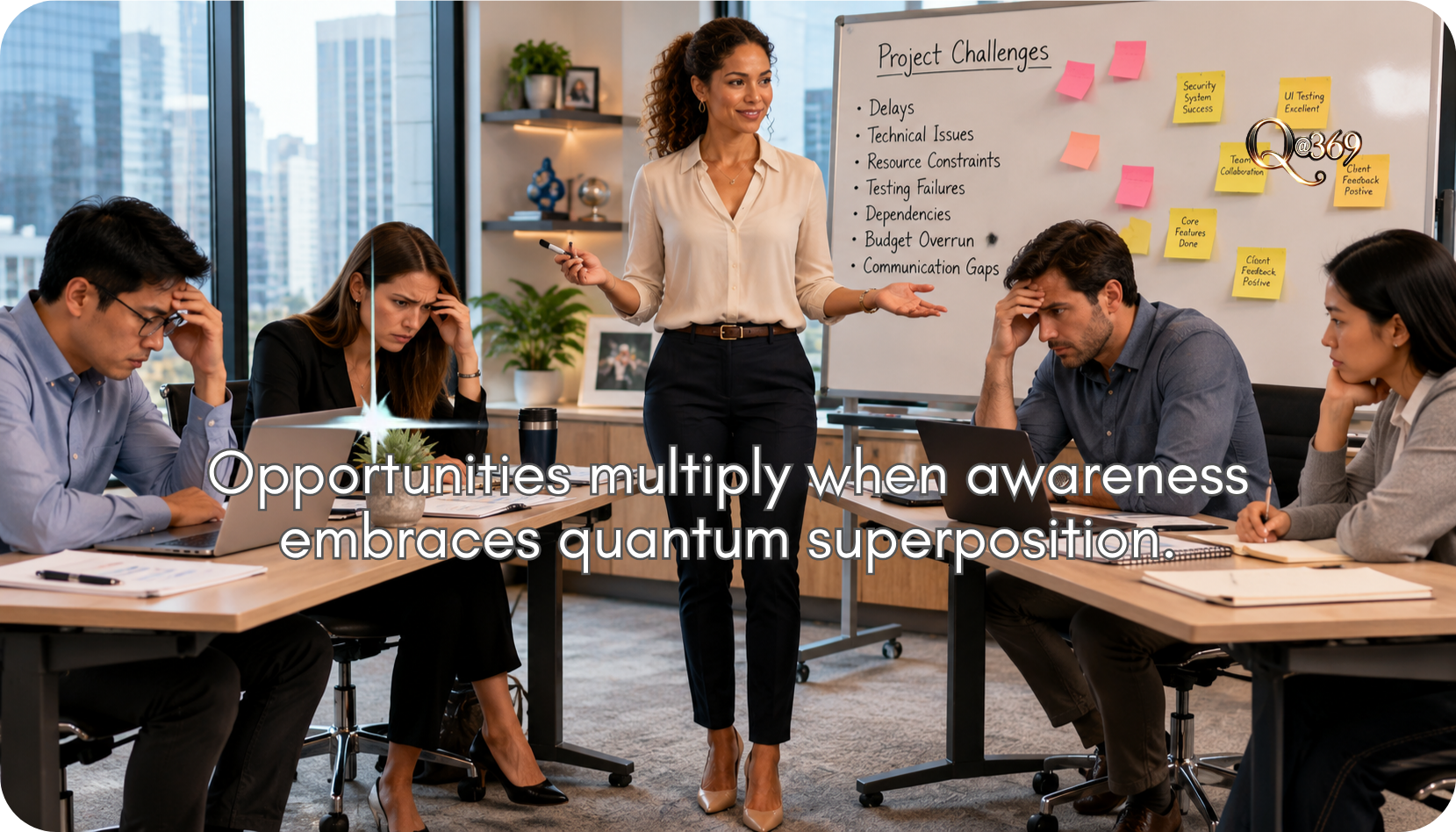
Alma worked as a software engineer leading a project that had fallen behind schedule. During a team meeting the conversation became increasingly negative as everyone listed delays, technical problems, and unexpected obstacles.
For several minutes the room filled with frustration.
Then Alma quietly asked a different question.
“What is working well?”
The room became silent.
One engineer mentioned the software security system had exceeded expectations. Another pointed out the interface testing had been highly successful. Someone else realized several difficult problems had already been solved.
The atmosphere changed.
The obstacles remained, but so did the opportunities.
By changing one question, Alma changed the emotional state of the entire team.
“Opportunities multiply when awareness embraces quantum superposition, for every possibility observed with intention becomes a doorway to transformation.” – Isaac Yue
Awareness Directs Attention
Where attention goes, emotion often follows.
Constantly searching for faults creates stress and discouragement. Intentionally looking for possibilities stimulates creativity and problem solving.
This does not mean ignoring difficulties.
It means recognizing that every challenge usually contains opportunities waiting to be discovered.
Awareness allows us to choose where we direct our mental energy.
Quantum Observation
Quantum Alchemy often explores the power of observation.
In daily life, what we repeatedly observe becomes the reality we reinforce within our minds. Focusing exclusively on problems strengthens stress, while consciously observing gratitude and possibility strengthens optimism and resilience.
Reality contains both.
Awareness determines which becomes our dominant experience.
My Reflection
Engineering taught me to identify problems because solving them improves products and processes. Yet I also learned that innovation rarely appears through criticism alone.
The greatest breakthroughs often begin when someone asks, “What if this could work?”
That simple shift from fault finding to possibility seeking has influenced both my professional career and my personal life.
Awareness does not deny difficulty. It simply remembers that possibility often stands quietly beside every challenge, waiting to be noticed.
Gratitude Is Practical Science
Gratitude is often described as a spiritual practice, but neuroscience shows it is also practical brain training.
The more we intentionally notice kindness, beauty, progress, and opportunity, the easier those observations become.
Possibility grows where awareness chooses to look.
Closing Summary
The human brain naturally notices problems before possibilities, but conscious awareness allows us to choose a different path. By practicing gratitude and intentionally searching for opportunities, we strengthen resilience, creativity, and emotional well being while experiencing life through a more balanced perspective.
Reflection Question:
What opportunity might be hidden inside the challenge you are facing today?
Practical Step:
Before ending your day, write down three positive observations that occurred, no matter how small they seem.
Forward Benefit:
Training your mind to notice possibilities strengthens optimism, improves emotional resilience, and supports healthier relationships and wiser decisions.
Studies show that practicing gratitude for just a few minutes each day increases activity in brain regions associated with positive emotion and long term psychological well being.
Research from the University of California and the Greater Good Science Center has shown that regular gratitude practice improves emotional well being, optimism, and resilience by reinforcing positive neural pathways.

References
- Rick Hanson. Hardwiring Happiness.
- Daniel Kahneman. Thinking Fast and Slow.
- Martin Seligman. Flourish.
- Daniel Siegel. Mindsight.
See more of QuantumAlchemist369™ selected self-empowerment knowledge selections on the Book Shelf
The Quantumarian Way

- Clear path to understanding coherence
- Align your daily harmonious life.
- Available in Print, Kindle and Audio
- Read Sample Pages on Amazon
- Learn More
A Kind Request From the Author
Please give us your feedback.
Leave your comments below. We would love to hear your thoughts
More Opportunities
Benefits of Joining Our Community
By joining QuantumAlchemist369™, you will love to stay informed and connected with us and the Quantum Alchemist community. Join us and receive free daily email updates of blogs, events, and useful insights.
Leave a Comment
We would love to hear your thoughts. Please leave a comment and share how this content resonates with your own mindful journey.
Forum Discussion
Join the Quantumarian Forum Community discussion.
Sustain the Alchemy
If the insights here have sparked something within you…We invite you to Sustain the Alchemy
You Will Want to Explore
All the items, books and graphic designs, available in our QuantumAlchemist369 Shop
Featured Offering on 369 Shop


Leave a Reply