
Why Do Good Intentions Sometimes Create Bad Outcomes?
Have you ever tried to help someone only to have the conversation end in frustration? Most misunderstandings do not begin with bad intentions. They often begin when sincere messages are delivered at the wrong time, in the wrong way, or without fully understanding the other person’s perspective. Throughout life I have learned that communication is not simply about what we say. It is also about how, when, and why we say it.
The Brain Hears More Than Words
Neurobiology shows that communication involves far more than language. The brain continuously evaluates facial expressions, tone of voice, emotional state, and body language.
When someone feels threatened, criticized, or misunderstood, stress responses can activate before logical thinking fully engages. Even helpful advice may be rejected if it arrives wrapped in frustration or judgment.
The message may be positive.
The delivery may not be.
Good Intentions Can Travel Poorly
Most people genuinely want positive outcomes.
Parents want to protect children.
Managers want projects to succeed.
Friends want to offer guidance.
Partners want stronger relationships.
Yet communication sometimes fails because intention and delivery become disconnected.
A well meaning comment delivered during stress can sound like criticism.
Helpful feedback offered publicly may create embarrassment.
Correct information presented without empathy may create resistance.
Intention matters, but communication determines whether that intention arrives successfully.
Aylin Learned To Listen First

Aylin noticed her husband seemed unusually quiet after returning home from work.
Wanting to help, she immediately began offering solutions.
Perhaps he should speak with his manager.
Perhaps he should reorganize his schedule.
Perhaps he should consider a different approach.
The more suggestions she offered, the quieter he became.
Finally Aylin paused.
She gently asked, “Would you like advice, or would you simply like me to listen?”
He smiled for the first time that evening.
“I just needed someone to listen.”
For the next twenty minutes she listened without interruption.
No solutions.
No corrections.
No recommendations.
Only attention.
By the end of the conversation he felt understood and relaxed.
Aylin learned an important lesson.
Sometimes communication succeeds not because of what we say, but because of how well we listen.
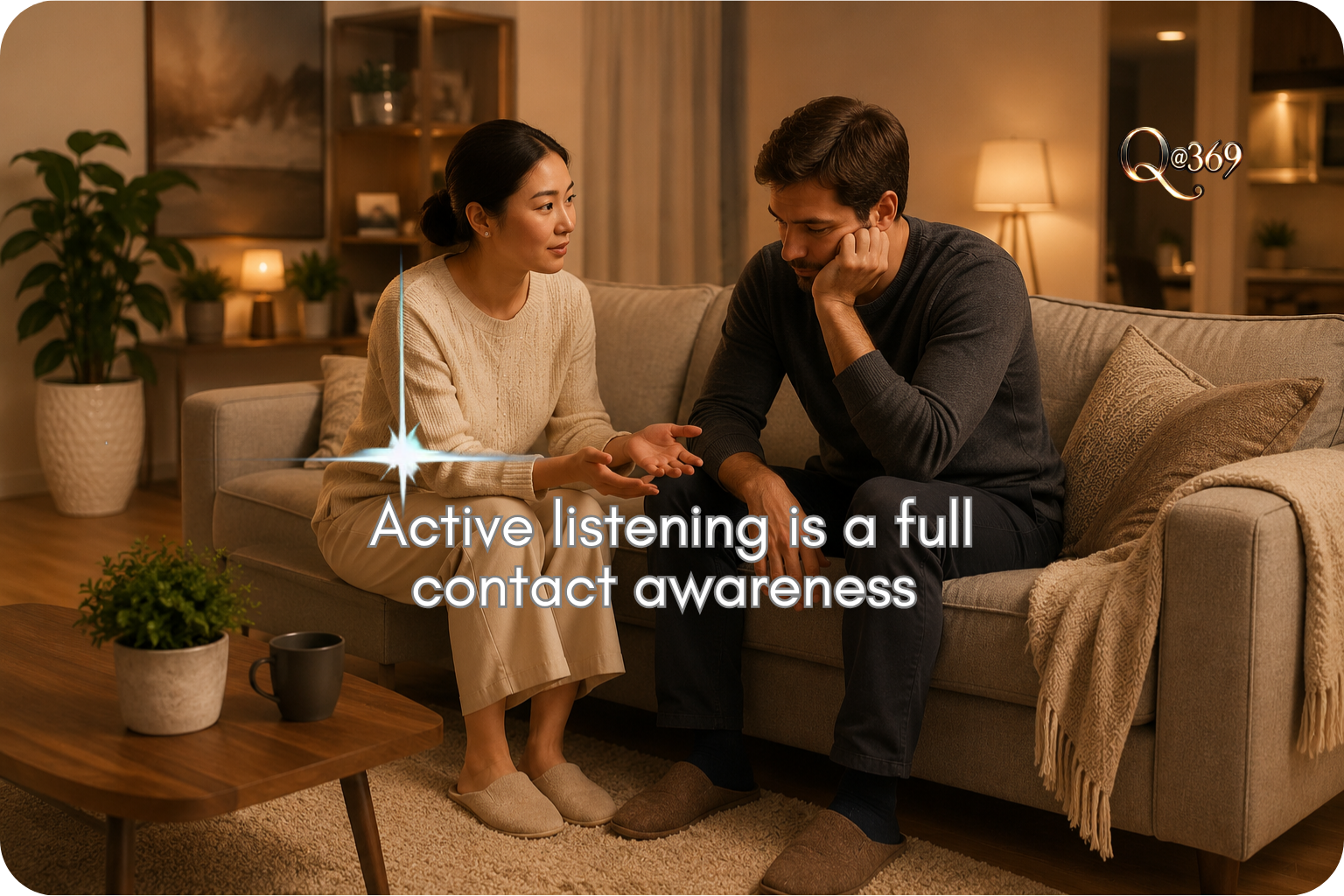
“Active listening is full contact awareness. In that quiet space, misunderstanding fades and human connection begins.” – Isaac Yue
Coherence Creates Better Conversations
Quantumarians often discuss coherence as alignment between thoughts, emotions, and actions.
Communication follows the same principle.
When words, tone, intention, and emotional state align, conversations become clearer and more productive.
People sense authenticity.
Trust increases.
Defensiveness decreases.
Understanding grows.
Coherent communication often creates coherent relationships.
Four Simple Communication Tools
1. Pause Before Responding
- Strong emotions often produce weak communication.
- Take a breath before reacting.
- A brief pause allows the logical brain to reengage.
2. Seek Understanding First
- Ask questions before offering solutions.
- Understanding creates connection.
- Assumptions often create conflict.
3. Match Timing To The Message
- Important conversations deserve appropriate timing.
- Even excellent advice may fail if delivered during stress, exhaustion, or distraction.
4. Listen To Understand
- Many people listen while preparing their response.
- Effective communicators listen to understand the speaker’s experience.
- This simple shift dramatically improves relationships.
My Reflection
Engineering projects depend heavily upon communication.
Design reviews, production meetings, customer discussions, and problem solving sessions all require people to exchange information clearly.
Over the years I discovered that technical knowledge alone rarely solves communication challenges.
Listening, patience, and emotional awareness often determine whether a team reaches alignment.
The same principle applies far beyond engineering. Families, friendships, and communities thrive when communication becomes intentional rather than reactive.
Better Communication Creates Better Outcomes
Most people are trying their best.
Most conflicts begin with misunderstanding rather than malice.
When we slow down, listen carefully, and communicate with awareness, we create opportunities for greater trust and cooperation.
Good intentions remain important.
Intelligent communication allows those intentions to arrive successfully.
Closing Summary
Communication involves much more than words. Emotional state, timing, tone, listening, and intention all influence how messages are received. By developing greater awareness and practicing simple communication skills, we reduce misunderstanding and create stronger relationships built upon trust and coherence.
Reflection Question:
When was the last time someone truly listened to you without interrupting or offering immediate solutions?
Practical Step:
During your next important conversation, spend twice as much time listening as speaking.
Forward Benefit:
Better communication strengthens trust, improves relationships, reduces conflict, and creates more harmonious interactions.
Research consistently shows that active listening improves relationship satisfaction, workplace collaboration, and conflict resolution by increasing understanding and reducing defensive responses.

References
- Covey S. The 7 Habits of Highly Effective People.
- Goleman D. Emotional Intelligence.
- Gottman J. The Seven Principles for Making Marriage Work.
- Kahneman D. Thinking, Fast and Slow.
See more of QuantumAlchemist369™ selected self-empowerment knowledge selections on the Book Shelf
Quantum Pathways: A Journey to Alchemical Magic

- Explore the depths of consciousness, intention, and emotional resilience
- Learn how to appling Alchemy enriches life
- Read Sample Pages on Amazon
- Follow the Link to Learn More
A Kind Request From the Author
Please give us your feedback.
Leave your comments below. We would love to hear your thoughts
More Intentions
Benefits of Joining Our Community
By joining QuantumAlchemist369™, you will love to stay informed and connected with us and the Quantum Alchemist community. Join us and receive free daily email updates of blogs, events, and useful insights.
Leave a Comment
We would love to hear your thoughts. Please leave a comment and share how this content resonates with your own mindful journey.
Forum Discussion
Join the Quantumarian Forum Community discussion.
Sustain the Alchemy
If the insights here have sparked something within you…We invite you to Sustain the Alchemy
You Will Want to Explore
All the items, books and graphic designs, available in our QuantumAlchemist369 Shop
Featured Offering on 369 Shop


Leave a Reply