
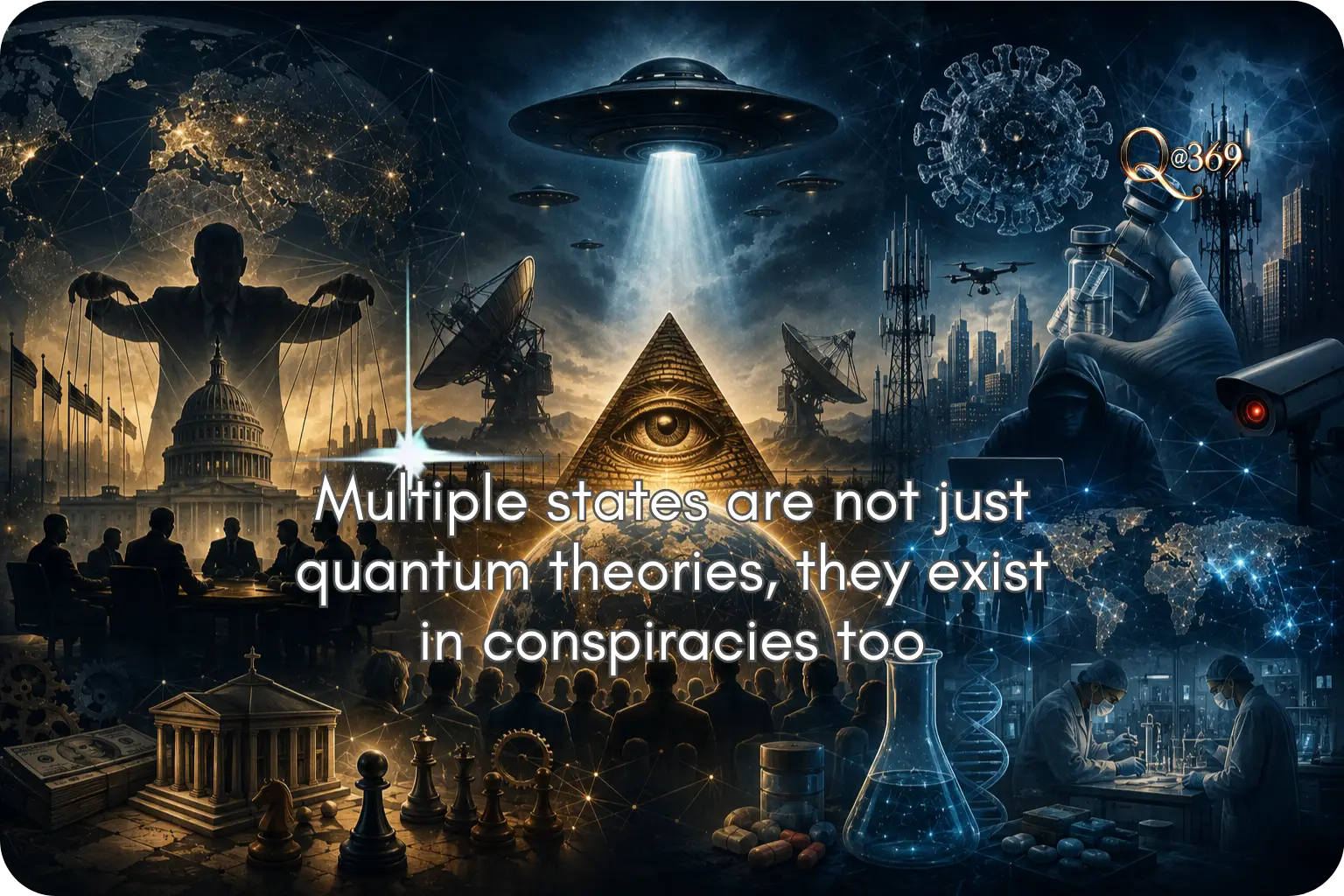
Why are we attracted to conspiracy theories?
Human psychology naturally searches for meaning, certainty, and explanation during uncertain situations.
Fear, curiosity, emotional tension, and pattern recognition strongly influence interpretation, belief and rise of conspiracy theories.
You will learn how uncertainty, social influence, and emotional perception contribute to fascination with conspiracy theories and hidden narratives.
The Human Need For Explanation
Human beings naturally seek understanding and predictability.
People often feel emotionally uncomfortable when events appear confusing or uncertain.
The brain searches for explanations to reduce emotional tension and uncertainty.
Simple explanations often feel emotionally satisfying during stressful situations.
People prefer meaning over confusion.
The Most Widespread Conspiracy Theories Across Modern Cultures
Across many cultures and countries, these are among the most widespread and persistent conspiracy theories today:
- Global Elite Control Theories
Claims that secret groups, wealthy elites, governments, or corporations secretly control world events, economics, media, or political systems.
Different cultures adapt this idea to local fears, history, and political tension. - UFO And Extraterrestrial Cover Up Theories
Beliefs that governments hide evidence of extraterrestrial life, advanced technology, or unexplained aerial phenomena.
This fascination appears globally because mystery, space, and secrecy strongly attract human curiosity. - Health And Technology Conspiracy Theories
Claims involving hidden dangers or secret agendas connected to vaccines, artificial intelligence, 5G technology, food systems, or pharmaceutical companies.
These theories often spread rapidly during periods of uncertainty, rapid technological change, or public health concern.
From a psychological perspective, conspiracy theories often grow strongest during periods of fear, uncertainty, social division, or rapid societal change.
They provide emotionally satisfying explanations for complex situations, even when evidence remains weak or incomplete.
Fear And Uncertainty Influence Perception
Fear strongly affects emotional interpretation and decision making.
Uncertainty increases emotional discomfort and psychological stress.
People often become more emotionally reactive during uncertain periods.
This can increase vulnerability to assumption and speculation.
Emotional tension influences interpretation and belief.
Pattern Recognition And Human Psychology
The human brain constantly searches for patterns and connections.
Pattern recognition helped human survival throughout evolutionary history.
People naturally connect unrelated information when searching for explanation.
Sometimes these perceived connections are accurate.
Sometimes they are emotional assumptions.
Pattern recognition influences interpretation and belief formation.
Curiosity And Hidden Narratives
Humans are naturally curious about mystery and secrecy.
Hidden explanations often feel emotionally compelling and dramatic.
People are attracted toward stories involving secrecy, control, or hidden knowledge.
Mystery stimulates emotional engagement and imagination.
Curiosity influences attention and emotional focus.
Social Amplification And Information Sharing
Modern communication rapidly spreads emotional information and speculation.
Social media increases visibility of dramatic and emotionally charged narratives.
People often share information emotionally before critically evaluating accuracy.
Emotion spreads faster than careful analysis.
Repeated exposure increases emotional familiarity and perceived credibility.
Isaac Yue Reflection On Awareness And Critical Thinking

I believe curiosity itself is healthy and valuable.
Questioning and exploration often lead toward discovery and understanding.
However, emotional reaction should never replace thoughtful analysis and balanced awareness.
Curiosity benefits from evidence, reflection, and emotional balance.
People sometimes accept explanations simply because they emotionally resonate with existing fear or frustration.
Awareness helps reduce emotional overreaction and assumption.
Balanced critical thinking encourages curiosity without abandoning reason or evidence.
Healthy awareness protects emotional stability and thoughtful interpretation.
“Multiple states exist within both quantum theory and conspiracy, where uncertainty, perception, and observation influence believed reality.” – Isaac Yue
Why People Seek Hidden Explanations
Hidden explanations often provide emotional certainty during confusing situations.
People sometimes feel comforted by believing events follow intentional hidden plans.
Randomness and uncertainty can feel emotionally uncomfortable or threatening.
Conspiracy theories sometimes simplify emotionally complex situations into understandable narratives.
Emotional comfort influences belief formation.
The Quantumarian Perspective On Awareness
Quantumarian principles encourage awareness, curiosity, emotional balance, and thoughtful reflection.
Open minded inquiry should remain balanced with evidence and honesty.
People benefit from questioning information thoughtfully without emotional extremism.
Awareness strengthens emotional regulation and balanced interpretation.
Critical thinking improves emotional clarity and understanding.
Curiosity Without Fear Or Extremism
Healthy curiosity encourages learning and thoughtful exploration.
Fear driven interpretation often reduces emotional balance and objectivity.
People benefit from remaining curious while respecting evidence and rational analysis.
Awareness improves emotional stability during uncertainty and social confusion.
Balance strengthens understanding.
Conclusion Awareness Strengthens Understanding
You learned how fear, uncertainty, curiosity, pattern recognition, and social influence contribute to fascination with conspiracy theories.
You also saw how awareness and critical thinking improve emotional balance and interpretation.
What influences the information and explanations you choose to trust most strongly?
Curiosity and awareness work best together when balanced through thoughtful reflection and evidence.
Healthy critical thinking strengthens emotional clarity and understanding.
Research shows emotionally balanced critical thinking improves decision making accuracy and reduces susceptibility to misinformation and emotional manipulation.
Statistic Source
American Psychological Association
References
- Kahneman, D. Thinking Fast and Slow. Farrar Straus and Giroux.
- Goleman, D. Emotional Intelligence. Bantam Books.
- Shermer, M. The Believing Brain. Times Books.
- Sagan, C. The Demon Haunted World. Ballantine Books.
See more of QuantumAlchemist369™ selected self-empowerment knowledge selections on the Book Shelf
“The Quantumarian Way”

“The Quantumarian Way” offers a clear and grounded approach to understanding coherence and how it shapes a harmonious life. This book is for those seeking clarity without complexity, and harmony in daily life. Available in Print, Kindle and Audio
- Read Sample Pages on Amazon
- Learn More
A Kind Request From the Author
Please give us your feedback.
Leave your comments below. We would love to hear your thoughts
More Conspiracy Theories
Benefits of Joining Our Community
By joining QuantumAlchemist369™, you will love to stay informed and connected with us and the Quantum Alchemist community. Join us and receive free daily email updates of blogs, events, and useful insights.
Leave a Comment
We would love to hear your thoughts. Please leave a comment and share how this content resonates with your own mindful journey.
Forum Discussion
Join the Quantumarian Forum Community discussion.
Sustain the Alchemy
If the insights here have sparked something within you…We invite you to Sustain the Alchemy
You Will Want to Explore
All the items, books and graphic designs, available in our QuantumAlchemist369 Shop
Featured Offering in 369 Shop

Find Your Quantum Sling Bag — Inspirational Minimalist Crossbody Bag


Leave a Reply