
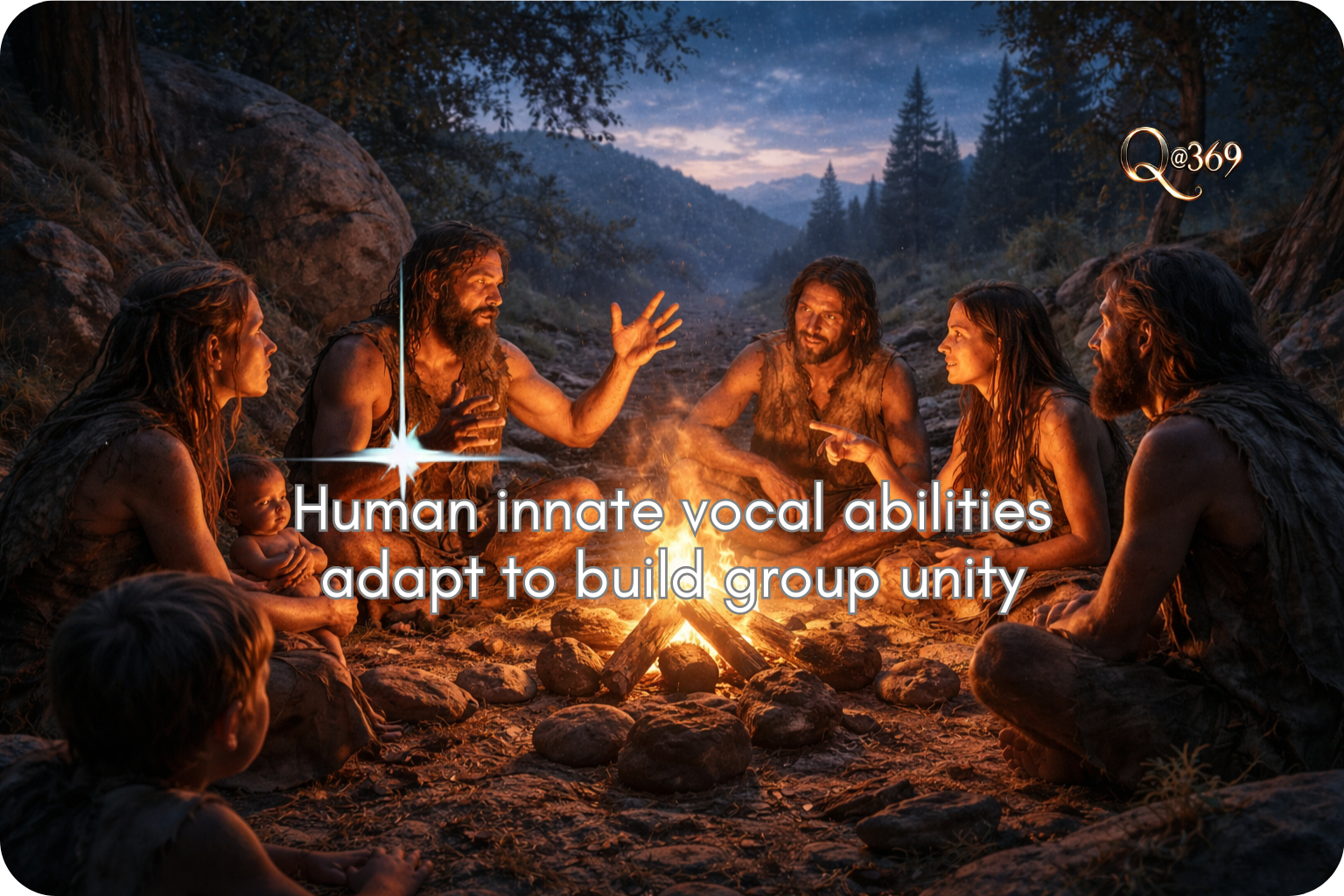
How did early distinct languages develop for each cultural group?
Anthropology shows that language diversity emerged naturally as communities formed separate identities.
Small tribal groups adapted communication to their environment, culture, and shared experiences.
While studying early human anthropology I became fascinated by how communication shaped identity and cooperation.
Exploring the origins of language reveals how speech helped humans build social connection and cultural continuity.
Early Communication Among Human Groups
Early humans depended on communication for cooperation and survival.
Hunter gatherer groups coordinated hunting, food sharing, and protection through vocal signals and gestures.
Over time repeated sounds developed into recognizable patterns that conveyed meaning.
Anthropologists believe these patterns gradually evolved into early spoken language.
Practical application. Communication systems grow stronger through shared experience and consistent interaction.
Small Groups And Language Formation
Most early human communities consisted of relatively small groups.
Anthropological estimates often place group size near one hundred individuals.
Within each group members interacted daily and developed shared communication habits.
Over generations these patterns evolved into unique speech styles and dialects.
Practical application. Close communities naturally develop distinctive ways of expressing ideas.
Geography And Language Diversity
Geographic separation strongly influenced language development.
Mountains, forests, and rivers separated communities for long periods.
When groups remained isolated, their communication patterns changed independently.
Linguists believe this process contributed to the formation of thousands of languages.
Practical application. Isolation encourages cultural creativity and linguistic innovation.
Language As Social Identity
Language served more than practical communication.
Speech patterns also identified membership within a community.
Shared vocabulary and pronunciation helped individuals recognize trusted group members.
Anthropologists call this linguistic identity.
Practical application. Communication style still influences how people form social bonds today.
The Evolution Of Dialects
Even within larger societies dialect differences appear naturally.
Small variations in pronunciation or vocabulary accumulate over generations.
Eventually these differences can become distinct languages.
Linguists observe this process continuing even in modern societies.
Practical application. Language evolves continuously through everyday use.
Anthropology Of Human Communication
Modern research in anthropology and linguistics continues studying the origins of language.
Fossil evidence suggests early humans possessed vocal structures capable of complex speech.
Archaeological discoveries also reveal symbolic art and cultural expression connected to communication.
Together these findings support the idea that language evolved gradually within early communities.
Practical application. Human creativity and cooperation depend strongly on communication systems.

“Human voices formed the first bridges of cooperation. When people learned to shape sound together, they learned to live together.” – Isaac Yue
Will Human Languages Eventually Become One
Across prehistoric time thousands of languages formed as small communities lived in geographic isolation. Each group developed its own vocabulary, pronunciation, and storytelling traditions. Language diversity expanded because human populations were scattered and communication between groups remained limited.
History Gradually Changed This Pattern.
Conquest often replaced local languages with the language of political power. The expansion of Latin across Europe during the Roman Empire and the spread of Arabic across North Africa provide clear historical examples. Later, colonial expansion spread Spanish, Portuguese, English, and French across multiple continents.
Commerce Also Reshaped Language Patterns.
Trade networks require efficient communication. Merchants, travelers, and diplomats often adopted a common language to reduce misunderstanding. Over centuries these trade languages grew into regional or global communication systems.
Modern Technology Accelerates This Trend.
Global media, the internet, aviation, and international business increasingly favor a small number of widely used languages. Linguists estimate that more than seven thousand languages exist today, yet many are spoken by small populations and may disappear within the next century.
Could Humanity Eventually Share One Universal Language?
Some linguists consider this possible, but the timeline remains uncertain. Cultural identity strongly protects language diversity. Communities often preserve language as an expression of heritage and belonging.
For that reason most researchers believe the future will involve fewer dominant languages rather than a single global language.
A small group of widely used languages may continue expanding for international communication while local languages persist within cultural communities.
Projecting a Date for a Universal Language Remains Impossible.
Language evolution depends on politics, migration, education, technology, and cultural values. These forces change constantly across history.
The more realistic outcome may be a world where one or two global languages support international communication while regional languages preserve cultural identity.
In that sense language diversity may narrow but not completely disappear.
Reflection Question
If humanity eventually shares a common language for communication, how might we preserve the cultural wisdom embedded within the many languages that shaped human history?
Isaac Yue Reflection
Anthropology reveals that language diversity reflects human creativity and adaptation.
Early communities developed speech patterns that strengthened identity and cooperation.
Rather than one universal language emerging first, communication evolved in many places simultaneously.
This diversity reminds us that human culture grows through interaction and shared experience.
Conclusion
Language diversity developed naturally as early human groups formed communities and identities.
Geographic separation and social interaction created thousands of unique communication systems.
Anthropology continues uncovering evidence explaining how speech evolved across cultures.
What might modern society learn from the communication creativity of early humans?
Forward benefit. Appreciating language diversity encourages greater respect for cultural identity and human cooperation.
Linguists estimate that more than seven thousand languages exist worldwide today according to Ethnologue Global Language Database.
References
- Everett Daniel, Language The Cultural Tool, Pantheon Books, 2012
- Pinker Steven, The Language Instinct, William Morrow, 1994
- Crystal David, The Cambridge Encyclopedia Of Language, Cambridge University Press, 2010
- Harari Yuval Noah, Sapiens A Brief History Of Humankind, Harper, 2015
- Ethnologue Global Language Database, Languages Of The World Report, 2023
The Quantumarian Way

- Clear path to understanding coherence
- Align your daily harmonious life.
- Available in Print, Kindle and Audio
- Read Sample Pages on Amazon
- Learn More
Please give us your feedback.
Leave your comments below. We would love to hear your thoughts
More Origins Of Language
Benefits of Joining Our Community
By joining QuantumAlchemist369™, you will love to stay informed and connected with us and the Quantum Alchemist community. Join us and receive free daily email updates of blogs, events, and useful insights.
Leave a Comment
We would love to hear your thoughts. Please leave a comment and share how this content resonates with your own mindful journey.
Forum Discussion
Join the Quantumarian Forum Community discussion.
Sustain the Alchemy
If the insights here have sparked something within you…We invite you to Sustain the Alchemy
You Will Want to Explore
All the items, books and graphic designs, available in our QuantumAlchemist369 Shop
Contact Us
For more information, and to contact Isaac Yue, visit our Contact Page.


Leave a Reply