
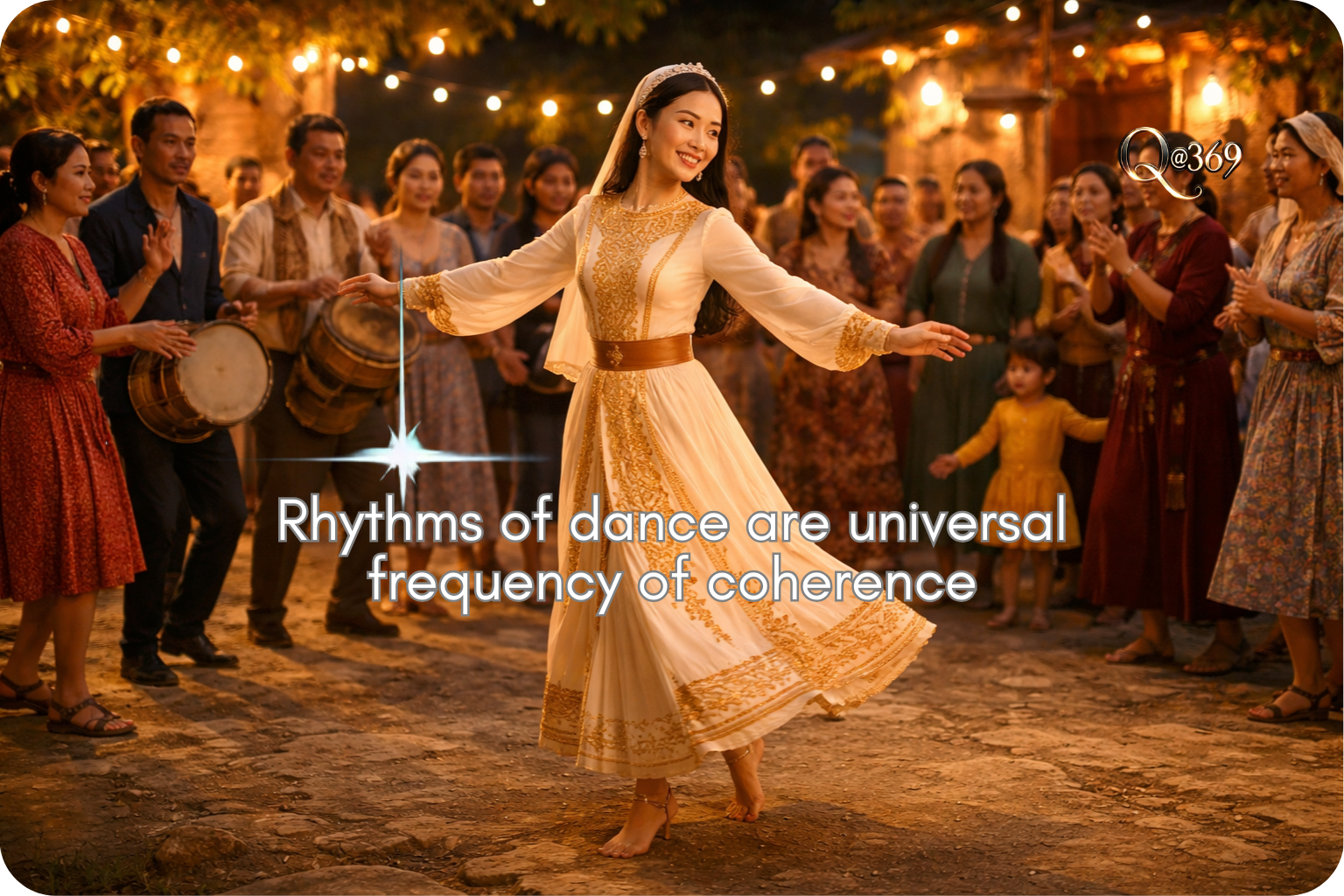
Why do the world cultures dance during celebrations?
Shared movement and rhythm activate powerful neurological and emotional responses that strengthen social bonds.
Understanding the science and tradition behind cultural dance reveals how movement builds community identity and belonging.
Anthropology Of Cultural Dance
Anthropologists observe that nearly every human culture developed communal dance traditions.
From village harvest festivals to ceremonial gatherings, dance often appears during moments of celebration and reflection.
These traditions strengthen shared identity within communities.
Movement, music, and participation reinforce belonging across generations.
Practical application. Cultural dance preserves traditions while strengthening social relationships.
Synchronization And Human Connection
When people move together in rhythm, their bodies begin to synchronize.
Studies show synchronized movement increases feelings of trust and cooperation.
This process activates neurological systems that support social bonding.
Participants often experience a stronger sense of unity with the group.
Practical application. Shared rhythmic activities encourage cooperation and emotional connection.
Music Rhythm And Neurological Entrainment
Rhythm influences the human brain in remarkable ways.
Neuroscientists explain that musical rhythm can synchronize brain wave patterns across participants.
This process is called neurological entrainment.
It helps individuals coordinate movement, emotion, and attention.
Practical application. Music and rhythm encourage group participation and emotional harmony.
Movement And Emotional Expression
Dance also provides a natural form of emotional expression.
Participants communicate joy, celebration, and cultural pride through movement.
Collective dancing reduces social barriers and encourages interaction between generations.
Communities often experience stronger cohesion after shared celebrations.
Practical application. Movement allows people to express emotions that words cannot easily convey.
Aylin Community Celebration

Aylin arrived at the village celebration as music echoed through the evening air.
Neighbors gathered in a circle while musicians played traditional rhythms.
Children laughed while elders demonstrated familiar dance steps.
Aylin joined the circle and followed the movement of the group.
Soon everyone moved together in synchronized rhythm and shared celebration.
The dance transformed strangers into friends and strengthened community spirit.
Practical application. Shared movement builds connection between people from different backgrounds.
“Across cultures and centuries people move to rhythm. The human spirit recognizes harmony. When bodies follow music together they reveal a deeper truth that coherence is the universal language of life.” – Isaac Yue
Isaac Yue Reflection
I often notice how movement can unite people more quickly than conversation.
Dance removes social barriers and encourages participation without complex rules.
Science confirms that synchronized movement strengthens emotional connection.
Cultural traditions discovered this truth long before modern neuroscience explained it.
Conclusion
Cultural dance strengthens community through synchronized movement, rhythm, and shared celebration.
Anthropology shows that dance traditions appear across nearly every human culture.
Music rhythm influences brain activity and encourages emotional connection between participants.
What traditions in your own community bring people together through shared movement?
Forward benefit. Participating in cultural traditions strengthens belonging and collective identity.
Research from the University of Oxford found that synchronized movement such as group dancing significantly increases social bonding and cooperation between participants.
References
- Dunbar Robin, Human Evolution And Social Behavior, Oxford University Press
- Tarr Bronwyn, Synchrony And Social Bonding, University of Oxford Research
- McNeill William, Keeping Together In Time Dance And Drill In Human History, Harvard University Press
- Levitin Daniel, This Is Your Brain On Music, Dutton Publishing
- Oxford University Social Neuroscience Research Group, Synchronization And Cooperation Studies
The Quantumarian Way

- Clear path to understanding coherence
- Align your daily harmonious life.
- Available in Print, Kindle and Audio
- Read Sample Pages on Amazon
- Learn More
Please give us your feedback.
Leave your comments below. We would love to hear your thoughts
More Cultural Dance
Benefits of Joining Our Community
By joining QuantumAlchemist369™, you will love to stay informed and connected with us and the Quantum Alchemist community. Join us and receive free daily email updates of blogs, events, and useful insights.
Leave a Comment
We would love to hear your thoughts. Please leave a comment and share how this content resonates with your own mindful journey.
Forum Discussion
Join the Quantumarian Forum Community discussion.
Sustain the Alchemy
If the insights here have sparked something within you…We invite you to Sustain the Alchemy
You Will Want to Explore
All the items, books and graphic designs, available in our QuantumAlchemist369 Shop
Contact Us
For more information, and to contact Isaac Yue, visit our Contact Page.


Leave a Reply