
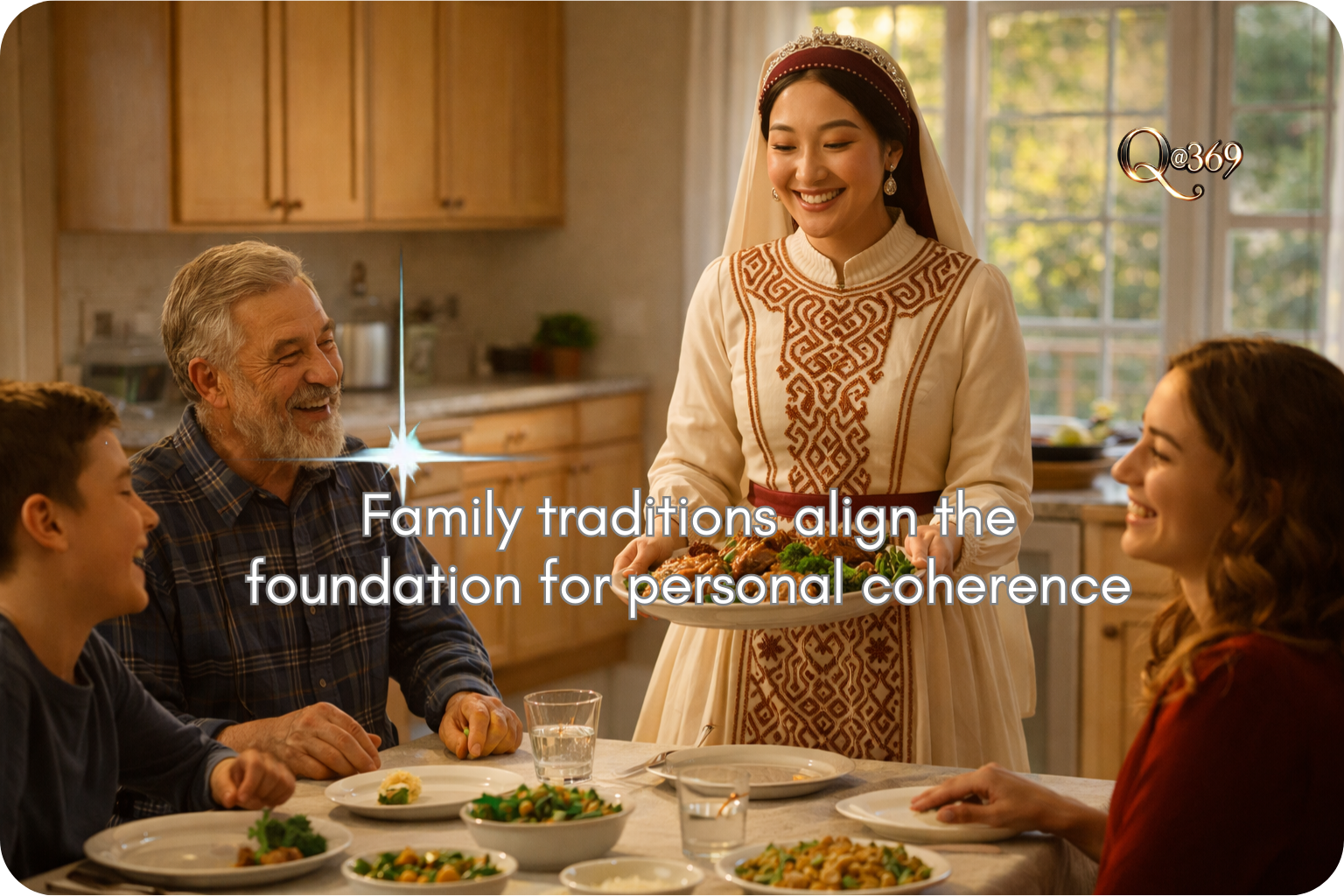
What childhood traditions still guide how you live today?
Family traditions shape identity through repetition, memory, and emotional meaning.
This reflection shows how traditions create stability, belonging, and lasting personal strength.
Traditions Create Identity
Family traditions are quiet teachers that shape how you see the world.
Simple routines repeat across years and become part of personal identity.
Meals, celebrations, and shared habits create familiar emotional anchors.
You carry these patterns into adulthood without always noticing.
Understanding them helps you choose which traditions still serve you today.
Emotional Safety Through Ritual
Rituals calm the nervous system through predictability and shared meaning.
Children feel secure when events follow patterns they understand.
A repeated evening meal or yearly celebration becomes emotional reassurance.
Adults continue to seek similar structure during uncertain times.
Recognizing this helps you create environments that support inner stability.
Aylin’s Family

Aylin prepared a simple family meal as evening sunlight filled the kitchen.
Her children laughed while elders shared stories from earlier generations.
She noticed many traditions were small but deeply meaningful.
The same bread recipe came from her grandmother decades earlier.
The meal carried memory, identity, and belonging at once.
Aylin realized traditions live through action rather than explanation.
She understood she was passing safety forward through ordinary moments.
“Family traditions create the steady rhythm that helps personal coherence grow across generations.” – Isaac Yue
Childhood Habits Become Adult Patterns
Many adult routines begin as childhood experiences.
Morning greetings, gratitude practices, or family humor shape future relationships.
Even decision making styles often reflect early family environments.
Awareness allows you to refine these inherited habits.
You can keep what strengthens you and release what no longer helps.
This creates intentional personal growth without rejecting your past.
Why Storytelling Matters
Family storytelling keeps values alive across generations.
Stories carry lessons without formal instruction or pressure.
Children learn resilience by hearing how older generations overcame challenges.
These narratives build courage and perspective during life transitions.
Sharing stories also strengthens emotional connection between generations.
Science Behind Ritual and Memory
Neuroscience shows repetition strengthens neural pathways related to memory and belonging.
Shared experiences activate emotional centers that reinforce social bonds.
Ritual actions help regulate stress responses and increase stability.
Psychologists note that meaningful traditions improve resilience in families.
These findings support why rituals continue across cultures and centuries.
Historical or Surprising Fact
Anthropologists found that every known culture uses rituals to mark transitions.
Birth, adulthood, partnership, and seasonal cycles include symbolic traditions.
Even modern societies create new rituals around technology and daily life.
Humans naturally organize meaning through shared repeated actions.
This universal pattern highlights the importance of intentional family practices.
Passing Traditions Across Generations
Traditions evolve rather than remain fixed.
Each generation adapts practices to match current realities.
The core value matters more than exact repetition.
A family meal today may include new foods but the same connection.
Passing traditions forward creates continuity while allowing growth.
Practical Ways to Strengthen Family Rituals
Choose one weekly tradition that feels meaningful and manageable.
Invite conversation about memories connected to that activity.
Keep the practice simple so it feels natural rather than forced.
Consistency matters more than perfection.
Intentional repetition builds lasting emotional impact.
Conclusion
Family traditions quietly shape identity, emotional safety, and personal values.
You have seen how rituals support mental stability and strengthen relationships.
What traditions from your childhood still guide your daily choices.
Which practices deserve renewal or adaptation for future generations.
Use this insight to create conscious rituals that support connection, balance, and emotional resilience.
Research shows that family rituals improve emotional well being and reduce stress in both children and adults.
References
- Fiese B H, Family Routines and Rituals A Context for Development in the Lives of Young Children, Infants and Young Children, 2002.
- Imber Black E, Rituals for Our Times Celebrating Healing and Changing Our Lives and Our Relationships, HarperCollins, 1999.
- Spagnola M and Fiese B H, Family Routines and Rituals A Context for Development in the Lives of Young Children, Journal of Family Psychology, 2007.
The Quantumarian Way

- Clear path to understanding coherence
- Align your daily harmonious life.
- Available in Print, Kindle and Audio
- Read Sample Pages on Amazon
- Learn More
Please give us your feedback.
Leave your comments below. We would love to hear your thoughts
More Family Traditions
Benefits of Joining Our Community
By joining QuantumAlchemist369™, you will love to stay informed and connected with us and the Quantum Alchemist community. Join us and receive free daily email updates of blogs, events, and useful insights.
Leave a Comment
We would love to hear your thoughts. Please leave a comment and share how this content resonates with your own mindful journey.
Forum Discussion
Join the Quantumarian Forum Community discussion.
Sustain the Alchemy
If the insights here have sparked something within you…We invite you to Sustain the Alchemy
You Will Want to Explore
All the items, books and graphic designs, available in our QuantumAlchemist369 Shop
Contact Us
For more information, and to contact Isaac Yue, visit our Contact Page.

Leave a Reply