
What does it truly mean to concentrate in a distracted world?
Many people confuse concentration with force or mental strain.
Neuroscience shows concentration is selective stability of attention.
This reflection explains how concentration forms from gentle focus and why it restores clarity and calm.
☼ AUDIO: Listen to “What does it truly mean to concentrate in a distracted world?” by Isaac Yue
☼ Also Available on Spotify
Concentration Defined Clearly
Concentration is the ability to hold attention on one chosen stream of information.
It does not require tension or suppression of thought.
Brain imaging shows efficient concentration uses less metabolic energy.
Spiritual awareness experiences concentration as ease rather than effort.
The Brain Networks of Attention
Neuroscience identifies three attention networks in the brain.
The alerting network maintains readiness.
The orienting network selects sensory input.
The executive network sustains focus through the prefrontal cortex.
When concentration is stable these networks synchronize efficiently.
This synchronization improves accuracy and emotional regulation.
Mental clarity increases without strain.
Chemistry Behind Focus
Dopamine and norepinephrine regulate attention stability.
Balanced levels support sustained focus.
Excess stimulation disrupts concentration and increases restlessness.
Slower environments help neurochemistry stabilize naturally.
Why Distraction Feels Normal
The human brain evolved to scan for change.
Distraction once supported survival.
Modern environments overload this system with constant novelty.
Awareness practice restores choice over attention.
Concentration as Selective Awareness
Spiritual practice views concentration as choosing where awareness rests.
It is not exclusion but prioritization.
Presence deepens when attention settles voluntarily.
This creates calm without disengagement from life.

“Coherent alignment of thought emerges when awareness stays grounded in the present moment” – Isaac Yue
Isaac Yue Reflection
What does it truly mean to concentrate?
People often try to be helpful by saying just concentrate and finish the task.
That phrase rarely explains how focus actually works.
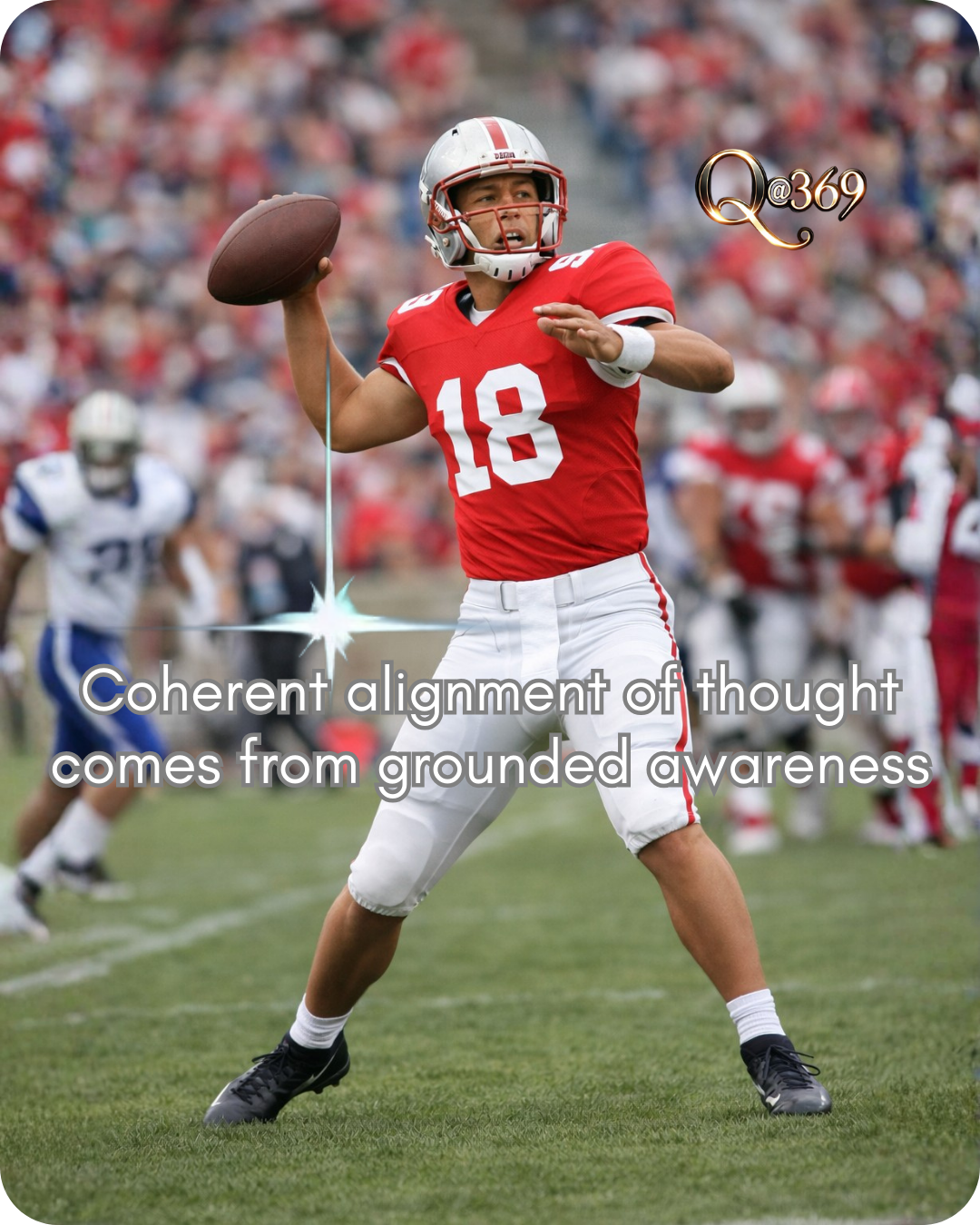
I have always admired athletes and their ability to focus under pressure.
American football offers a clear example.
A quarterback stands surrounded by motion noise and collision the moment the play begins.
In seconds the outcome shifts toward success or failure.
My own experience taught me that concentration does not silence thought.
My mind remains active with competing ideas.
The difference is order.
I learned to place thoughts in sequence rather than fight them.
I stay with the original task and allow side thoughts to wait.
If needed I pause briefly and write them down.
This approach keeps attention steady without force.
Clarity replaces mental friction.
Work moves forward efficiently and productively.
Concentration for me is not narrowing the mind.
It is guiding it with patience and priority.
Surprising Scientific Fact
Research shows attention improves after brief rest intervals.
Continuous effort reduces focus quality over time.
Short pauses restore neural efficiency.
This explains why forced concentration fails.
Practical Concentration Tool
Sit upright with eyes open.
Choose one sensory anchor such as breath or sound.
Hold attention gently for thirty seconds.
When attention wanders return without judgment.
Repeat three times daily.
Everyday Application
Use this tool before conversations or decisions.
Concentration improves listening and response quality.
Emotional reactions soften.
Awareness supports a harmonious life.
Conclusion
Concentration is stable awareness not mental force.
Science confirms efficient focus reduces cognitive strain.
What changes when you stop forcing attention today?
Practice gentle concentration once this morning.
Clarity and calm will follow naturally.
Brief rest intervals improve sustained attention performance by up to thirty percent
University of Illinois attention research
References
- Posner, M. I., and Petersen, S. E., The Attention System of the Human Brain, Annual Review of Neuroscience, 1990.
- Aston Jones, G., and Cohen, J. D., An Integrative Theory of Locus Coeruleus Norepinephrine Function, Annual Review of Neuroscience, 2005.
- Kahneman, D., Attention and Effort, Prentice Hall, 1973.
- ang, Y. Y., Holzel, B. K., and Posner, M. I., The Neuroscience of Mindfulness Meditation, Nature Reviews Neuroscience, 2015.
- Pashler, H., The Psychology of Attention, MIT Press, 1998.
Quantum Alchemy: The Convergence of Science, Spirit, and Enlightenment
Second Edition – Refined & Expanded

- Discover the practical link of modern science to ancient wisdom
- Available in Print, Kindle and Audio.
- Read Sample Pages on Amazon
- Follow the Link to Learn More
Please give us your feedback.
Leave your comments below. We would love to hear your thoughts
More Gentle Focus
Benefits of Joining Our Community
By joining QuantumAlchemist369™, you will love to stay informed and connected with us and the Quantum Alchemist community. Join us and receive free daily email updates of blogs, events, and useful insights.
Leave a Comment
We would love to hear your thoughts. Please leave a comment and share how this content resonates with your own mindful journey.
Forum Discussion
Join the Quantumarian Forum Community discussion.
Sustain the Alchemy
If the insights here have sparked something within you…We invite you to Sustain the Alchemy
You Will Want to Explore
All the items, books and graphic designs, available in our QuantumAlchemist369 Shop
Contact Us
For more information, and to contact Isaac Yue, visit our Contact Page.

Leave a Reply