

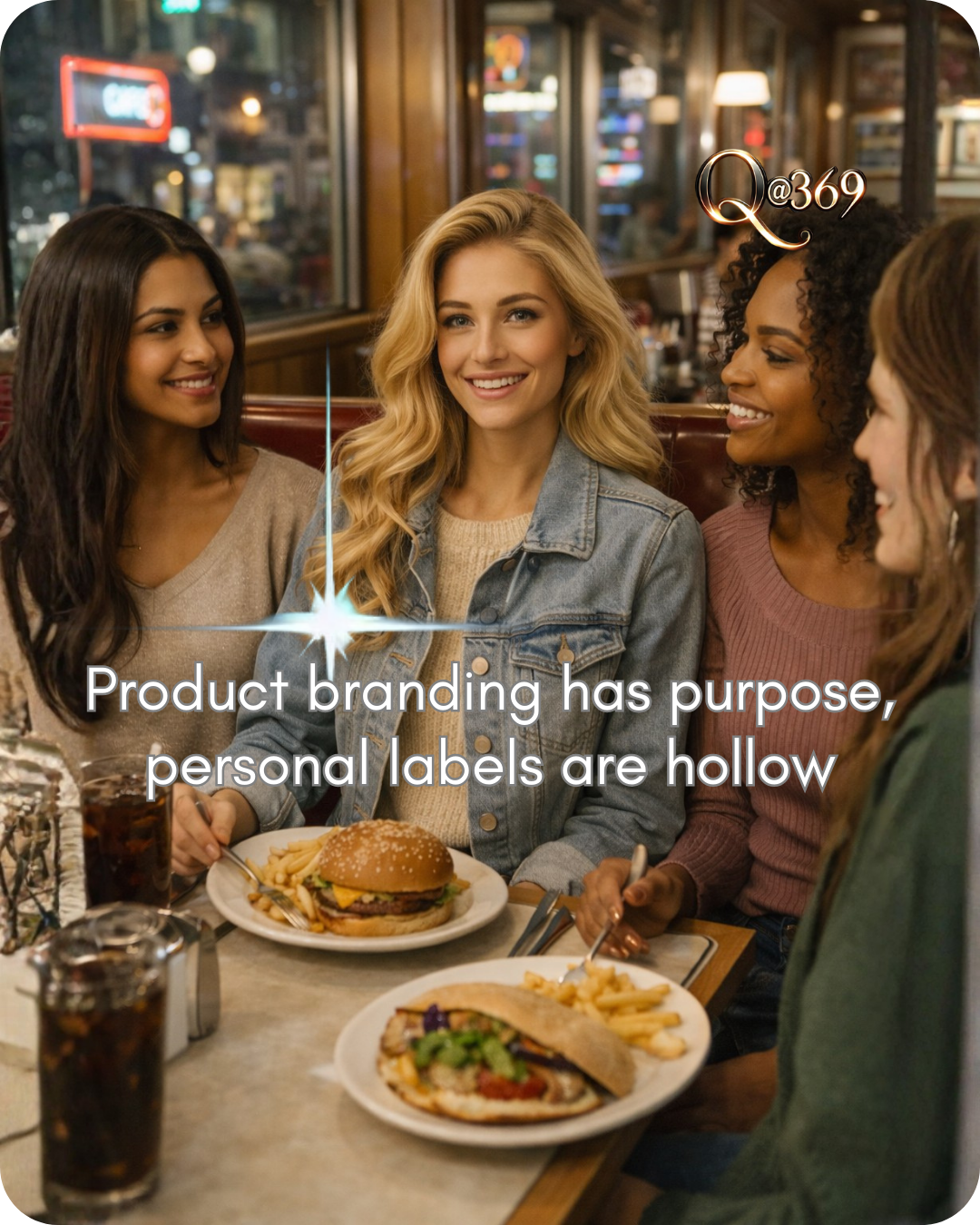
What defines who you are when no role is attached to your name?
Many people confuse relationship and social labels with personal identity.
This reflection clarifies how identity forms before any relationship begins.
☼ AUDIO: Listen to “What defines who you are when no role is attached to your name?” by Isaac Yue
☼ Also Available on Spotify
IDENTITY AND LABEL CONFUSION
Relationship labels offer social shorthand.
They do not define internal character or values.
Human identity develops through awareness long before social roles appear.
Many people unconsciously borrow identity from titles.
Single married divorced or partnered become mental shortcuts.
These shortcuts reduce self inquiry and delay self definition.
THE BRAIN AND COGNITIVE SHORTCUTS
The brain favors efficiency over depth.
Labels reduce cognitive effort during social interaction.
This tendency is called heuristic processing in psychology.
Heuristics help navigation but limit personal clarity.
They replace observation with assumption.
Identity becomes externally referenced instead of internally grounded.
SURPRISING FACT FROM PSYCHOLOGY
Research in social psychology shows labels shape self perception rapidly.
A 1970s Stanford study found roles altered behavior within days.
Participants adopted identity traits unrelated to personal values.
This demonstrates how quickly roles override self awareness.
Identity drift occurs when labels replace reflection.
Awareness restores authorship of identity.
IDENTITY BEFORE RELATIONSHIP
Identity forms through repeated internal alignment.
Values attention and boundaries create stable self definition.
Relationships then reflect identity rather than supply it.
When identity depends on status instability increases.
Fear of loss intensifies attachment behaviors.
Internal clarity reduces relational pressure.

“Product branding carries clear purpose while personal labels often distract from the deeper truth of who we are.” – Isaac Yue
THE CHLOE BRAND
Chloe built her fashion brand with clear personal vision.
Her social circle often asked about her relationship status.
She noticed how quickly conversations shifted when labels appeared.
One evening Chloe paused before answering.
She spoke about her values instead of her status.
The room grew quieter and more attentive.
Chloe realized identity clarity changed how others engaged.
Her presence felt complete without explanation.
Relationships followed her clarity rather than defined it.
PRACTICAL REFLECTION TOOL
Sit quietly and write three sentences.
Begin each sentence with I am without adding any role.
Avoid titles family terms or relationship labels.
Read the sentences aloud slowly.
Notice emotional stability or discomfort.
Discomfort highlights identity gaps needing attention.
Repeat this exercise weekly.
Identity strengthens through repetition and honesty.
Clarity grows before connection.
WHY THIS MATTERS FOR RELATIONSHIPS
Partners sense internal stability quickly.
Clear identity reduces projection and expectation.
Relationships become shared exploration rather than identity support systems.
When identity is self sourced communication improves.
Boundaries become respectful rather than defensive.
Connection deepens naturally.
CONCLUSION
Identity does not require validation through partnership.
Awareness forms before roles and remains after them.
What qualities define you without any label attached?
Consider how identity clarity reshapes connection.
Apply the reflection tool this week.
Observe how relationships respond to grounded presence.
Research from the American Psychological Association shows individuals with stable self identity report higher relationship satisfaction and lower anxiety.
References
- American Psychological Association. Self Concept and Identity Development. American Psychological Association Publications, Washington DC, 2019.
- Zimbardo, Philip G. The Lucifer Effect Understanding How Good People Turn Evil. Random House, New York, 2007.
- Tajfel, Henri, and Turner, John C. An Integrative Theory of Intergroup Conflict. In The Social Psychology of Intergroup Relations, Brooks Cole, Monterey CA, 1979.
- Kahneman, Daniel, and Tversky, Amos. Judgment Under Uncertainty Heuristics and Biases. Science, Vol 185, No 4157, 1974.
“Quantum Pathways: A journey to Alchemical Magic”

by Isaac Yue
Are you ready to explore the depths of consciousness, intention, and emotional resilience, and learn how to apply the alchemy to enrich your life? Follow Tramor’s profound transformation as he uses quantum alchemy to discover love, realize his artistic dreams and enhance his relationship.
- Read Sample Pages on Amazon
- Follow the Link to Learn More
Please give us your feedback.
Leave your comments below. We would love to hear your thoughts
More Social Labels
Benefits of Joining Our Community
By joining QuantumAlchemist369™, you will love to stay informed and connected with us and the Quantum Alchemist community. Join us and receive free daily email updates of blogs, events, and useful insights.
Leave a Comment
We would love to hear your thoughts. Please leave a comment and share how this content resonates with your own mindful journey.
Contact Us
For more information, and to contact Isaac Yue, visit our contact page.


Leave a Reply