
How much of what you think is self- awareness rather than social influence?
Human neurology adapts continuously to social environments and repeated emotional cues.
This reflection explores how social exposure shapes thought patterns and emotional states.
You will learn how to recognize counterproductive mental states and restore inner coherence with mental autonomy.
☼ AUDIO: Listen to “How much of what you think is self- awareness rather than social influence?” by Isaac Yue
☼ Also Available on Spotify
The Social Brain by Design
The human brain evolved for social connection and group survival.
Neurobiology shows social cues strongly influence attention emotion and behavior.
Belonging signals safety while exclusion activates stress responses.
Awareness helps distinguish connection from unconscious conformity.
Neural Entrainment and Repetition
Repeated social input entrains neural firing patterns over time.
Language tone and emotional frequency shape habitual thinking.
Spiritual awareness restores choice within conditioned responses.
Limiting reactive exposure protects cognitive clarity.
Mirror Neurons and Emotional Contagion
Mirror neurons replicate observed emotional states automatically.
This supports empathy but also spreads anxiety or hostility.
Awareness interrupts emotional absorption.
Pausing before reaction restores self regulation.
Social Scripts and Counterproductive States
Cultural scripts reward urgency comparison and validation seeking.
These patterns elevate cortisol and reduce emotional stability.
Spiritual grounding favors presence over performance.
Noticing internal tension reveals misaligned states early.
Recognizing Counterproductive Thought Patterns
Counterproductive states feel rushed defensive or compulsive.
Neuroscience links these states to threat perception loops.
Spiritual clarity reframes awareness as observation rather than judgment.
Naming the state weakens its influence.

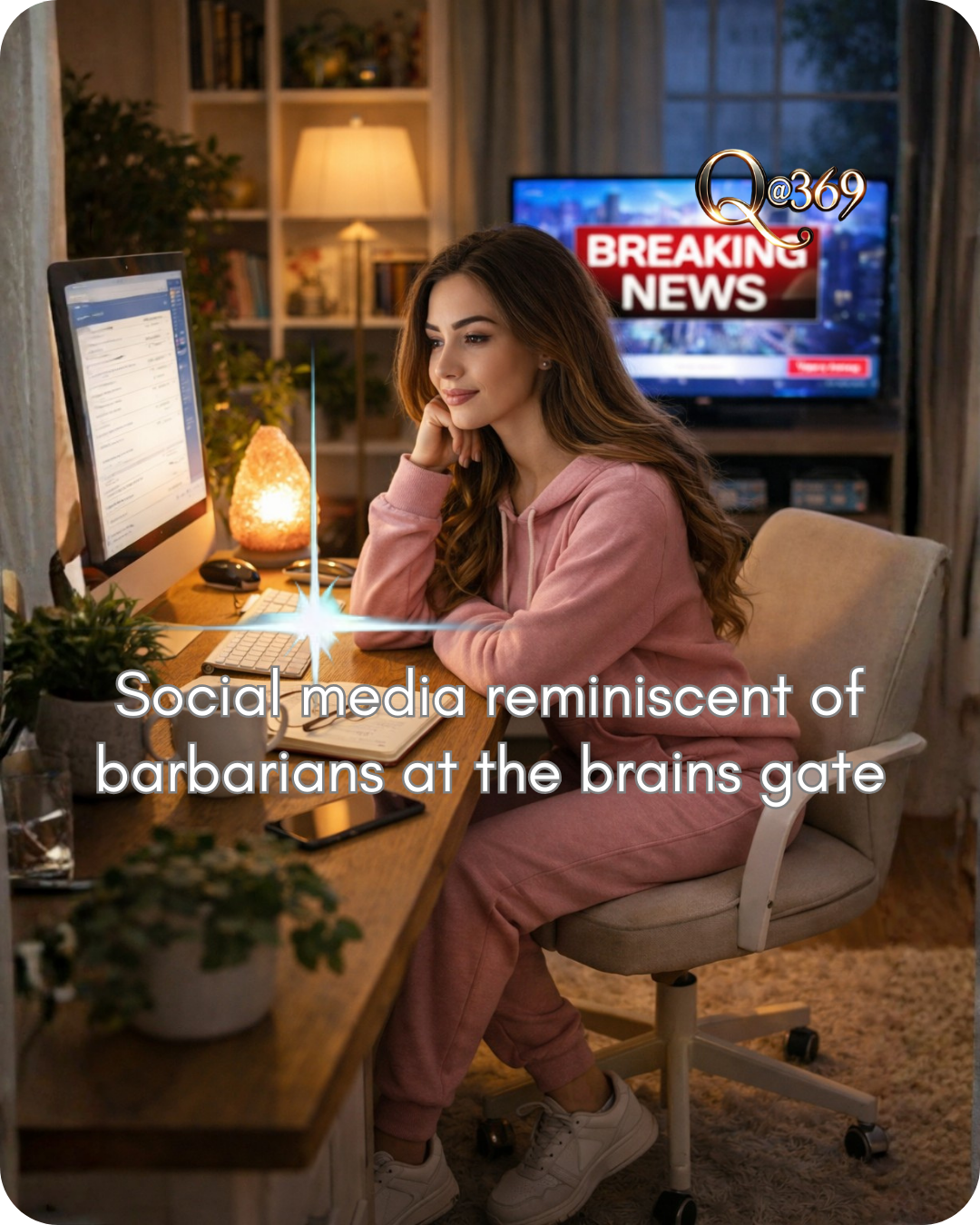
“Social media can act like barbarians at the brain’s gate unless awareness stands watch and protects clarity and calm.” – Isaac Yue
Restoring Neurological Coherence
Slowing breath and attention calms limbic activation.
Reducing exposure to high intensity social input stabilizes thought patterns.
Spiritual practice reinforces inner reference points.
Small daily pauses restore coherence reliably.
Practical Awareness Tool
Notice your emotional state after social interaction.
Ask whether clarity increased or tension rose.
Adjust exposure and boundaries accordingly.
This tool strengthens mental autonomy.
Conclusion
Social environments shape neurology and habitual thought patterns.
Awareness restores choice within social influence.
Which social inputs currently shape your thinking most strongly?
Practice observing before absorbing.
This approach supports clarity resilience and a harmonious life.
Chronic social stress increases baseline cortisol levels by over twenty percent
Sapolsky Why Zebras Do Not Get Ulcers 2004
References
- Sapolsky, R. M., Why Zebras Do Not Get Ulcers, Holt Paperbacks, New York, 2004.
- Cacioppo, J. T., and Patrick, W., Loneliness, W. W. Norton and Company, New York, 2008.
- Iacoboni, M., Mirroring People, Farrar Straus and Giroux, New York, 2008.
- Coan, J. A., Social Baseline Theory, Current Directions in Psychological Science, 22(6), 427 to 432, 2013.
- Kahneman, D., Thinking Fast and Slow, Farrar Straus and Giroux, New York, 2011.
The Quantumarian Way: Living Harmonious Life with Coherence

- Clear approach to understanding coherence
- Create alignment to shape a harmonious life
- Read Sample Pages on Amazon
- Learn More
Please give us your feedback.
Leave your comments below. We would love to hear your thoughts
More Mental Autonomy
Benefits of Joining Our Community
By joining QuantumAlchemist369™, you will love to stay informed and connected with us and the Quantum Alchemist community. Join us and receive free daily email updates of blogs, events, and useful insights.
Leave a Comment
We would love to hear your thoughts. Please leave a comment and share how this content resonates with your own mindful journey.
Forum Discussion
Join the Quantumarian Forum Community discussion.
Sustain the Alchemy
If the insights here have sparked something within you…We invite you to Sustain the Alchemy
You Will Want to Explore
All the items, books and graphic designs, available in our QuantumAlchemist369 Shop
Contact Us
For more information, and to contact Isaac Yue, visit our Contact Page.


Leave a Reply