

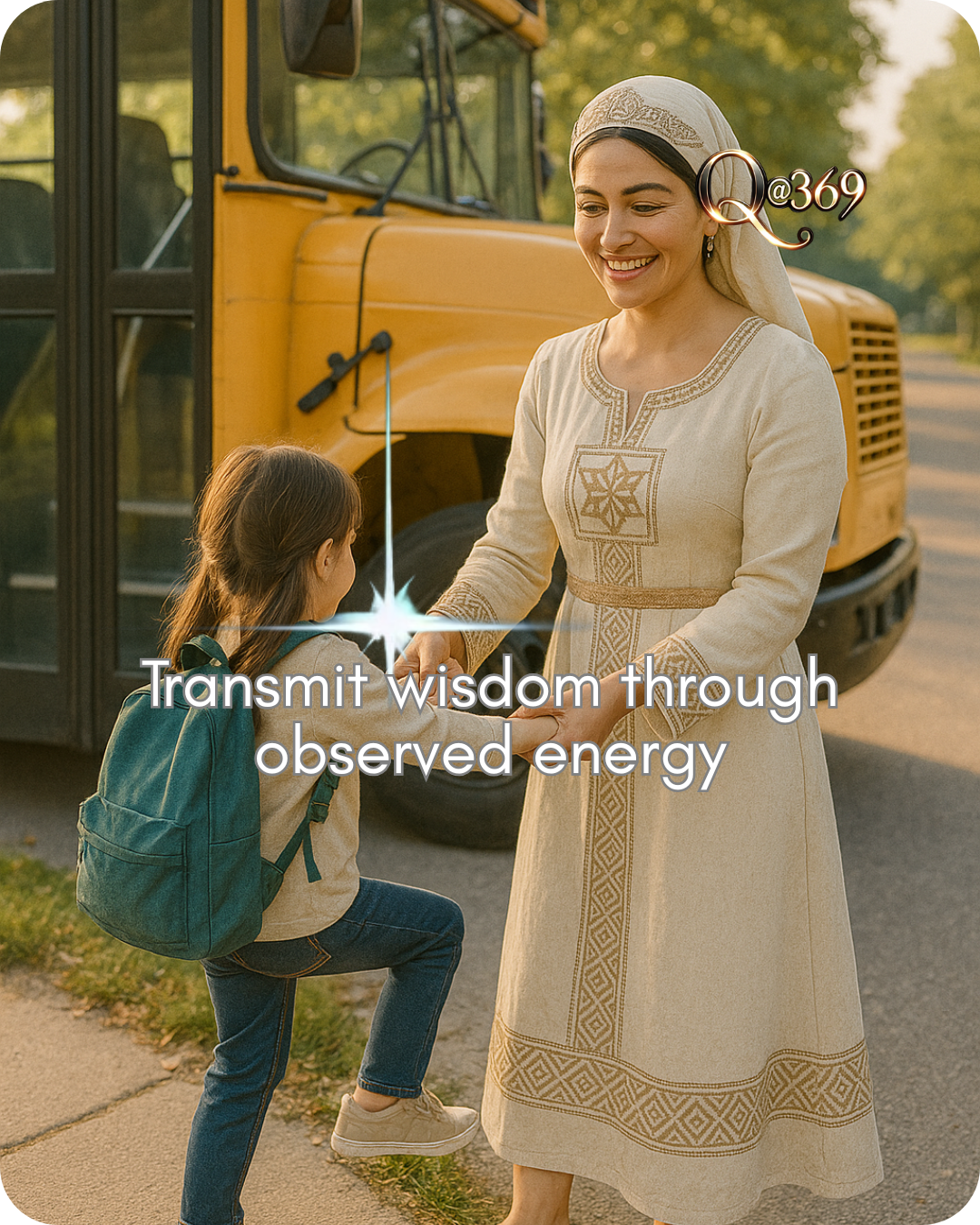
How do children learn coherence in a world filled with constant influence?
Why do young minds watch adults more closely than they follow spoken instruction.
How can daily actions shape a child who grows with calm confidence.
This reading explains how demonstration forms the strongest teaching children method and how science supports this truth.
You gain insight that strengthens your role as a steady guide for your family.
☼ AUDIO: Listen to “How do children learn coherence in a world filled with constant influence?” by Isaac Yue
☼ Also Available on Spotify
Children Learn Through Observation Before Language Forms
Mirror neuron research confirms that children absorb behavior through silent observation before they understand complex language.
Their brains copy emotional tone and energy states with remarkable speed.
Your calm presence becomes a steady signal that shapes their nervous system.
A spiritual view supports this pattern because young awareness responds to the field your actions create.
You support a child when your behavior expresses the values you hope they learn.
Why Emotional Regulation Begins With the Adult First
The amygdala in a child reacts quickly to adult tension in the environment.
It softens when the adult remains steady during challenging moments.
This response teaches the child that calm is possible.
Your centered breath becomes a model for emotional strength.
You offer a powerful gift when you hold peace long enough for the child to copy it.

“Children absorb the energy we demonstrate long before they understand the words we speak. True wisdom transfers through the calm we practice.” – Isaac Yue
Aylin and the Quiet Morning Choice
Aylin prepared breakfast while her young daughter searched for a missing school project.
The child moved with frantic energy and bumped a chair.
Aylin felt rising stress in her chest yet she paused with intention before speaking.
She placed her hand on the counter and breathed with a slow rhythm.
Her daughter mirrored the slower breathing without conscious effort.
Together they searched with clear minds and found the project under a folded blanket.
Aylin did not use warning tones.
Her steady energy guided her daughter toward clarity.
The morning ended with quiet strength and shared confidence.
How Your Presence Shapes Neural Pathways
Neuroscience confirms that repeated exposure to stable adult energy strengthens pathways in the prefrontal cortex.
These pathways support focus memory and emotional balance.
Children in steady environments recover faster after stressful moments.
They often display higher social confidence and greater personal stability.
Your awareness becomes a tool that shapes their emotional landscape with every calm moment.
Why Children Copy What You Practice Not What You Say
Young brains respond to consistent behavior more strongly than spoken instruction.
When your actions match your values the child senses harmony.
When actions conflict with stated rules the child feels confusion.
Your practice of coherence becomes a clear message that builds trust.
This message creates a strong internal compass that supports lifelong confidence.
How to Demonstrate the Quantumarian Way in Daily Life
Pause before reacting so your breath can steady your mind.
Move with intention during common tasks.
Invite the child into your calm moments instead of commanding calm.
Speak with tone aligned to patient awareness.
Your steady rhythm guides children toward their natural clarity.
Conclusion: The Future You Shape Through Your Example
You learned how powerful observation is for childhood learning.
You explored how emotional regulation begins with the adult and grows through shared presence.
You watched Aylin guide her daughter with calm behavior and steady attention.
What future do you create when every action shows a child how coherence feels.
Your daily example becomes a foundation that strengthens the next generation.
Practice one quiet breath each morning to model the path you want your child to follow.
Children exposed to stable emotional environments show a thirty percent increase in self regulation skills by age seven according to research from the University of Washington.
References
- Rizzolatti G and Craighero L. The mirror neuron system. Annual Review of Neuroscience 2004.
- Siegel D. The Developing Mind. Guilford Press 2012.
- Davidson R. The Emotional Life of Your Brain. Penguin 2012.
- Porges S. The Polyvagal Theory. Norton 2011.
- Thompson R and Meyer S. Socialization of emotion regulation. In Handbook of Socialization 2007.
“Quantum Possibilities: Empower Your Life for Ultimate Harmony”

By Author Isaac Yue
Start Your Quantum Possibilities Journey Today!
What if you had the power to shape your reality, transform challenges into opportunities, and create a life of true fulfillment? Quantum Possibilities serves as a guide to harness the universe’s hidden energies to self-empowerment and personal growth towards harmonious living.
- Read Sample Pages on Amazon
- Follow the Link to Learn More
Please give us your feedback.
Leave your comments below. We would love to hear your thoughts
More Teaching Children
Benefits of Joining Our Community
By joining QuantumAlchemist369™, you will love to stay informed and connected with us and the Quantum Alchemist community. Join us and receive free daily email updates of blogs, events, and useful insights.
Leave a Comment
We would love to hear your thoughts. Please leave a comment and share how this content resonates with your own mindful journey.
Contact Us
For more information, and to contact Isaac Yue, visit our contact page.


Leave a Reply