
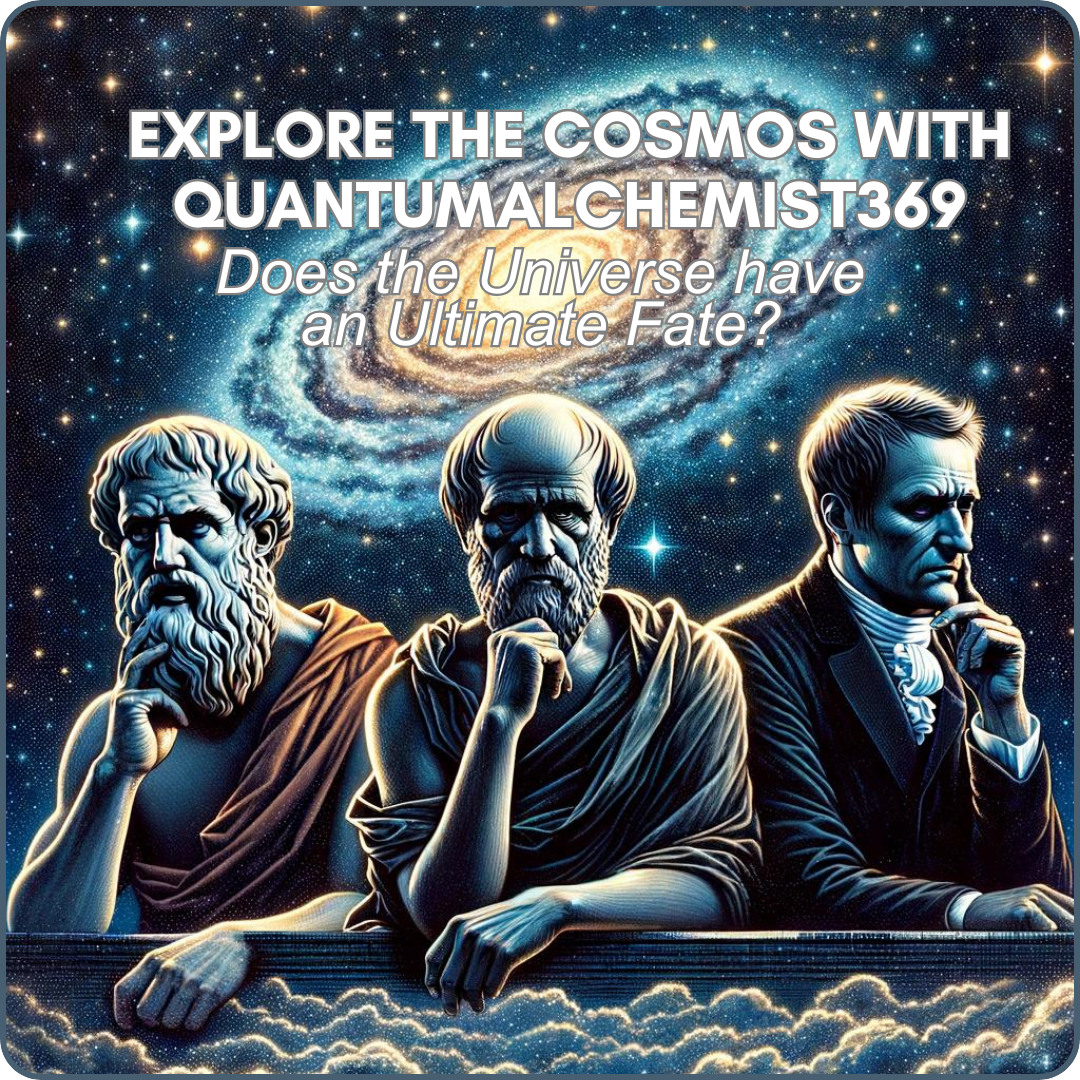
Quantum alchemy combines ancient alchemy with modern quantum physics. It offers unique insights into the universe’s fate and potential endings. Discover how these ideas could transform your understanding of existence.
Introduction to Cosmic Finales
Scientists predict the universe’s end with theories like the Big Freeze, Big Rip, and Big Crunch. These scenarios explore cosmic expansion and the essence of matter and energy.
Quantum Alchemy and Universal Fate
Quantum alchemy merges quantum physics with alchemical symbolism. It offers unique insights into the universe’s demise, intertwining ancient knowledge and cosmic phenomena.
Big Freeze: A Return to the Void
The Big Freeze envisions a cold, lifeless universe. Quantum alchemy sees this as solutio: a dissolution back to the cosmos’s origin. This reflects on the philosophical notion of returning to the primordial essence, questioning existence’s transient nature.
Big Rip: Cosmic Purification
The Big Rip foresees spacetime tearing apart. This aligns with calcinatio, symbolizing purification or energy release. It prompts contemplation on the universe’s impermanence and the cycles of destruction and rebirth inherent to existence.
Big Crunch: A Cyclic Renewal
The Big Crunch predicts a return to the singularity. Similar to coagulatio, it suggests a cosmic cycle of renewal. This concept mirrors philosophical views on cyclical existence and the universe’s eternal ebb and flow.

Philosophical Insights: Contemplations on the Cosmos’ Conclusion
Throughout history, philosophers have grappled with questions not only about the nature of existence and reality but also about the ultimate fate of the universe. Their reflections offer unique insights, blending metaphysical speculation with profound existential inquiry.
- Plato, a foundational figure in Western philosophy, did not explicitly detail a theory on the end of the universe. However, through his theory of Forms and the cyclical nature of the cosmos as depicted in his works like “Timaeus,” one might infer that he saw the universe as undergoing perpetual cycles of formation and destruction, a process overseen by a divine craftsman or “Demiurge.”
- Aristotle critiqued the idea of a beginning or end of the universe, positing instead an eternal cosmos. In his work “On the Heavens,” he argued against the notion of a finite universe with a start and an endpoint, proposing instead that the universe has always existed and will continue to do so, forever unchanged and unchanging.
- Immanuel Kant, in his “Critique of Pure Reason,” speculated on the ultimate destiny of the physical universe, linking it to the moral realm. He pondered the idea of a final end to all things material as a necessary condition for the moral perfection of beings, suggesting a cosmos finite in time but infinite in its moral and spiritual implications.
The Universe’s Poetic Symmetry
Quantum alchemy provides a symbolic interpretation of the universe’s potential ends. It shows a cosmos where the end is also a beginning, reflecting on the interconnectedness of existence.
Please give us your feedback:
More Universe’s Fate
Join the QuantumAlchemist369 Community
Discover a community passionate about quantum alchemy and cosmic exploration. Engage with like-minded individuals for transformative discussions.
We Value Your Thoughts
Share your insights and questions below—we love to hear from you.
Get in Touch
For more information and inquiries, visit our contact page.
Leave a Reply