

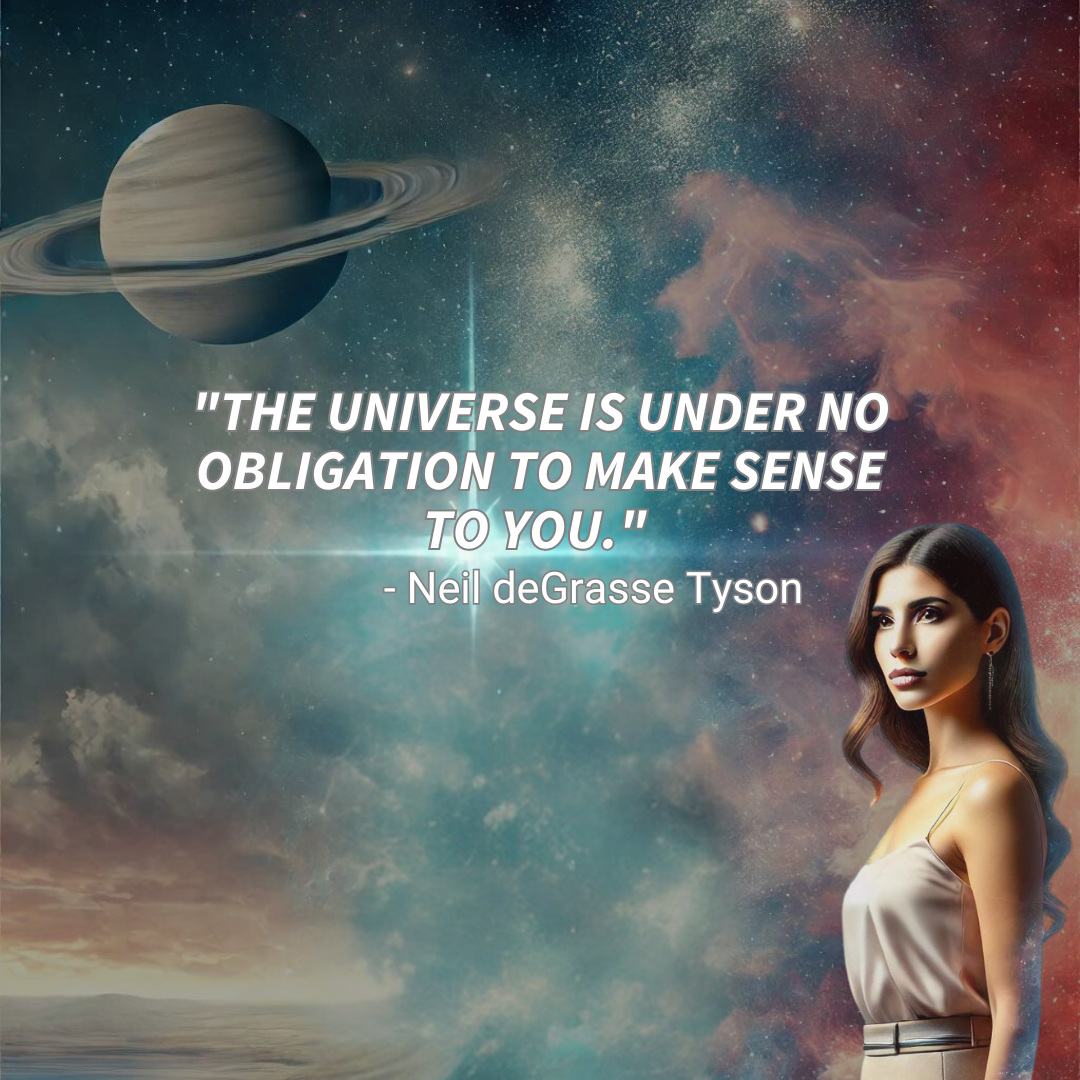
Quantum void explores the concept of “nothingness” in physics, a profound and complex subject in science and philosophy.. This subject is explored due to its profound implications on our understanding of the universe. Engaging with this content offers insights into the deepest questions of existence and reality.
Before the ‘Big Bang’
The 5 Why questions of the universe leads to the question of what existed before the creation of our universe. It is one of the most profound and complex in cosmology and physics, and it’s important to clarify a few points:
- Concept of ‘Nothing’: The idea of ‘nothing’ before the universe is tricky. In classical physics, ‘nothing’ might imply a complete absence of matter, energy, space, and time. However, in quantum mechanics, even what we might think of as ‘nothing’ (like a vacuum) can have properties and fluctuations.
- The Universe’s Creation: The most widely accepted scientific theory for the origin of the universe is the Big Bang. This theory suggests that the universe started as an extremely hot and dense point (a singularity) and then expanded. But it doesn’t specifically address what preceded the singularity or whether there was a ‘before’ in the conventional sense, since time itself began with the Big Bang.
- Something Outside the Universe: The idea that something outside our universe created it enters into the realm of theoretical physics and philosophy. Some theories, like those involving multiverses, suggest our universe could be one of many, possibly with different physical laws. But these theories are highly speculative and not universally accepted in the scientific community.
- Limitations of Current Science: Current scientific understanding and theories cannot conclusively describe or prove what, if anything, existed before the Big Bang. This question is at the very edge of scientific inquiry, blending into metaphysical speculation.

“Not only is the universe stranger than we imagine, it is stranger than we can imagine.” – Arthur Eddington
Is Nothing Really Nothing?
We can highlight an important distinction in understanding the concept of “nothing” in physics and philosophy. Let’s clarify this further:
- Vacuum in Physics: In physics, particularly quantum physics, a vacuum is not truly ‘nothing’ in the absolute sense. It’s defined as space devoid of matter, but it still has properties and may contain fluctuating energy fields due to quantum mechanics. These fluctuations are known as quantum vacuum fluctuations.
- ‘Nothing’ in the Absolute Sense: The notion of ‘absolute nothingness’—a state with no matter, no energy, no space, and no time—is more of a philosophical concept than a physical one. In the context of the universe and its origins, this idea of ‘absolute nothingness’ is difficult to comprehend and even more challenging to incorporate into physical theories.
- Relativity of ‘Nothing’: The concept of ‘nothing’ is relative in physics. For example, outer space is often perceived as a vacuum because it’s largely devoid of matter, but it’s not ‘nothing’ in the absolute sense. It still has properties like gravitational fields and dark energy.
- Before the Big Bang: When discussing what existed ‘before’ the Big Bang, the term ‘nothing’ becomes even more complex. Since time and space as we understand them began with the Big Bang, the concept of ‘before’ might not apply in the conventional sense.
True Dynamics of Nothingness
In conclusion, while in everyday language ‘nothing’ might imply a complete absence of anything, in physics and cosmology, the term takes on a more nuanced and complex meaning. The idea of ‘absolute nothingness’ remains a profound and elusive concept, straddling the boundaries between empirical science and philosophical inquiry.
Quantum Insights: Understanding the Universe
In exploring ‘nothingness’, we confront the limits of classical physics and venture into quantum realms where ‘nothing’ has properties. This journey challenges our understanding of existence and time, inviting philosophical contemplation. Embracing these concepts enriches our cosmic perspective.
The Five Whys of The Universe’s Creation
“Part I: Astounding Galactic Secrets: Journey to the Universe’s Creation”,the “5 Whys” technique reveals that the universe’s origin, starting with the Big Bang, is rooted in quantum fluctuations within a singularity.
“Part II Quantum Revelation: The Emotional and Powerful Dynamics of Nothingness” discusses the method limits when we try to understand what preceded the Big Bang and the nature of ‘nothingness’.
“Part III Epic Quest: Unraveling the Secrets of the Universe’s Existence” discusses ttechnique to explain the Universe, an in depth to understanding to the answers to the “Whys”. The question of why there is a universe is one of the most profound and challenging inquiries in philosophy, cosmology, and physics..
QuantumAlchemist369™ Enlightening Book Series
by Isaac Yue


Learn more on Isaac Yue’s Summary Page
Bundle discounts available in our Store
Click on Book image to order from Amazon Now
This collection of seven books present an empowering journey, blending science and spirituality through quantum alchemy principles. Each book offers unique insights into unlocking personal growth, achieving harmony, and realizing life’s potential by embracing positivity, mindfulness, and transformative thinking.
References
- “A Brief History of Time” by Stephen Hawking
- “The Road to Reality: A Complete Guide to the Laws of the Universe” by Roger Penrose.
- “Until the End of Time: Mind, Matter, and Our Search for Meaning in an Evolving Universe” by Brian Greene
Please give us your feedback:
More Universe Mysteries
Benefits of Joining Our Community
Joining our community offers access to exclusive insights, discussions, and resources on quantum alchemy and personal growth. Engage with like-minded individuals and expand your understanding of the universe. Participate in transformative practices that promote holistic well-being.
Share Your Thoughts
We value your insights and questions. Please share your thoughts below.
Get in Touch
For more information and inquiries, please contact Isaac Yue through our contact page. We are here to answer your questions and provide further insights.


Leave a Reply