

Why does society treat relationship status as proof of wholeness?
Cultural narratives often equate partnership with completion and absence with lack.
This reflection examines how status becomes a shortcut for meaning.
You will explore wholeness as an internal state that precedes partnership and supports conscious connection.
☼ AUDIO: Listen to “Why does society treat relationship status as proof of wholeness?” by Isaac Yue
☼ Also Available on Spotify
Status as a Social Shortcut
The mind favors simple labels to reduce uncertainty.
Social psychology shows categories replace deeper evaluation.
Marital status becomes a symbol of success or failure.
Awareness questions symbols and returns to lived experience.
Completion Myths and Conditioning
Cultural stories frame partnership as a cure for incompleteness.
These stories shape expectations and pressure choices.
Neuroscience shows expectation alters perception and emotion.
Spiritual clarity separates conditioning from truth.
Marital Status Across Cultures
Western Individualist Cultures
In many Western societies marital status often signals personal success or failure.
Singlehood may be viewed as transitional while marriage implies completion.
This framing emphasizes achievement identity and external validation.
Collectivist East Asian Cultures
In several East Asian traditions marital status reflects family continuity and social harmony.
Marriage is less about personal completion and more about relational responsibility.
Individual wholeness is often understood through contribution rather than status.
Indigenous and Community Centered Cultures
Many Indigenous cultures view partnership as one expression of communal balance.
Marital status does not define worth or completeness.
Wholeness arises from belonging contribution and connection to land and people.
Wholeness as an Internal State
Wholeness refers to internal coherence and self trust.
Neurobiology links coherence with stable emotional regulation.
Spiritual traditions describe fullness as presence without lack.
Partnership expresses fullness rather than repairing absence.
Identity Without Status
Identity forms through roles and repeated feedback.
Status roles can overshadow inner awareness.
Meditative attention loosens role attachment.
Presence reveals value independent of labels.

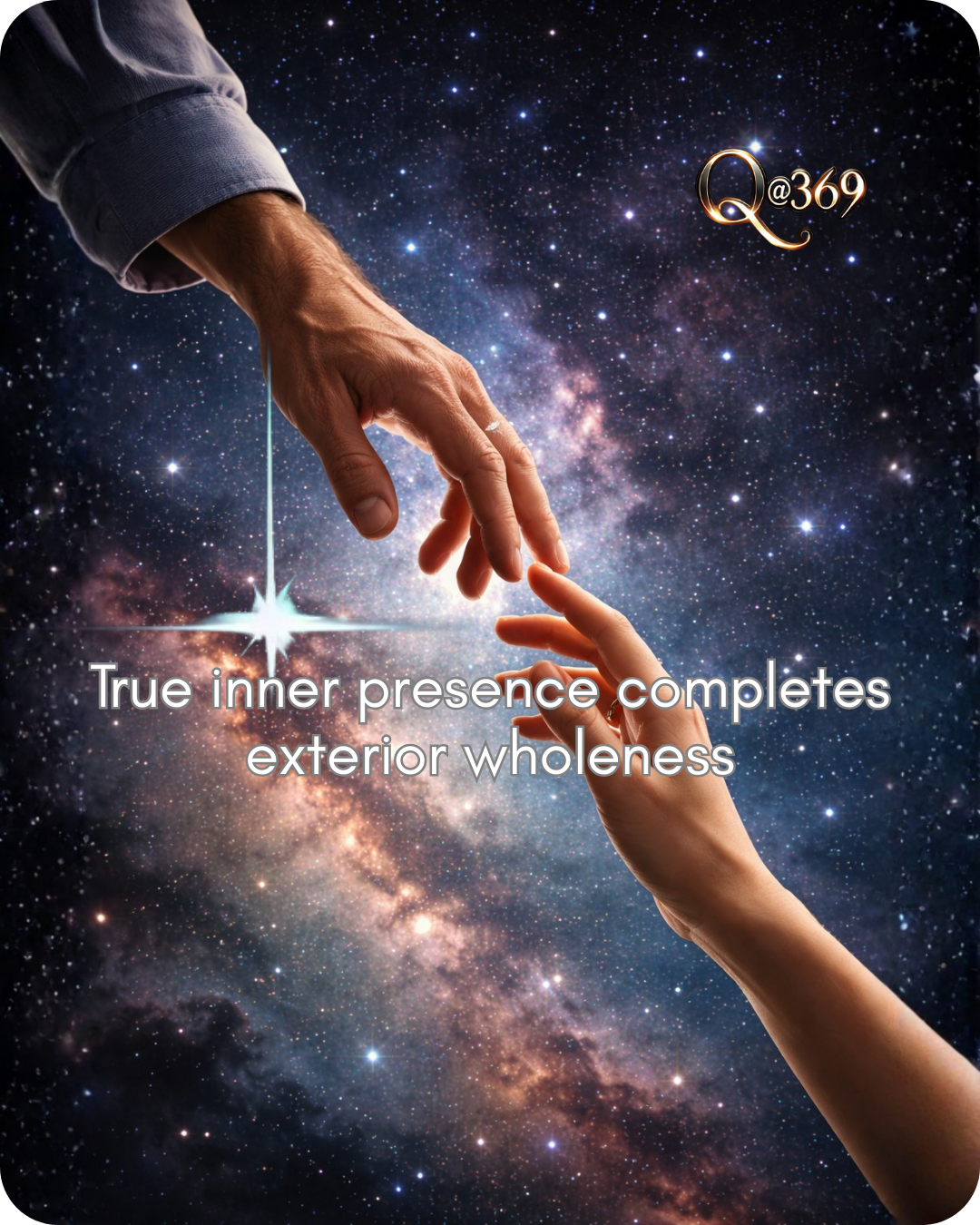
“True inner presence completes exterior wholeness long before any role title or partnership is named.” – Isaac Yue
Isaac Yue Reflection
I have met fulfilled people across every relationship status.
I have also met partnered people who felt incomplete.
Watching my own patterns taught me wholeness arrives internally first.
Partnership then became expression rather than solution.
Partnership as Expression
When wholeness precedes connection relationships breathe.
Choice replaces need and care replaces demand.
Neuroscience shows secure attachment grows from internal stability.
Spiritual awareness frames love as sharing abundance.
Social Pressure and Comparison
Comparison amplifies anxiety and diminishes clarity.
The brain responds to comparison with threat signals.
Awareness interrupts comparison through self reference.
Inner grounding restores calm decision making.
Practical Evening Reflection
Notice moments you seek validation through status.
Pause and return attention to breath and posture.
Ask what feels whole right now.
Let answers arise without urgency.
Conclusion
Status does not define wholeness or readiness for partnership.
Wholeness begins as internal coherence and self presence.
What changes when you treat partnership as expression rather than completion?
Practice honoring inner fullness before seeking external confirmation.
This approach supports conscious partnership and a harmonious life.
Secure attachment correlates with higher emotional regulation regardless of marital status
Mikulincer and Shaver Journal of Personality and Social Psychology 2007
References
- Mikulincer, M., and Shaver, P. R., Attachment in Adulthood, Guilford Press, New York, 2007.
- Kahneman, D., Thinking Fast and Slow, Farrar Straus and Giroux, New York, 2011.
- Siegel, D. J., Mindsight, Bantam Books, New York, 2010.
- Deci, E. L., and Ryan, R. M., Self Determination Theory, Guilford Press, New York, 2000.
- Coan, J. A., Social Baseline Theory, Current Directions in Psychological Science, 22(6), 427 to 432, 2013.
“The Quantumarian Way”

“The Quantumarian Way” offers a clear and grounded approach to understanding coherence and how it shapes a harmonious life. This book is for those seeking clarity without complexity, and harmony in daily life.
- Read Sample Pages on Amazon
- Learn More
Please give us your feedback.
Leave your comments below. We would love to hear your thoughts
More Partnership
Benefits of Joining Our Community
By joining QuantumAlchemist369™, you will love to stay informed and connected with us and the Quantum Alchemist community. Join us and receive free daily email updates of blogs, events, and useful insights.
Leave a Comment
We would love to hear your thoughts. Please leave a comment and share how this content resonates with your own mindful journey.
Contact Us
For more information, and to contact Isaac Yue, visit our contact page.


Leave a Reply