

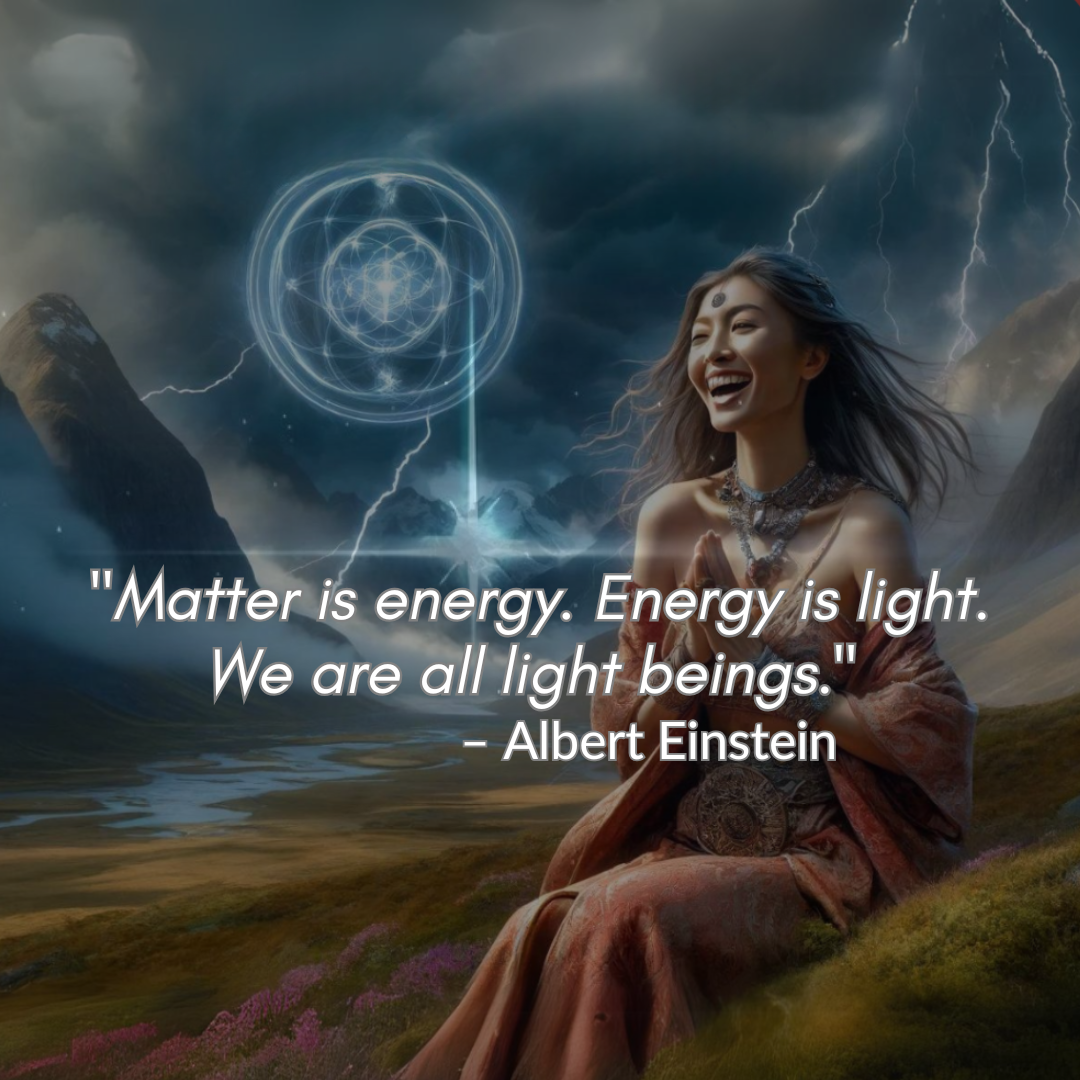
Quantum duality explores the complex interaction between matter and energy at both spiritual and scientific levels. Quantum duality is a fascinating concept in our understanding of existence. Understanding quantum duality can enrich perspectives on spirituality, self-awareness, and universal connection.
Bridging Science and Spirituality: Quantum Duality and Spiritual Trilogy
Quantum duality reveals subatomic particles’ wave-particle duality, while spiritual trilogies highlight three core divine principles. Comparing them uncovers parallels between scientific discovery and spiritual enlightenment. This juxtaposition connects tangible reality with profound existential questions. It encourages deep reflection on the universe’s mysteries and our place within it.
Quantum Duality
Quantum duality refers to the principle of duality found in quantum mechanics, which suggests that particles such as electrons and photons exhibit both particle-like and wave-like properties, depending on the experimental setup and observation. This principle is epitomized in the famous double-slit experiment, which shows that light and matter can display characteristics of both waves (such as interference patterns) and particles (being counted as discrete entities). Quantum duality challenges classical intuitions about the nature of reality, revealing a fundamental aspect of the quantum world that eludes the mutually exclusive categories of “particle” and “wave” found in classical physics.
The Dual Nature of Religious Beliefs
Many religions are built around the concept of duality, such as good versus evil, heaven versus hell, and creator versus destroyer. This framework helps explain the world’s complexities through opposing forces and moral choices. It guides spiritual practice, ethical behavior, and the pursuit of salvation or enlightenment. Exploring these dualities offers insight into the human condition and the universal search for meaning.
Spiritual Trilogy
The term “spiritual trilogy” is not a standard term in the study of spirituality or religion and can have multiple interpretations depending on the context. However, in general it refers to a grouping of three spiritual or divine aspects that are considered to be fundamental. One example is the Christian Holy Trinity, which represents God in three persons: the Father, the Son (Jesus Christ), and the Holy Spirit. In other spiritual or religious contexts, a trilogy refers to a set of three interconnected spiritual principles, entities, or realms that together form a complete and unified whole.

“Those who are not shocked when they first come across quantum theory cannot possibly have understood it.” – Niels Bohr
Comparison of Duality and Spiritual Trilogies
While quantum duality and spiritual trilogy originate from entirely different spheres—science and spirituality—they both reflect humanity’s attempt to understand and conceptualize complex realities that transcend simple explanations.
- Nature of Concepts: Quantum duality is a scientific principle based on empirical evidence and mathematical formalism, aimed at describing the physical properties of the quantum world. In contrast, spiritual trilogy is a metaphysical concept that seeks to explain aspects of the divine or spiritual reality, often based on religious beliefs, spiritual experiences, or philosophical reflections.
- Unity in Multiplicity: Both concepts, despite their differences, express a form of unity in multiplicity. Quantum duality reveals how entities in the quantum realm can simultaneously embody dual natures (particle and wave), suggesting a more complex underlying reality. Similarly, the idea of a spiritual trilogy embodies a unity of three distinct aspects or entities that together represent a higher or more complete understanding of the divine or spiritual.
- Epistemological Foundations: The understanding and acceptance of quantum duality come through scientific experimentation and theory, which rely on observation, experimentation, and rational analysis. On the other hand, belief in a spiritual trilogy is often rooted in faith, spiritual insight, and religious tradition, which may involve personal or collective experiences of the divine, revelation, or doctrinal teachings.
- Impact on Worldviews: Both concepts challenge simpler, more reductionist worldviews. Quantum duality questions the classical dichotomy between wave and particle, suggesting a more nuanced and interconnected quantum reality. A spiritual trilogy, like the Holy Trinity, challenges monotheistic or polytheistic categorizations, proposing a complex unity within divinity.
The Essence of Duality in Spiritual Beliefs
- Taoism: Yin and Yang – Yin and Yang are foundational to Taoist philosophy, representing complementary forces that create harmony and balance in the universe. Yin is the passive, receptive female principle, while Yang is the active, assertive male principle. Together, they illustrate how opposite or contrary forces are interconnected and interdependent in the natural world, giving rise to each other in turn.
- Zoroastrianism: Good and Evil- Good and Evil in Zoroastrianism are embodied by Ahura Mazda (the Wise Lord) and Angra Mainyu (the Destructive Spirit), respectively. This ancient religion is one of the earliest examples of dualism, where the cosmos is seen as a battleground between the forces of good and light versus those of evil and darkness, with humanity’s actions contributing to the outcome of this cosmic struggle.
- Manichaeism: Light and Darkness- Light and Darkness were central in Manichaeism, an ancient and influential Gnostic religion that depicted the universe as a battleground between the spiritual world of light and the material world of darkness. Followers believed that through spiritual knowledge and practices, individuals could help recover particles of light trapped within the physical realm and return them to the realm of light.
These examples show how the concept of duality, represented through two primary elements or principles, is a powerful and recurring theme in various spiritual traditions, often used to describe the fundamental nature of reality, morality, and human existence.

Exploring the Power of Three in Spiritual Traditions
Spiritual beliefs with a trilogy element often reflect a deep symbolic or doctrinal significance attributed to the number three, representing a variety of principles, entities, or realms that are fundamental to the respective spiritual or religious system. Here are several examples from different traditions:
- Christianity: The Holy Trinity – The Holy Trinity is one of the most well-known examples of a spiritual trilogy. It represents the belief in one God expressed in three Persons: the Father, the Son (Jesus Christ), and the Holy Spirit. Each Person is fully God, yet there is only one God, embodying unity in diversity.
- Hinduism: Trimurti – Trimurti refers to the triple deity of supreme divinity in Hinduism, representing aspects of creation, preservation, and destruction. The Trimurti consists of Brahma (the creator), Vishnu (the preserver), and Shiva (the destroyer). This trinity reflects the cyclical nature of the universe in Hindu belief.
- Egyptian Religion: The Theban Triad – The Theban Triad consists of Amun, his consort Mut, and their son Khonsu. This family of deities was central to the religion of Thebes, an ancient Egyptian city. Amun is a creator god, Mut is a mother goddess, and Khonsu is associated with the moon and healing.
- Celtic Mythology: The Triple Goddess – The Triple Goddess is a figure in various forms of neopaganism, often interpreted as an embodiment of the female divine in three aspects: the Maiden, the Mother, and the Crone. These aspects represent different stages of female life and also correspond to phases of the moon (waxing, full, and waning).
- Norse Mythology: The Three Norns – The Three Norns in Norse mythology are Urd (fate), Verdandi (present), and Skuld (future). They are often depicted as spinning the threads of life, determining the destiny of all beings. The Norns embody the temporal dimensions that shape existence.
- Slavic Mythology: The Zorya – The Zorya are three guardian goddesses, known in some Slavic myths. They are Zorya Utrennyaya (the Morning Star), Zorya Vechernyaya (the Evening Star), and sometimes Zorya Polunochnaya (the Midnight Star), who watch over the doomsday hound to prevent it from escaping and eating the constellation Ursa Minor, which would end the world.
These examples illustrate the rich diversity of spiritual beliefs that incorporate a trilogy element, each with its unique symbolism and significance within its cultural and religious context.
The Significance of Six and Nine in Spiritual Beliefs
Beliefs incorporating six elements often include Earth, Water, Fire, Air, Space, and Consciousness, spanning physical and metaphysical realms. These elements symbolize a holistic understanding of existence, seen in traditions like Buddhism and Tibetan spirituality. Beliefs with nine elements, like in Balinese Hinduism and some Neopagan practices, extend this complexity. They merge physical, celestial, and spiritual forces, offering a nuanced cosmos interpretation.
Wrapping Up
In summary, while quantum duality and spiritual trilogy operate in completely different domains—physical science versus spirituality and religion—they both represent humanity’s effort to grasp and articulate the complexities of reality, whether it be the quantum universe or the nature of the divine.
Quantum duality bridges science and spirituality. It challenges our understanding of the physical world. This insight invites a reevaluation of reality itself.
References (Isaac Yue Recommended)
- “Quantum: Einstein, Bohr, and the Great Debate about the Nature of Reality.” by Manjit Kumar. T
- “The Theory Of Everything” by Stephen W. Hawking
- “Quantum Physics and Mechanics for Beginners…” by Carl J. Pratt
- “Breaking Barriers A Story of Love, Business and Possibilities” by Isaac Yue
- “Quantum Possibilities: Empower Your Life for Ultimate Harmony” by Isaac Yue
- “Quantum Alchemy: The Convergence of Science, Spirit, and Enlightenment” by Isaac Yue
- “Quantum Alchemist Approach to Creating a Positive and Fulfilling Life” by Isaac Yue
- “Quantum Pathways: A Journey to Alchemical Magic” by Isaac Yue
See more of QuantumAlchemist369™ selected self-empowerment knowledge selections on the Book Shelf
“Quantum Alchemy: The Convergence of Science, Spirit, and Enlightenment”
Second Edition – Refined & Expanded

Whether you are a seeker, a thinker, or someone ready to move beyond fragmented worldviews, this book offers a transformative path toward deeper understanding and harmonious existence. Step into the convergence. Begin your quantum alchemy today.
- Read Sample Pages on Amazon
- Follow the Link to Learn More
Please give us your feedback:
More Quantum Duality
Join Our Community
Joining our community connects you with like-minded enthusiasts. Share, learn, and grow together in understanding.
We Value Your Thoughts
Please share your thoughts below; let’s discuss!
Stay in Touch
For further inquiries, insights, or to connect with Isaac Yue, please visit our contact page.


Leave a Reply